 Vegetarian
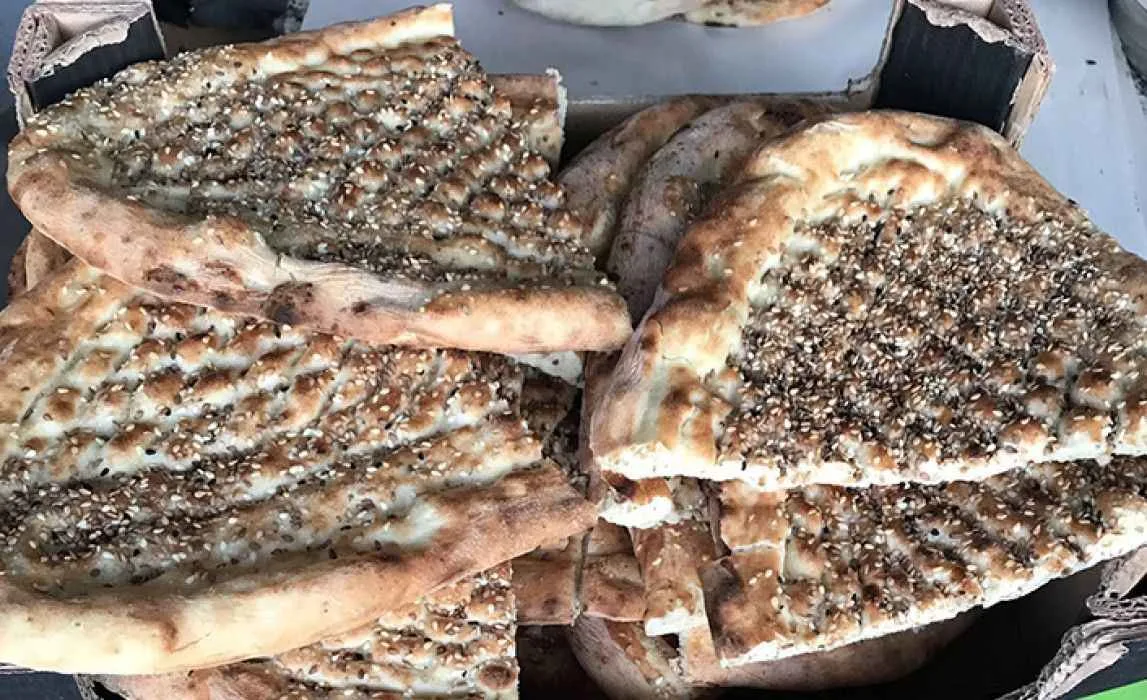
Sesame bread (küncülü ekmek) is a regional Gaziantep bread crusted generously with sesame and baked in a traditional stone oven. The "küncü" in its name means sesame in the Antep dialect; so küncülü ekmek is, at its simplest, "sesame bread." Its dough — flour, water, salt and yeast — is made without any meat or animal ingredient. The aroma and crispness the sesame gains as it toasts in the stone oven make it one of the staples of the Antep breakfast and sahur (pre-dawn Ramadan meal) table.
The identity of küncülü ekmek springs from a plain harmony: a soft dough, the generous sesame on top, and the deep baking aroma the stone oven lends. Behind it lies Gaziantep's deep-rooted sesame (küncü) culture and its neighbourhood stone-oven tradition. Though less visible than the city's registered breads, this bread is a living, beloved part of Antep's daily table life and, especially, of the Ramadan sahur.
What Is Sesame Bread and What Is in It?
Küncülü ekmek is a regional Gaziantep bread made by rolling out a leavened dough into a flat shape, scattering it generously with sesame, and baking it in a stone oven. Its character comes not from a special ingredient inside but from the aroma the sesame on top gives as it toasts in the stone oven, and from the crispness of the bread's outer crust. It is a plain but filling bread, eaten on its own as well as with cheese and olives.
Core Components
- Flour, Water, Salt and Yeast: The dough of küncülü ekmek is built from the four basics of bread: flour, water, salt and yeast. This plain dough gives the bread its soft inside and its body.
- Sesame (Küncü): The signature of the bread is the sesame that generously covers its top. Toasting as it bakes, the sesame lends the bread a distinctive aroma, a faintly nutty taste and a crisp top crust; the name "küncülü" comes from exactly this.
- A Little Oil (Optional): In some versions a small amount of oil may be added to the dough or the surface, enriching the colour and texture of the crust. The essence of the bread still rests on the balance of flour, water, salt, yeast and sesame.
What Does "Küncü" Mean?
In the Antep dialect, "küncü" means sesame and "küncülü" means with sesame (sesame-topped). The word's root traces to Persian: the Persian kuncid / kuncud (sesame) settled into the local dialect as "küncü." That is why sesame bread is naturally called "küncülü ekmek" in Gaziantep. The same root also shows how deep-rooted the city's sesame culture is; sesame is a fundamental ingredient in Antep cuisine, appearing in many places from sweets to bread.
The History and Cultural Origins of Sesame Bread
Küncülü ekmek is part of Gaziantep's deep-rooted bread and stone-oven tradition. Given the central place of sesame (küncü) in Antep cuisine, the custom of crusting bread with sesame is woven deeply into the city's daily life. Küncülü ekmek is a deep-rooted symbol especially of weekend mornings, of Sunday breakfasts, and of the sahur table during the month of Ramadan.
The Breakfast and Sahur Tradition
In Antep, küncülü ekmek is the bread of the morning and of sahur. On weekend mornings, and especially at Sunday breakfast, fresh küncülü ekmek comes to the centre of the table. During Ramadan it becomes one of the staples of the sahur table; the aroma of the sesame on top and the bread's full body provide a strong start to a long fasting day. In this respect küncülü ekmek is a tradition intertwined with the city's morning-table culture and carried from generation to generation.
The "Bring Your Own Sesame to the Oven" Custom
A deep-rooted Antep custom tied to küncülü ekmek is that a person takes their own sesame (küncü) to the neighbourhood stone oven. In the traditional practice, the household brings the sesame it has roasted or prepared to the oven; the baker makes the bread specially for that person with this sesame, and the bread is carried home fresh. This "bring your own sesame" ritual is a habit belonging to the city's street and neighbourhood culture, reflecting the close relationship with the local oven and the fact that the bread is a personal, freshly made flavour.
Küncülü ekmek does not carry a geographical indication under its own name; Gaziantep's registered breads are Tırnaklı Pide and Kübban. Küncülü ekmek is an unregistered but deep-rooted part of the city's sesame (küncü) and stone-oven tradition. No invented registration is claimed for küncülü ekmek on this page; the bread is treated as one form of Antep's living breakfast and sahur culture.
The Sesame Bread Tradition and Ritual in Gaziantep
In Gaziantep, küncülü ekmek is the bread above all of the morning table and of sahur. The hot, sesame-crusted bread fresh from the stone oven is placed at the centre of the breakfast table, with cheese, olives and tea arranged around it. Eating it fresh, while still hot, is the most prized way; the aroma of the sesame and the crispness of the crust reach their strongest with this warmth.
What It Is Eaten With
Küncülü ekmek is served with many flavours of the Antep breakfast table. Its most frequent companions are Antep cheese, za'atar (zahter), olives, and honey with butter; alongside comes brewed tea. Cheese can also be placed inside the hot bread and rolled up to eat. This plain but full spread brings the flavour of the bread and the sesame on top to the fore; each companion completes the taste of küncülü ekmek from a different angle.
Why You Should Try It
A slice of fresh küncülü ekmek carries Gaziantep's morning table and neighbourhood stone-oven culture straight to the palate: the toasted aroma of the sesame on top, the crispness of the crust and the soft inside come together. Without an elaborate preparation or a showy presentation, the honest flavour of the bread and the sesame comes to the fore. The truest way to taste it is on an Antep morning, fresh from the stone oven, with cheese and olives and hot, alongside tea.
Frequently Asked Questions
What is sesame bread and where is it from?
It is a regional Gaziantep bread crusted generously with sesame and baked in a traditional stone oven; it is a deep-rooted part especially of the breakfast and sahur table.
What does "küncü" mean?
In the Antep dialect "küncü" means sesame and "küncülü" means with sesame. The word comes from the Persian root kuncid/kuncud (sesame); this is why sesame bread is called küncülü ekmek.
Does sesame bread have a geographical indication?
It has no geographical indication under its own name. Gaziantep's registered breads are Tırnaklı Pide and Kübban; küncülü ekmek is an unregistered but deep-rooted part of the city's sesame and stone-oven tradition.
When is sesame bread eaten?
It is eaten especially on weekend mornings and at Sunday breakfast, and during Ramadan at the sahur table; eating it fresh and hot, straight from the stone oven, is the most prized way.