In the labyrinth of Gaziantep's bazaars, where the Almaci Market meets the Coppersmiths' Bazaar, a coffee aroma nearly four centuries old greets you. Tahmis Coffee House takes its name from the phrase "the place where coffee is pounded and roasted," and as one of the city's oldest coffeehouses it still serves history by the cup. A pause here beneath the stone columns, over the buttery taste of menengic coffee, is the warmest possible introduction to everyday life in Antep.
Tahmis Coffee House sits right in the heart of Gaziantep's historic urban fabric, at a lively spot where the bazaars interlace. Step through its door and you feel you have crossed into a world very different from a modern cafe: stone columns, old tinned trays, low stools, and the aroma of coffee filling the air. This is not merely a place to drink coffee; for centuries it has been where the people of Antep gather, talk, and play games.
Visited by nearly every traveler who comes to the city, this coffeehouse is one of Gaziantep's most genuine scenes, a single table where locals and foreign guests meet side by side.
What It Is and Where
Tahmis Coffee House lies within Sahinbey, Gaziantep's central district, in the city's historic bazaar quarter. Neighboring the Almaci (Elmaci) Market and set within the same web of markets as the famous Coppersmiths' Bazaar, it stands along the historic route known as the "Culture Road." Its location tells the story of the coffee itself: this bustling trade zone, where merchants, artisans and travelers have mingled for centuries, makes plain why a coffeehouse was founded on exactly this spot.
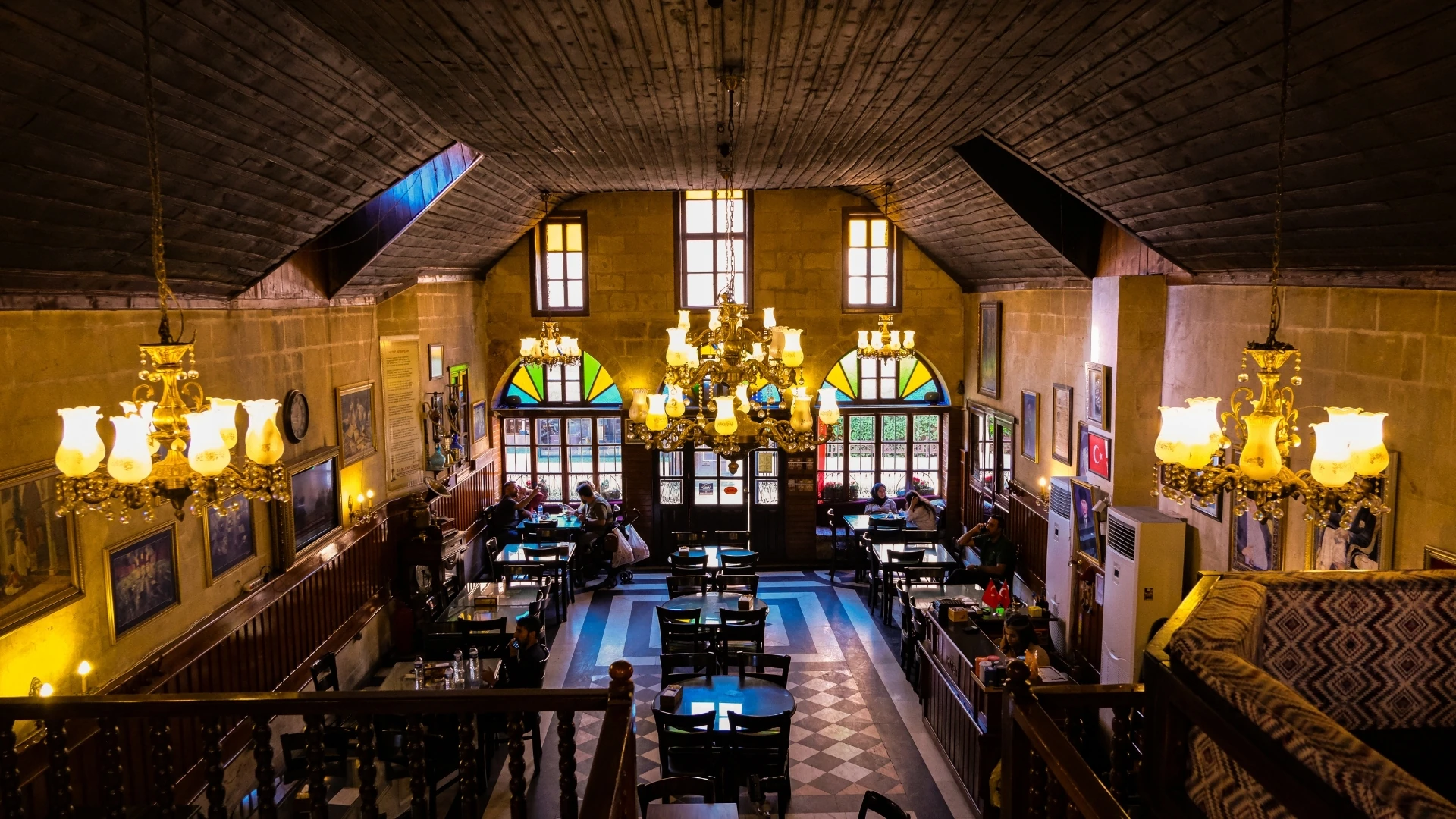
With its two-storey, stone-built structure, the coffeehouse keeps its own calm atmosphere a step inside from the clamor of the bazaar. The word "Tahmis" describes the place where coffee beans are pounded and roasted; in other words, the building's name points directly to its original function.
A History Approaching Four Centuries
The founding of Tahmis Coffee House reaches back to the first half of the 17th century. While most sources give the founding year as 1635, some records cite 1638; for this reason it is most accurate to regard the building as established "in the mid-17th century." The person credited with commissioning the coffeehouse is the Turkmen aga and provincial governor Mustafa Aga.
The most striking detail is the purpose behind it: Tahmis was built as an endowment business to generate income for a Mevlevi lodge, the dervish convent of the Mevlevi order. From the very start, then, the steam rising from its coffee was meant to keep a Sufi lodge's kitchen running. This story, which shows how Ottoman coffeehouses were woven into a network of charitable endowment and economy, makes Tahmis far more meaningful than an ordinary business.
The building also carries the scars of passing centuries. At the turn of the 20th century, two major fires in 1901 and 1903 left it severely damaged. The Mevlevi lodge's sheikh of the time, Feyzullahoglu Sheikh Mehmet Munip Efendi, then spent a large sum from his own pocket to rebuild the coffeehouse, together with the shops adjoining it, in 1904 and once again endowed it. In recent times the structure underwent a thorough restoration and reopened while preserving its original character.
"Tahmis" describes the place where coffee beans are prepared by pounding and roasting. In the past this work was done in dibek mortars carved from walnut wood; the dibek coffee still served today is directly tied to the venue's name.
What to See
The greatest strength of Tahmis is that its architecture draws its appeal from authenticity rather than show. The space, carried by stone columns, sustains the coffeehouse atmosphere of past centuries with its low ceilings, old seating arrangement and soot-darkened walls. This place earns the adjective "historic" not from decor but from stones that have genuinely seen the centuries.
The heart of the venue is, of course, the coffee. The most sought-after drink here is menengic coffee, which emerged from the solution Antep cuisine devised in times when coffee beans were scarce. Menengic is made from the fruit of the wild pistachio (terebinth), contains no caffeine, and has a buttery, nutty taste; with its foam and aroma it offers an entirely different experience. Dibek coffee and classic Turkish coffee are served alongside it.
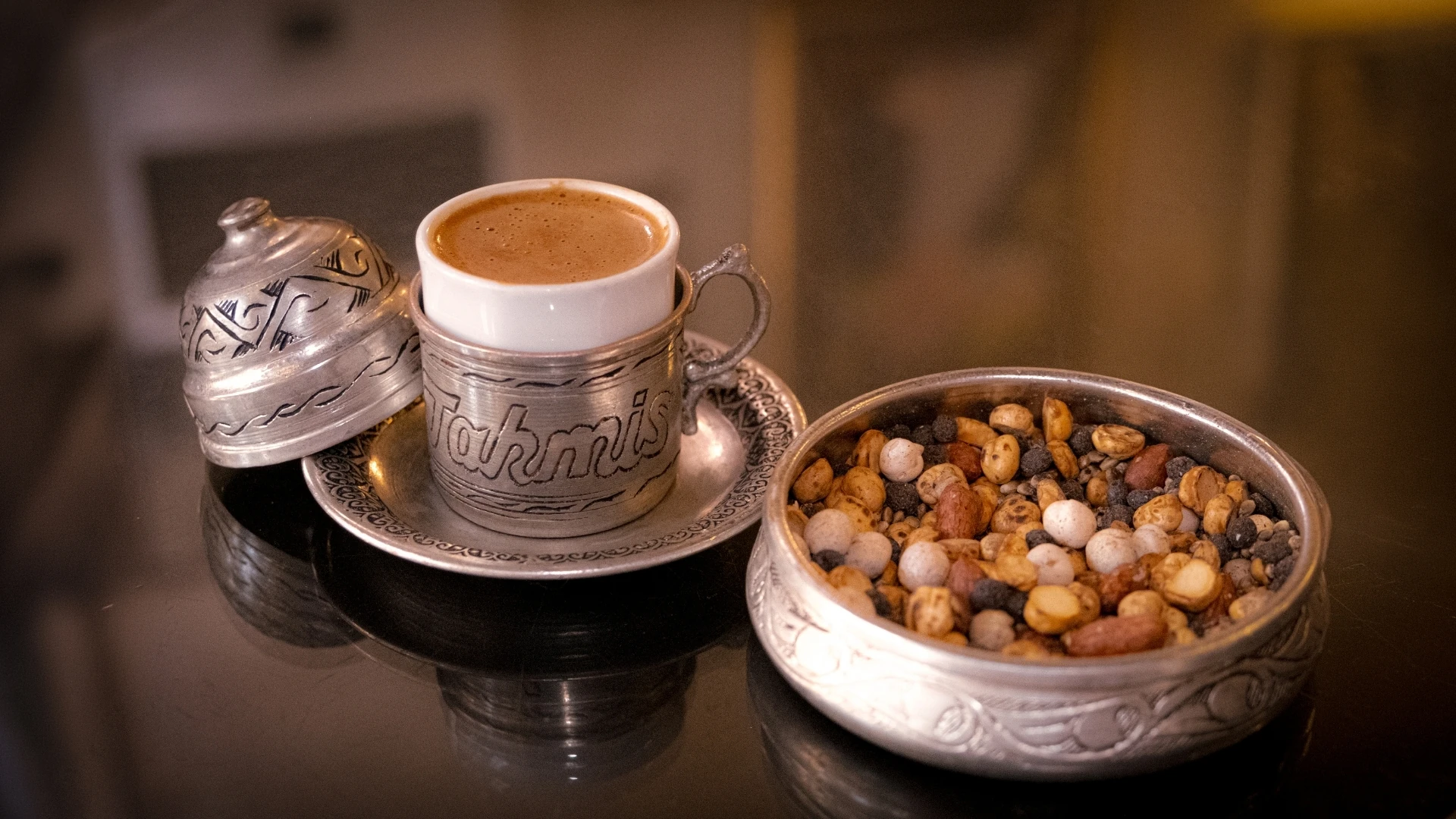
Watching the coffee being brewed is a pleasure in itself: cezves slowly steeping over embers set the rhythm of the place. Despite sitting at the very center of the bazaar, Tahmis feels like a corner where time slows down indoors.
Its Place in City Life
For the people of Gaziantep, Tahmis Coffee House is not just a venue but a tradition of meeting. For centuries shopkeepers have caught their breath here between sales, friends have played games, and the pulse of the day has been taken over cups of coffee. The coffeehouse is deeply intertwined with Antep's bazaar life; as the neighbor of the coppersmith, the spice seller and the draper, it has become part of the city's daily tempo.
This deep past has earned Tahmis a place among the world's oldest operating coffeehouses. With its nearly four centuries of uninterrupted service, the coffeehouse has become a living heritage that embodies Gaziantep's coffee culture and the art of taking a pause.
Today and How to Visit
Tahmis Coffee House today is still a working coffeehouse, open to visitors. In a space renewed by restoration yet faithful to its essence, you can rest over a cup of menengic or dibek coffee and breathe in the atmosphere of the old bazaar.
Its location is practically a base camp for a bazaar walk. The Almaci Market right beside it and the Coppersmiths' Bazaar across from it can both be explored easily before or after your coffee break. If you want to understand the finer points of coppersmithing, a visit to the Copper Museum that tells the bazaar's craft; and to see the lodge that the coffee's income supported, a stop at the Mevlevi lodge will round out the story of Tahmis. And if you would like to take menengic coffee home with you, the guide on the drink's own menengic coffee page will point the way.
Frequently Asked Questions
When was Tahmis Coffee House founded?
Its founding reaches back to the first half of the 17th century. Most sources give the year as 1635, while some cite 1638; it is therefore most accurate to say it was established in the mid-17th century. It was commissioned by the Turkmen aga and provincial governor Mustafa Aga.
Why was Tahmis Coffee House built?
The coffeehouse was built as an endowment business to generate income for a Mevlevi lodge (dervish convent). This feature shows how Ottoman coffeehouses were intertwined with the charitable endowment economy of the city.
Where is Tahmis Coffee House?
It is in Sahinbey, Gaziantep's central district, within the historic bazaar quarter. It neighbors the Almaci (Elmaci) Market, sits within the same network of bazaars as the Coppersmiths' Bazaar, and lies along the Culture Road route.
What do you drink at Tahmis Coffee House?
The venue's most famous drink is menengic coffee, a caffeine-free brew made from the fruit of the wild pistachio (terebinth). Dibek coffee and classic Turkish coffee are also served. The name "Tahmis" means the place where coffee is pounded and roasted.
Is Tahmis Coffee House still open?
Yes. Despite the fires and restorations it has endured, the coffeehouse is still working and open to visitors today. With its nearly four centuries of uninterrupted history, it is counted among the world's oldest operating coffeehouses.
Did Tahmis Coffee House suffer fires?
Yes. At the turn of the 20th century, two major fires in 1901 and 1903 severely damaged the building. It was then rebuilt in 1904 by the Mevlevi lodge's sheikh of the time, Sheikh Mehmet Munip Efendi, and once again endowed.