The Hasan Süzer Ethnography Museum was an ethnography museum that recreated old Antep home life through mannequin scenes inside a traditional Antep mansion dating to the early 1900s. Following a restoration and redisplay carried out by Gaziantep Metropolitan Municipality in partnership with the Süzer family, the mansion reopened on 9 May 2026 as the Hasan Süzer Museum of Marriage and Life Culture, and the museum as it stands today is covered on that page.
This article covers the museum's donation story, the architecture of the traditional Antep mansion, the rooms recreated with mannequins, and a discovery guide for visitors. Within Gaziantep's atlas of museums, this is the stop that represents the city's civil architecture and domestic culture.
The Building and the Donation Story
The mansion that houses the museum stands on Hanifioğlu Street in the Bey Mahallesi quarter in the historic centre of Gaziantep, and with its narrow streets, cut-stone walls and tiled roofs it is one of the best-preserved examples of Antep's old urban fabric. In 1985, in a rather ruined state, the building was bought by the businessman Hasan Süzer. Süzer had it restored faithfully to its original form and donated it to the Ministry of Culture and Tourism on the condition that it be used as an ethnography museum; the ethnography department of the Gaziantep Museum was then moved into this mansion, and the building was arranged as a mansion-museum.
In later years the building underwent extensive repairs as well. In this sense the museum is a concrete example of a ruined mansion turning, at the hands of private philanthropy, into the shared memory of a city.
The Architecture of the Antep Mansion
The museum building carries the typical features of a traditional Antep mansion. Built of cut stone walls and covered by a tiled pitched roof, the structure rises in three storeys over a cellar carved into the bedrock. This cellar is on two levels, with a difference in floor height of roughly two metres between them. The building has three separate entrance doors; two of these open onto the main road and one onto a side street.
From the carved large door on the façade you pass into the central courtyard, called the "hayat" ("life") in traditional Antep houses; paved with coloured stones in fine stonework, this courtyard is the heart of the home's daily life. In one corner of the courtyard stands an independent two-storey servants' building, its upper floor a sitting room and its lower floor a hearth and service unit. The floors are divided by function: the ground floor holds the service units, the first floor the selamlık where male guests were received, and the topmost floor the haremlik, the private living quarters of the household. This division shows how privacy in the traditional Antep house was secured not by rigid walled partitions but through spatial design.
Rooms Recreated with Mannequins
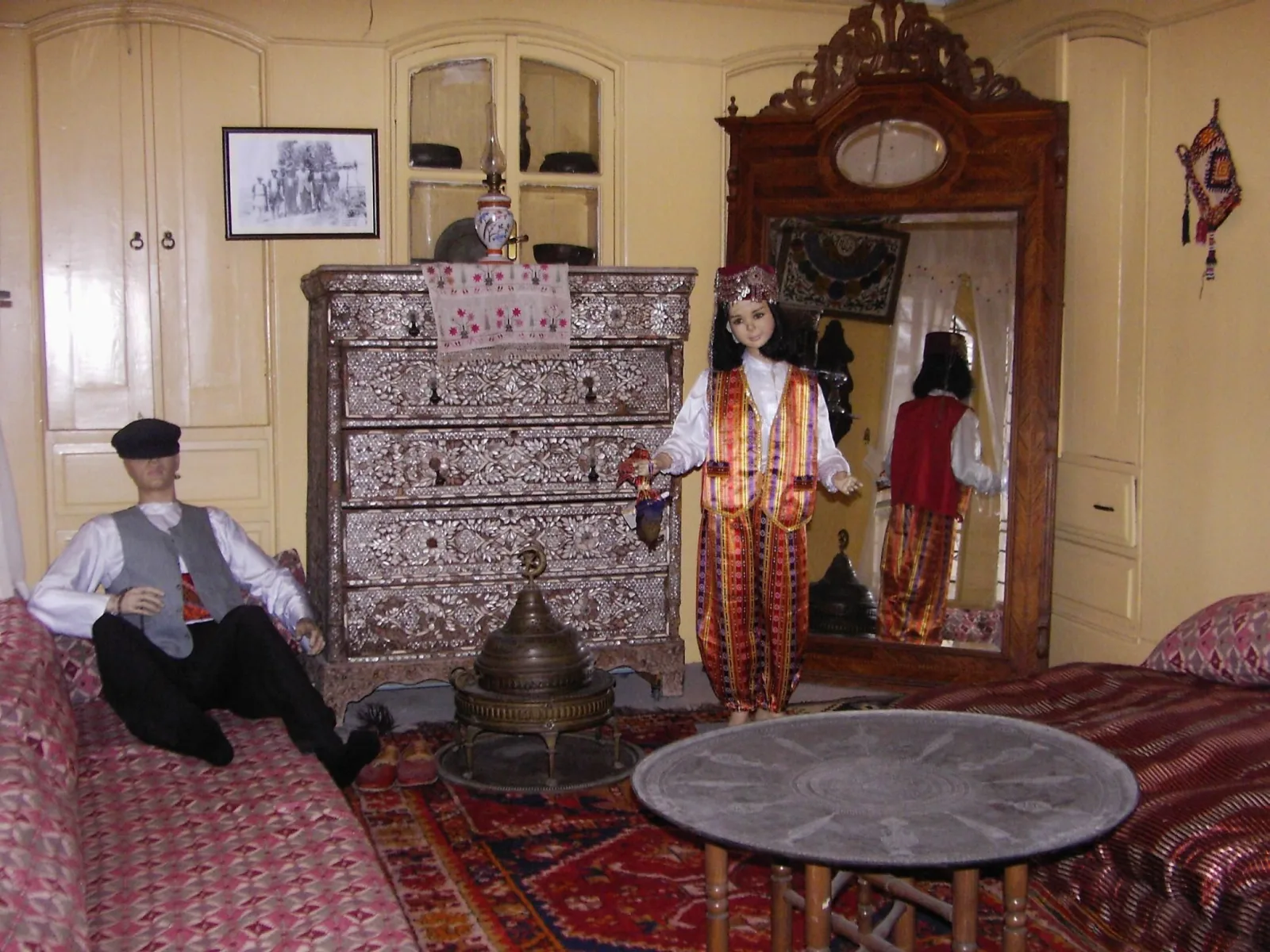
What truly sets the museum apart is that, rather than lining objects up in display cases, it turns traditional Antep home life into a narrative through mannequin scenes. Each room is furnished with region-specific objects according to its role in daily life, and costumed mannequins are placed in the scenes so that the everyday life of the past is presented like a frozen moment.
The Work Room and Handicrafts
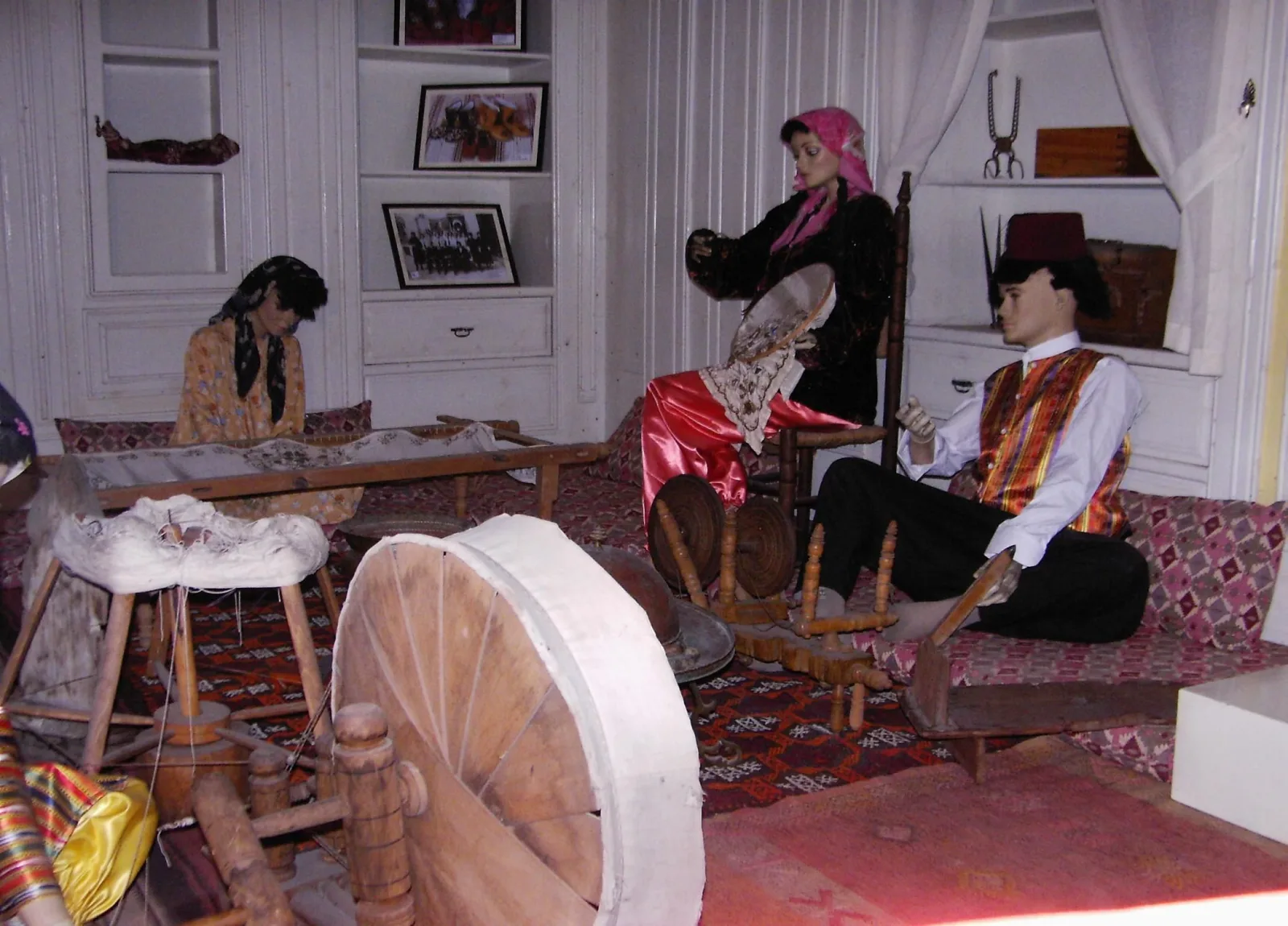
One of the recreated scenes in the mansion is the work room, where domestic production was carried out. Here traditional handicrafts such as silk embroidery (metallic thread work), spinning yarn with a spindle, and working at the weaving loom are shown together with female figures. This scene tells how the Antep house was not merely a dwelling but also, in itself, a place of production.
The Kitchen and the Tandoor Room
In the kitchen area, known as the ocaklık, a scene of preparing bread and kneading dough is recreated. In the neighbouring tandoor room, a winter scene is set in which the family gathers around the tandoor to warm themselves. Together these two spaces show how central food and warmth were to daily life in the Antep house.
The Bathhouse and the Living Spaces
In the mansion's bathhouse (hammam) there is a scene of a mother bathing her child, directly revealing the culture of water and cleanliness in the traditional Antep house. The display also presents everyday objects such as water vessels, bone combs and soap holders, each in the room to which it belongs and with its own function. The selamlık, in turn, is the space of the culture of conversation and hospitality where male guests were received, while the haremlik is the private living space of the household.
The Hasan Süzer Ethnography Museum shows the life of the traditional Antep house; the culinary dimension of the same culture is completed by the Emine Göğüş Culinary Museum, set in another mansion in the historic centre. The Bayazhan City Museum, which tells the social and historical life of the city, is a third complementary stop.
A Visitor's Discovery Guide
- See the building as an exhibit in its own right: the mansion itself is as valuable as the scenes inside it; pay attention to the architecture as you tour the coloured-stone "hayat" courtyard, the transitions between floors and the two-level cellar carved into the rock.
- Follow the selamlık–haremlik division: the way the floors are distributed by function (ground floor service, first floor selamlık, top floor haremlik) tells the rules of social life in the traditional Antep house through the space itself.
- Pause at the mannequin scenes: the bread scene in the kitchen, the weaving in the work room and the bathing scene in the bathhouse are the museum's most "story-telling" sections.
- Tour the historic centre together: the mansion is within walking distance of the city's other home and culinary museums in the same historic fabric, and the visit can be planned for the same day.
To get to know the life of Antep in the period the mansion represents within a broader frame, you can take a look at the History of Gaziantep page; and to see the city's ancient depth, the Zeugma Mosaic Museum page.
Summary and Cultural Value
The Hasan Süzer Ethnography Museum carries one of the best-preserved examples of traditional Antep mansion architecture into the present, together with the scenes of life inside it. With its cut-stone walls, its coloured-stone courtyard known as the "hayat," its selamlık–haremlik layout and its cellar carved into the rock, the building is the memory not of a single family but of an entire city's living culture. And the transformation of a ruined mansion into a museum at the hands of a philanthropist is a concrete example of Gaziantep's will to preserve its own historic fabric.
Frequently Asked Questions
How was the Hasan Süzer Ethnography Museum founded?
The historic Antep mansion, then in ruins, was bought and restored in 1985 by the businessman Hasan Süzer and donated to the Ministry of Culture and Tourism on the condition that it be used as an ethnography museum. The ethnography department of the Gaziantep Museum was moved into this mansion.
What is there to see in the museum?
Traditional Antep home life is brought to life with costumed mannequin scenes: you tour the work room with silk embroidery and weaving, the kitchen (ocaklık) with its bread/dough scene, the tandoor room where the family gathers to warm itself, and the bathhouse where a mother bathes her child. Everyday objects such as water vessels, bone combs and soap holders are also displayed.
Where is the museum?
It is located on Hanifioğlu Street in the Bey Mahallesi quarter in the historic centre of Gaziantep, in the Şahinbey district.
How old is the building and what are its architectural features?
The structure is a traditional Antep mansion dating to the early 1900s. It has cut-stone walls and a tiled pitched roof; it rises in three storeys over a two-level cellar carved into the rock, and has three entrance doors and a central courtyard, the "hayat," paved with coloured stone.
Who is Hasan Süzer?
He is the businessman who bought the historic mansion, had it restored faithfully to its original form and donated it to the Ministry of Culture and Tourism on the condition that it be used as an ethnography museum.