 Vegetarian
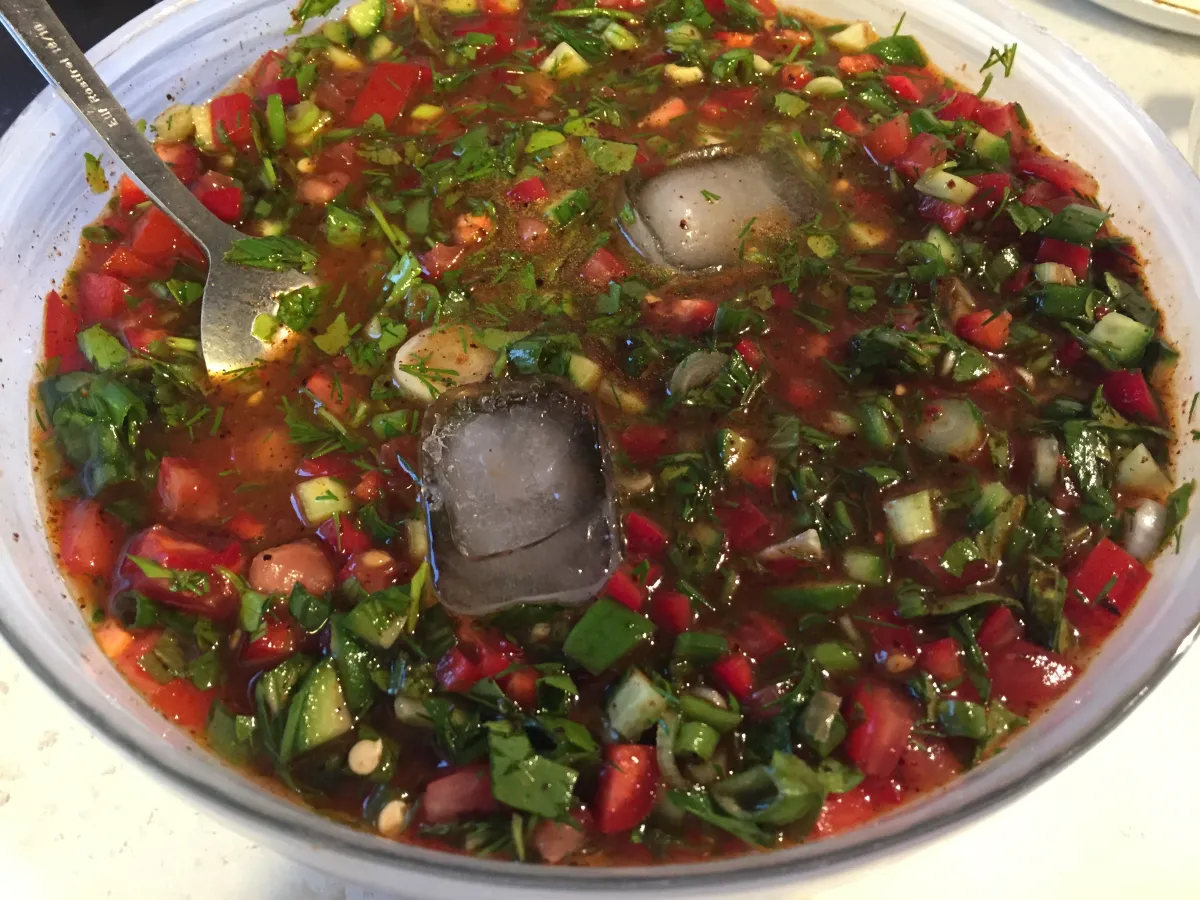
Avrat salad (avrat salatası) is a Gaziantep salad served in a cold, tangy liquid: tomato, onion and green pepper, cut into small cubes, are combined with finely chopped parsley and mixed with pomegranate molasses, red pepper flakes, dried mint, salt and water, then chilled with ice. The registered recipe contains no olive oil, sumac or lemon; the salad's sourness comes from pomegranate molasses produced by traditional methods in the Gaziantep area. Following an application by the Gaziantep Metropolitan Municipality on 28 November 2025, Gaziantep Avrat Salatası was registered as a geographical indication by TÜRKPATENT on 25 September 2026 (Geographical Indication / Mahreç İşareti, Reg. No: 1903).
The salad's identity rests on a balance built from simple ingredients: the juicy sweetness of the tomato, the sharpness of the onion and pepper, the freshness of the parsley and the sourness of the pomegranate molasses are drawn together by the water and ice. Served alongside Gaziantep's local dishes, avrat salad, with its ice-chilled liquid, is a familiar part of the city's summer table.
What Is Avrat Salad and What Is in It?
Avrat salad is made of diced vegetables in a liquid soured with pomegranate molasses, chilled with ice and served cold. Three features of the registered recipe stand out: added water that gives the salad its liquid, ice added just before serving, and pomegranate molasses as the only souring agent. According to the registration, the ingredients are mixed gently so as not to crush them; the salad contains no walnuts, oil or sumac.
Core Components
- Tomato: Tomato forms the base of the salad and is cut into small cubes.
- Onion and Green Pepper: Onion (kuru soğan, mature bulb onion rather than spring onion) and green pepper, cut into small cubes, bring sharpness and freshness to the salad.
- Parsley: Finely chopped parsley gives the salad its green freshness.
- Pomegranate Molasses (Nar Ekşisi): The salad's only souring agent; under the registration it must be produced by traditional methods in the Gaziantep area. Pomegranate molasses gives the salad a fruity sourness.
- Red Pepper Flakes (Pul Biber) and Dried Mint: Red pepper flakes add heat and dried mint adds aroma. In Gaziantep's registered soups and stews, dried mint is usually stirred into sizzling fat and drizzled over the dish at serving; in avrat salad, by contrast, it is added raw, along with the pomegranate molasses and water.
- Water and Ice: The water stirred into the salad and the ice added just before serving are the two elements that define avrat salad.
The Geography of Its Service
The ingredients are combined in a deep bowl, and avrat salad is brought to the table in its liquid, with ice added just before serving so that it arrives cold. According to the registration document, because of its cooling effect the salad is served alongside Gaziantep's local dishes, especially in the summer months; it comes to the table not as a main course but as a companion that complements the dishes.
The History and Cultural Origins of Avrat Salad
No written record has come to light of who first made avrat salad or when; the registration document likewise says only that the salad has an important place and a long history in Gaziantep's culinary culture. The tomato and pepper at the heart of the salad spread from the Americas to the Old World from the 16th century onwards and became common in Anatolian kitchens relatively late, so the salad in its present form cannot be dated back many centuries. Even so, the tradition of juicy, spoonable salads to which it is close, and the word in its name, offer clues to Antep's culinary and linguistic culture.
Antep's Juicy Salad
According to the Gaziantep Provincial Directorate of Culture and Tourism, salads in Antep cuisine are also made with lettuce, cucumber and tomato; alongside thick (koyu) dishes, however, the custom is a very juicy salad eaten with a spoon, its ingredients very finely chopped, with plenty of parsley, with peppers and a sour note. The text does not name the salad, but what it describes is close to the definition of avrat salad. Similar salads are also known by names such as "sulu salata" (juicy salad), "Antep salatası" (Antep salad) or "ezme salata" (crushed salad), and sources differ on which salad each name refers to. The registration, however, ties the name "avrat salatası" specifically to the salad made with water and ice and soured with pomegranate molasses. Avrat salad is also listed among Gaziantep-style salads in the Gaziantep cuisine course programme of Türkiye's Ministry of National Education.
What Does "Avrat" Mean?
The Turkish Language Association's dictionary gives "avrat", the word in the salad's name, as Arabic in origin and records two senses: "wife" and, in regional speech, "woman"; the earliest known Turkish record of the word in the sense "woman, wife" dates from around 1300. In dialect surveys of Turkish as spoken in Türkiye, the word appears throughout the dialect group that includes Gaziantep, and in the Gaziantep dialect it has also been recorded with an approving sense, along the lines of "a woman with all the good qualities of womanhood." However, no written record or generally accepted account has come to light explaining why the salad was given this name, and the reason behind it remains an open question.
Geographical Indication Registration
The name "Gaziantep Avrat Salatası" has been protected by official registration, together with its defined ingredients and method of preparation. The process, which began with the application made by the Gaziantep Metropolitan Municipality on 28 November 2025, concluded on 25 September 2026 with registration by TÜRKPATENT (Geographical Indication / Mahreç İşareti, Reg. No: 1903); on the same day, Gaziantep Sakız Helva was also registered (Reg. No: 1904). The registration guarantees that the name may be used only for salad prepared within the provincial borders of Gaziantep using the defined ingredients and method.
Gaziantep Avrat Salatası was entered into the TÜRKPATENT geographical indications register as a Geographical Indication (Mahreç İşareti, Reg. No: 1903) on 25 September 2026; the application was made on 28 November 2025 by the Gaziantep Metropolitan Municipality. Classified in the "Salad / Dishes and soups" group, the product must go through every stage of production within the provincial borders of Gaziantep, and the pomegranate molasses used must be produced by traditional methods in the area; production is inspected by a three-member committee formed under the coordination of the Gaziantep Metropolitan Municipality.
The Avrat Salad Tradition and Ritual in Gaziantep
In Gaziantep, avrat salad is not the main dish on the table but a cool companion set beside the local dishes. The city's hot summers, the importance it attaches to sour flavours and its tradition of cooling drinks and treats served with ice help explain the salad's place at the table.
A Cooling Companion of the Summer Table
Antep cuisine has a distinct group known as "serinleticiler" (cooling treats): licorice (meyan), tah, urmu mulberry and unripe-grape (koruk) sherbets; haytalı (haytalya); and karsambaç, a mixture of snow and pekmez (fruit molasses). In a city of hot, dry summers, the registered Antep Licorice Sherbet is likewise served with ice, especially in the summer months. According to its registration, avrat salad too is served especially in summer because of its cooling effect; its ice-chilled liquid, soured with pomegranate molasses, brings a tart balance to hot-weather meals.
Pomegranate Molasses in a Cuisine of Seven Sours
Gaziantep cuisine chooses its souring agent to suit the dish, and it draws on seven of them: lemon, citric acid (limon tuzu), unripe grape (koruk), unripe-grape molasses (koruk pekmezi), ground sumac (sumak tozu), sumac sour (sumak ekşisi) and pomegranate molasses (nar ekşisi). Official texts introducing Antep cuisine note that sumac sour goes into "sulu salata" (juicy salad); the registration text of Gaziantep Unripe Grape Sour (Koruk Ekşisi) likewise states that it is frequently used in salads. The registered avrat salad, however, takes its sourness from pomegranate molasses alone. The registration does not name a particular pomegranate molasses; one example known in the area is Oğuzeli Pomegranate Molasses, made without additives from the registered Oğuzeli pomegranate.
How It Differs from Gavurdağı Salad
Avrat salad shares pomegranate molasses and finely diced vegetables with gavurdağı salad, another well-known Gaziantep salad, but the two are quite different in character. Gavurdağı salad contains walnuts, and most recipes also include olive oil and sumac. Avrat salad has no walnuts, olive oil or sumac; instead, water is added to give it its liquid, and it is chilled with ice.
Why You Should Try It
A single spoonful of avrat salad carries Gaziantep's summer table, and the city's love of sour flavours, straight to the palate: finely diced vegetables and the aroma of dried mint come together in an ice-chilled liquid soured with pomegranate molasses. Containing no oil, the salad refreshes the palate alongside the local dishes. The truest way to taste it is on a hot summer day, beside one of Gaziantep's local dishes, spooning it from a bowl whose ice has not yet melted.
Frequently Asked Questions
What is avrat salad?
Avrat salad (registered as Gaziantep Avrat Salatası) is a salad of tomato, onion, green pepper and parsley mixed with pomegranate molasses, red pepper flakes, dried mint, salt and water, and served cold with ice.
Where does the name "avrat" come from?
Turkish dictionaries record "avrat", a word of Arabic origin, with the meanings "wife" and, in regional speech, "woman"; in the Gaziantep dialect, an approving sense along the lines of "a woman with all the good qualities of womanhood" has also been recorded. No written record has come to light, however, explaining why the salad was given this name.
Does avrat salad contain olive oil or lemon?
The registered recipe contains no olive oil, lemon or sumac; the salad's sourness comes solely from pomegranate molasses produced by traditional methods in the area.
Does avrat salad have a geographical indication?
Yes. Following an application by the Gaziantep Metropolitan Municipality, Gaziantep Avrat Salatası was registered as a geographical indication by TÜRKPATENT on 25 September 2026 (Mahreç İşareti, Reg. No: 1903).
When and how is avrat salad eaten?
It is eaten alongside Gaziantep's local dishes, especially in summer; ice is added just before it reaches the table, so it is served cold.
How does avrat salad differ from gavurdağı salad?
Gavurdağı salad contains walnuts and usually olive oil and sumac; avrat salad contains no walnuts, olive oil or sumac, is prepared with added water and is served with ice.