Duluk (known in antiquity as Doliche) Ancient City is an age-old settlement located about 10 kilometres north of the centre of Gaziantep, in the Şehitkâmil district, around Keber Hill near the village of Dülük. The real fame of the city, founded in the ancient region of Commagene, comes from a god whose name it bears: the cult of Jupiter Dolichenus (Iuppiter Dolichenus), which spread to every corner of the Roman Empire, was born right here, on the sacred hill near Dülük. In addition, one of the largest known underground Mithras temples, cut into the rock beneath the city, makes Doliche one of the most remarkable centres of belief in Anatolia.
Today Doliche is being brought back to light through long-running excavations carried out by the University of Münster (Forschungsstelle Asia Minor) team together with Türkiye's Ministry of Culture and Tourism. This page deals with the city itself — its location, its history, its two great cults and its excavation adventure. Among Gaziantep's ancient cities, Doliche is an extraordinary site that left its mark not through its movable finds but through the very beliefs it gave rise to.
Location and Name
Doliche was founded on a saddle-shaped natural rise called Keber Hill, which stretches opposite the modern village of Dülük, north of Gaziantep. In antiquity the region lay in the geography of Commagene, about 30 Roman miles west of Samosata (present-day Samsat), the capital on the bank of the Euphrates. The modern Turkish place name "Dülük" is the form that the ancient name Doliche took over the centuries; both names refer to the same settlement.
The city's location was no accident. Doliche was settled on hilly terrain overlooking a fertile plain, on the caravan routes connecting south-eastern Anatolia to Syria and Mesopotamia. This crossroads position was one of the chief factors that nourished both the city's own prosperity and the spread of the cults it gave rise to across a wide geography. For the broader historical context of Commagene in the Hellenistic and Roman periods, Zeugma Ancient City, another important centre of the region on the bank of the Euphrates, offers a complementary comparison.
The Birth of the Cult of Jupiter Dolichenus
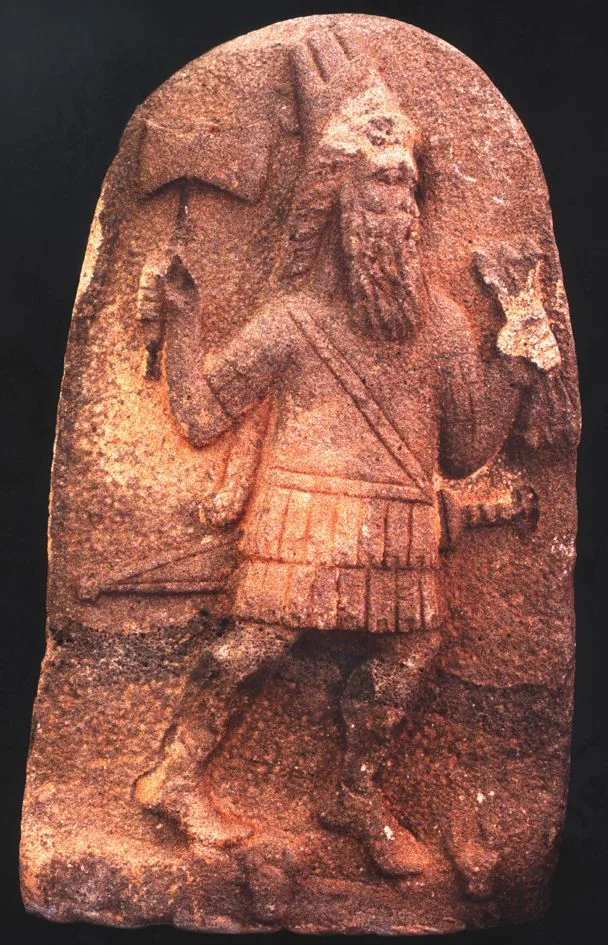
The element that put Doliche on the map of the ancient world is the god worshipped on the sacred hill near Dülük. This god was a local storm and fertility god whose origins reach much further back; researchers associate him with the thunder and weather gods of the Hittite-Hurrian tradition (the Teshub/Hadad-Baal line). In the Roman era this local god was identified with Iuppiter, the chief god of Rome, and took the name Jupiter Dolichenus, that is, "Jupiter of Doliche" — his name came directly from the city itself.
The god's sanctuary stood on Dülük Baba Hill, right beside the city settlement. Excavations by the Münster team have revealed that the roots of the temple here reach back to the Iron Age, when the first temple was built on the hill. In other words, the tradition of worship on Doliche's sacred hill began long before the Roman era and continued uninterrupted for centuries.
A Faith That Spread Across the Empire
The cult of Jupiter Dolichenus gained extraordinary currency throughout the Roman Empire from the early 2nd century CE to the middle of the 3rd century CE. The leading role in this spread was played by the Roman army: legionaries and soldiers carried this faith to the empire's most distant frontier regions. Altars and temples dedicated to the god appear across a wide geography, from the Danube and the Rhine to Britain, and from there to North Africa and Rome itself. The transformation of a frontier town's local god, through military networks, into one of the shared cults of a world empire is one of the most striking examples in the history of ancient religion.
The cult's brilliant age ended together with the fate of the city that gave it birth. After Doliche was destroyed by the Sasanians in the middle of the 3rd century, the faith in Jupiter Dolichenus quickly fell out of favour and in time died out. Thus the cult withdrew from the stage of history in the same century as the hill that had given it birth.
The epithet "Dolichenus" in the name "Jupiter Dolichenus" points directly to the city of Doliche; that is, the god took his name from the place where he dwelt. This shows how closely intertwined the cult and the city were: someone reading the word "Dolichenus" on an altar in any corner of the empire was in fact commemorating this hill north of Gaziantep. The god's official depictions also appear as the chief god on the city's seals.
The Rock-Cut Mithras Temple (Mithraeum)
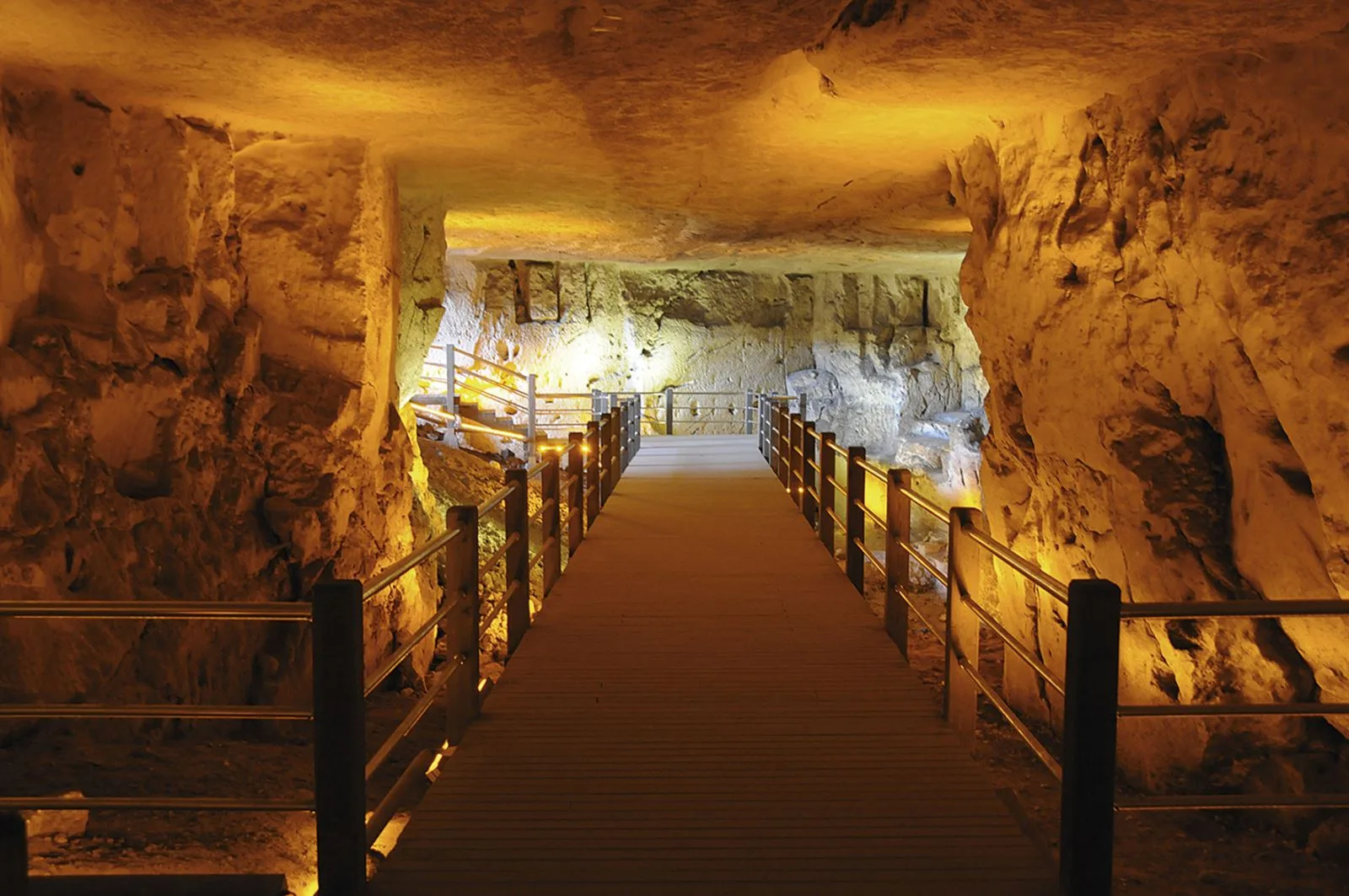
Doliche's second great centre of belief is a Mithras Temple (Mithraeum) cut into the rock beneath the city's settlement hill. In the 1st century CE a mystery cult developed around the god Mithras, whose origins reach back to Iran; in the 2nd and 3rd centuries this faith found great favour throughout the empire, especially among the Roman army. Mithras temples were generally artificially dark, cave-like spaces, because the bull-sacrifice scene at the heart of Mithraic mythology took place in a cave.
At Doliche, beneath Keber Hill, there are two Mithraic cult spaces created in an abandoned underground quarry. These spaces were discovered in 1997 and 1998 and then excavated between 1998 and 2000. Unlike most known Mithras temples, the structure is architecturally unusual because it was cut into the natural rock and into the cavity of a former quarry. The date of the temples is given as the 2nd or 3rd century CE on the basis of the architectural remains of the Roman era and the cult tradition. In the spaces, two cult reliefs showing Mithras slaying the bull (the tauroctony) were brought to light.
In various reports and studies, this structure is described as the largest known underground Mithras temple. The spokesman of the excavation team, Prof. Dr. Michael Blömer, however, described the temple without placing it in a global comparison, as a "fairly large" structure and the largest temple in the region. The impressive size of the space concretely reveals the power of the Mithras cult at Doliche and the city's religious weight in the region.
The University of Münster Doliche Excavations
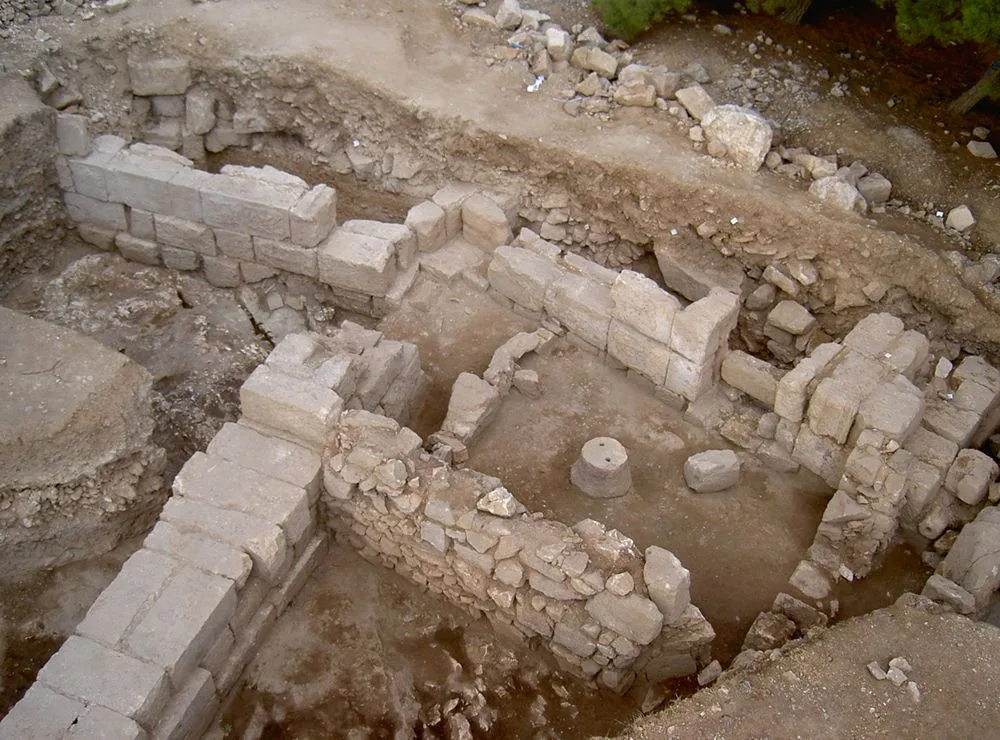
The systematic research carried out at Doliche and the sacred sites around it bears the signature of the Forschungsstelle Asia Minor team attached to the University of Münster. The sanctuary of Jupiter Dolichenus on Dülük Baba Hill has been excavated by this team since 2001, in cooperation with Türkiye's Ministry of Culture and Tourism. In the following years the work expanded to cover the city itself — the settlement area on Keber Hill.
The scientific direction of the excavations was for many years undertaken by Prof. Dr. Engelbert Winter; among those leading the project was also Prof. Dr. Michael Blömer. The work of this team has fundamentally renewed our knowledge of the origins of the cult of Jupiter Dolichenus reaching back to the Iron Age and of its spread throughout the Roman Empire. The site is also being scanned with modern geophysical methods (such as ground-penetrating radar and electrical resistivity measurements) to map the structures underground.
The Seal Archive and Finds
One of the most striking results of the Doliche excavations is the finds of seals and seal impressions. In the sanctuary on Dülük Baba Hill, more than 600 stamp and cylinder seals have been recovered. Apart from these, thousands of bullae (seal impressions) stamped on clay, belonging to the city's administrative archive, have been found; the excavations have yielded over 6,000 fired lumps of clay, of which roughly four thousand bear identifiable impressions. On these impressions appear depictions of the city's chief god, Jupiter Dolichenus, which shows the extent to which the god and the city's official identity were integrated. This extraordinary archive forms a unique source for the institutional and religious life of Doliche in the Roman era.
The Doliche area is also not limited to antiquity alone: the flint deposits and find spots around Dülük indicate that the region has been the scene of human activity since the Palaeolithic period. Thus the Dülük area presents a multi-layered landscape of settlement and belief stretching from the Stone Age to the Roman era and beyond.
It is possible to see a wider selection of artefacts that came from Doliche and from the ancient settlements around Gaziantep at the Gaziantep Archaeology Museum in the city centre. For the region's Roman-era mosaic art, the Zeugma Mosaic Museum is a prominent stop.
Later Ages and the Site Today
Doliche continued to exist after its brilliant period in the Roman era as well. Settlement continued in the Late Antique and Byzantine periods; however, after the destruction in the 3rd century the city never regained its former religious weight. Following the devastations the region suffered in the Middle Ages, the centre of gravity of settlement shifted to nearby Ayıntab (Antep); Doliche in time turned into a small settlement in the shadow of this growing city. Thus the legacy of ancient Doliche was, in a sense, carried over into the core of present-day Gaziantep.
Today the Dülük area is, with both its archaeological sites and the Dülük Baba forest and picnic grounds, an excursion spot for the people of Gaziantep where nature and history meet. The settlement remains on Keber Hill, the sanctuary on Dülük Baba Hill and the rock-cut Mithras temple make the city's past traceable on the ground. As the excavations continue, the picture of Doliche's everyday life — especially the dwellings around the rock-cut Mithras temple — is becoming ever clearer.
To follow, in a broader frame, the place of the Hellenistic and Roman age that Doliche belongs to within the city's history, see the History of Gaziantep page; for the region's other ancient settlements, you can look at the Carchemish, Yesemek Open-Air Museum, Tilmen Mound and Sakçagözü pages.
Frequently Asked Questions
Where is Duluk (Doliche) Ancient City?
Doliche lies about 10 kilometres north of the centre of Gaziantep, in the Şehitkâmil district, around Keber Hill near the village of Dülük. In antiquity it lay in the region of Commagene, about 30 Roman miles west of Samosata (Samsat) on the bank of the Euphrates.
Who is Jupiter Dolichenus and where was his cult born?
Jupiter Dolichenus (Iuppiter Dolichenus) is a god whose origins rest on a local storm and fertility god, identified in the Roman era with the chief god Iuppiter. The "Dolichenus" in his name comes directly from the city of Doliche; the main centre of the cult is the sanctuary on Dülük Baba Hill near Dülük.
How far did the cult of Jupiter Dolichenus spread?
The cult spread throughout the empire, especially through the Roman army, from the early 2nd century CE to the middle of the 3rd century CE. Altars dedicated to the god are found across a wide geography, from the Danube and the Rhine to Britain, North Africa and Rome. After Doliche's destruction in the 3rd century the cult quickly fell out of favour.
What kind of structure is the Mithras Temple (Mithraeum) at Doliche?
At Doliche, beneath Keber Hill, there are two Mithraic cult spaces cut into an abandoned underground quarry. Discovered in 1997–1998 and excavated between 1998 and 2000, these spaces are dated to the 2nd–3rd century CE; within them, two cult reliefs showing Mithras slaying the bull were recovered. The structure is described as one of the largest known underground Mithras temples.
Who is carrying out the Doliche excavations?
The excavations are conducted by the Forschungsstelle Asia Minor team attached to the University of Münster, in cooperation with Türkiye's Ministry of Culture and Tourism. Work has been carried out at the sanctuary on Dülük Baba Hill since 2001; among those leading the project are Prof. Dr. Engelbert Winter and Prof. Dr. Michael Blömer.
What important finds were recovered at Doliche?
In the sanctuary on Dülük Baba Hill, more than 600 stamp and cylinder seals have been found. In addition, thousands of bullae (clay seal impressions), belonging to the city's administrative archive and bearing depictions of Jupiter Dolichenus, have been brought to light; the excavations have yielded over 6,000 fired lumps of clay, of which roughly four thousand carry identifiable impressions. The flint find spots around Dülük, for their part, show that the region has been inhabited since the Palaeolithic period.