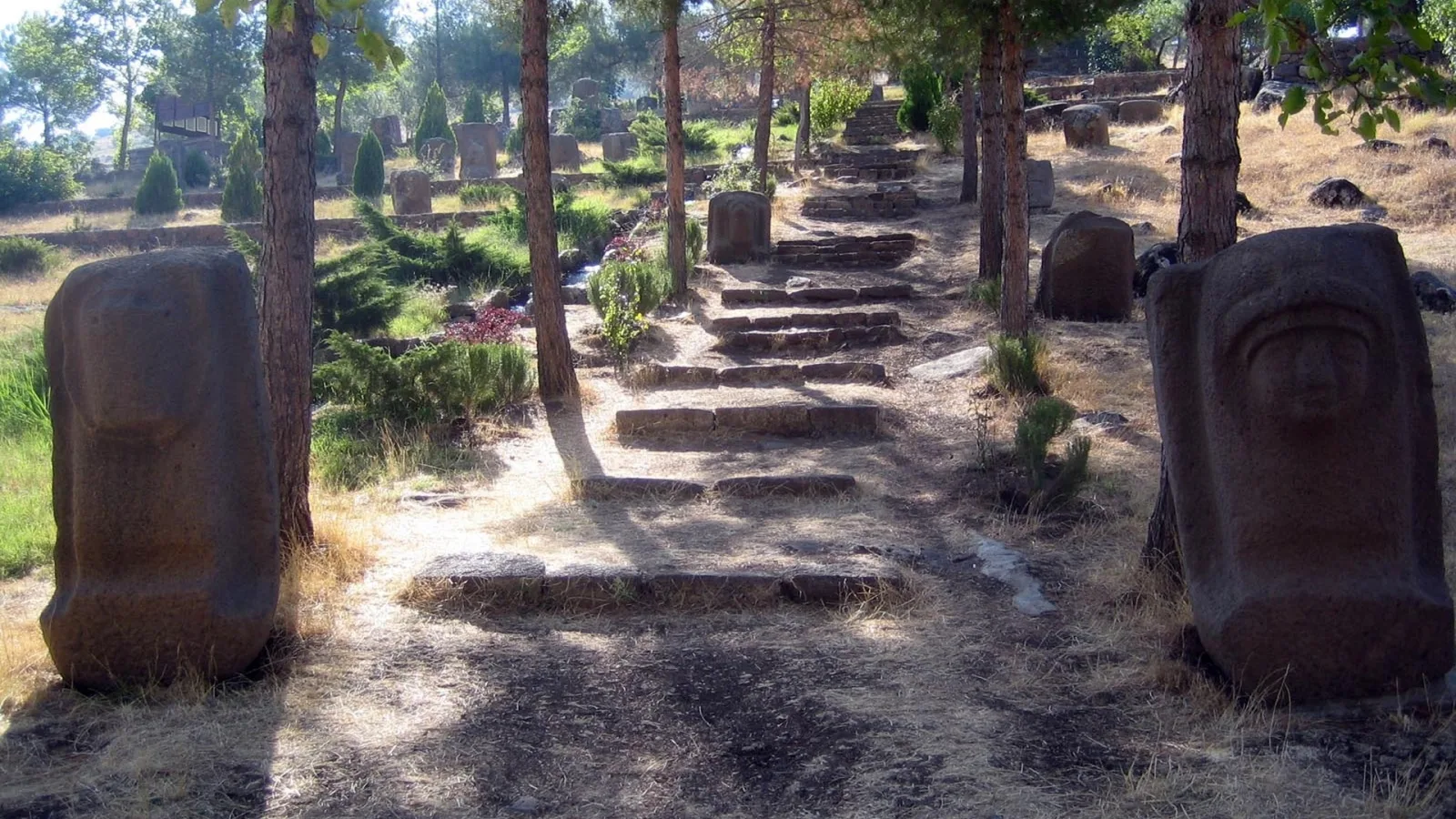
The Yesemek Open-Air Museum is an extraordinary archaeological site spread across a hillside in the village of Yesemek, in the İslahiye district of Gaziantep. In the Hittite and Late Hittite periods this was the largest basalt quarry and open-air sculpture workshop in the region; with an area of roughly 100,000 square metres and hundreds of unfinished sculpture roughouts, it is recognised as the largest known stone-working workshop of the ancient Near East. Gate lions, sphinxes and mountain gods stand half-finished on the slope, just as they were at the moment the workers laid down their tools more than three thousand years ago.
What makes Yesemek unique is that it is not a finished city of monuments but a "production site": sculptures roughly hewn from raw basalt yet not given their final touches lay out, step by step, the workings of a sculptor's workshop. In this respect Yesemek tells a wholly different story, one that complements the region's other ancient cities — settlements such as Zeugma or Duluk.
Where Is Yesemek? Location and Geography
Yesemek lies just south of Yesemek village, in the İslahiye district of Gaziantep province. The site is about 23 kilometres from the centre of İslahiye and roughly 113 kilometres from the centre of Gaziantep. The workshop was established on the western slope of a rise called Karatepe (also known as Aslanlıtepe).
The choice of location was no accident: the area lay directly atop a natural source of basalt (volcanic dolerite). Rather than transporting the raw material from afar, the sculptors were able to work the stone where it emerged. The rocks scattered across the slope served as both quarry and workshop; roughly shaped roughouts were then prepared for their final working. In this respect Yesemek functioned as a kind of "factory" feeding the monumental architecture of the region's Iron Age city-states.
An Open-Air Workshop: How Did Yesemek Operate?
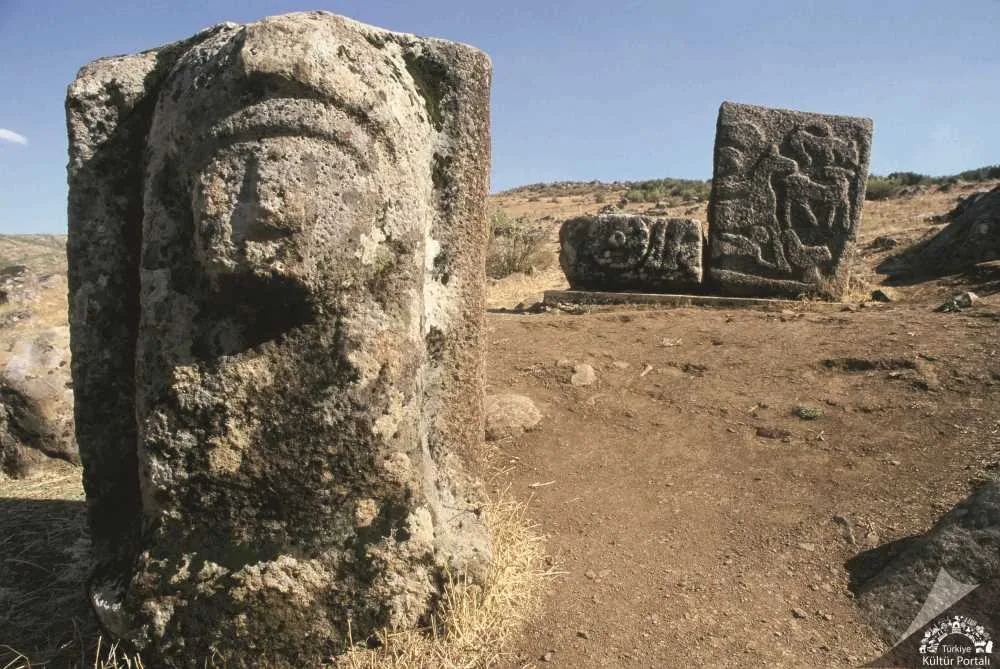
The most striking aspect of Yesemek is the way it lays before our eyes, frozen in time, a sculpture's journey from raw stone to finished work. Because the roughouts on the site are at different stages of completion, researchers can read the workshop's working order almost like a flow chart: first large basalt blocks were broken away from the quarry, then the rough outlines of the figure (a lion's body, the wing line of a sphinx) were carved, and finally the fine details were worked.
Most of the roughouts visible on the slope appear to have been deliberately left unfinished. It is thought that the final touches were applied not here but at the city gates or palaces to which the works were to be sent; this reduced the risk of damage during transport. This production logic makes Yesemek not merely a find-spot but also a technical record of an ancient craft.
Which Figures Were Carved?
The works produced in the workshop reflect the typical monumental repertoire of Hittite and Late Hittite art. The principal types of figures documented on the site are as follows:
- Gate lions: lion sculptures that guarded the entrances of city gates and palaces, some examples of which are winged.
- Sphinxes: hybrid creatures bearing a woman's head on a lion's body.
- Mountain gods: god figures depicted with their arms crossed over the chest.
- Bear/human and hunting-scene reliefs: a bear-human figure together with relief fragments on hunting themes.
- Architectural and other elements: pieces belonging to scenes such as a war chariot, and orthostat blocks (relief-carved base stones) set into the walls of buildings.
The Hittite Period and Its Founding: Suppiluliuma I
The founding of the Yesemek workshop is linked to Suppiluliuma I (reigned roughly 1344–1322 BCE), one of the most powerful rulers of the Hittite Empire — that is, to the 14th century BCE. In this period the Hittites had expanded into northern Syria and seized control of the region; Yesemek too appears to have been opened, as part of this expansion, to meet the empire's need for monumental construction along its southern frontier.
The workshop experienced its truly active phase during the Hittite age (roughly the 14th–13th centuries BCE). After the Hittite Empire broke apart at the end of the Bronze Age, the region's history entered a new phase; but Yesemek's story did not end there.
Location: Gaziantep, İslahiye, Yesemek village. Character: a Hittite / Late Hittite period basalt quarry and open-air sculpture workshop. Area: roughly 100,000 m². Founding: around the 14th century BCE, in the reign of the Hittite King Suppiluliuma I. Active period: the 14th–13th centuries BCE (Hittite) and a revival in the 9th century BCE (Sam'al / Late Hittite). Largest known: the largest known stone-working workshop of the ancient Near East. UNESCO World Heritage Tentative List: 2012 (reference no. 5732).
The Late Hittite Period: The Sam'al / Zincirli Influence
After the collapse of the Hittite Empire, city-states of Late Hittite and Aramaean origin emerged in the region. The Yesemek workshop revived in this period: in particular in the 9th century BCE, during the era of the Kingdom of Sam'al, whose centre was the nearby Zincirli Mound, the workshop became operational once again. The sculptures produced in this phase reflect the level reached by the Late Hittite city-states in art and technology.
The workshop's final abandonment, meanwhile, is associated with the region's coming under Assyrian control in the 8th–7th centuries BCE (sources differ on this closing date). After this date production at Yesemek ceased; hundreds of unfinished roughouts were left on the slope just as they were. The fact that the workshop was founded in the Hittite age and revived in the Late Hittite period makes Yesemek a witness not to a single period but to a long tradition of stone-working spread across roughly five or six centuries.
To trace the marks of the Late Hittite and Aramaean city-states in the region within a broader frame, you can look at nearby settlements such as Tilmen Mound and Sakçagözü; and for the region's general historical fabric, see the History of Gaziantep page.
How Many Sculptures Are There? Discovery and Excavations
The number of roughouts at Yesemek is given differently in different sources; this is because the site has been excavated in different periods, and each excavation has brought new works to light. For this reason it is more accurate to read the figure together with the excavation history rather than as a single definitive number.
One of the researchers who studied the region in the early period was the Austrian anthropologist and archaeologist Felix von Luschan. Systematic excavations, however, began much later. The team led by Prof. Dr. Bahadır Alkım, in excavations carried out between 1957 and 1961, uncovered around 200 sculpture roughouts. Later, in work conducted under the direction of the archaeologist İlhan Temizsoy in the 1990s, the works that had remained underground were also brought to the surface, raising the total to roughly 300 carvings and roughouts.
The number of roughouts across the site as a whole is higher than these early excavations suggest. In the survey and documentation work carried out by the Gaziantep Museum Directorate together with the Gaziantep Metropolitan Municipality, a total of 518 sculpture roughouts and basalt blocks were documented in 2018. This figure rose to 564 in 2021, with the 46 new works found in the rescue excavations begun under the direction of the Gaziantep Museum Directorate and the scientific consultancy of Prof. Dr. Atilla Engin. Since it is thought that there are still other roughouts waiting underground on the slope, the number of works at Yesemek is a "living" figure that grows as excavations proceed.
Today Yesemek is open to visitors as an open-air museum attached to the Directorate of the Gaziantep Archaeology Museum. For the information obtained from the site and the region's other archaeological finds, the Gaziantep Archaeology Museum is a complementary stop; and for the region's Roman-period mosaics, the Zeugma Mosaic Museum stands out.
The Largest Sculpture Workshop of the Ancient World and the UNESCO Tentative List
With its spread of roughly 100,000 square metres, Yesemek is regarded as the largest known stone-working (sculpture) workshop of the ancient Near East. This scale suggests that the site produced not merely for a single local city but for monumental buildings across a wide geography of the region. The extraction and working here of basalt blocks weighing up to ten tonnes gives a striking sense of the era's stone-working and transport skills.
The site's cultural importance has also been recognised at the international level. The "Yesemek Quarry and Sculpture Workshop" was added by Türkiye in 2012 (13 April 2012) to the UNESCO World Heritage Tentative List; its UNESCO reference number is 5732. Being on the Tentative List does not mean the site holds permanent/inscribed World Heritage status; this list is a preliminary inventory of areas evaluated for future formal nomination.
Those who wish to discover the region's ancient heritage as a whole can also reach, from the Ancient Cities category page, other important centres of the Late Hittite world such as Carchemish. As the place where the lions and sphinxes that adorned the gates and palaces of these cities were "born," Yesemek holds a special place on the region's archaeological map.
Frequently Asked Questions
Where is the Yesemek Open-Air Museum?
Yesemek lies south of Yesemek village, in the İslahiye district of Gaziantep province. The site is about 23 kilometres from the centre of İslahiye and roughly 113 kilometres from the centre of Gaziantep, and was established on the western slope of the Karatepe (Aslanlıtepe) rise.
When and by whom was Yesemek founded?
The founding of the workshop is linked to the Hittite King Suppiluliuma I (reigned roughly 1344–1322 BCE), that is, to the 14th century BCE. It experienced its truly active phase during the Hittite age (roughly the 14th–13th centuries BCE) and later revived in the Late Hittite period.
Why is Yesemek important?
With its area of roughly 100,000 square metres, Yesemek is regarded as the largest known stone-working (sculpture) workshop of the ancient Near East. Because its hundreds of unfinished roughouts lay out, step by step, the production stages of a sculpture from raw stone to finished work, the site is a unique technical record of an ancient craft.
What sculptures are there at Yesemek?
On the site there are gate lions characteristic of Hittite and Late Hittite art (some examples winged), sphinxes with a lion's body and a woman's head, mountain gods with crossed arms, a bear-human figure together with hunting-scene reliefs, and orthostat blocks. Most of the works are in the form of deliberately unfinished roughouts.
How many sculpture roughouts are there at Yesemek?
The number varies according to the sources. Bahadır Alkım's excavations of 1957–1961 uncovered around 200 roughouts; with the work conducted under the direction of İlhan Temizsoy in the 1990s the total reached roughly 300. In the documentation work of the Gaziantep Museum Directorate and the Metropolitan Municipality, 518 roughouts and basalt blocks were documented in 2018; with the 46 new works found in the 2021 excavations this figure rose to 564. Since there are still roughouts underground, the number is thought to grow with excavations.
To which periods does Yesemek belong, and what is its relation to Sam'al?
The workshop was founded and operated in the Hittite age (the 14th–13th centuries BCE); it revived in the Late Hittite period, in particular in the 9th century BCE, during the time of the Kingdom of Sam'al, whose centre was the nearby Zincirli Mound. The workshop's final abandonment is associated with the region's coming under Assyrian control in the 8th–7th centuries BCE; the closing date varies according to the sources.