Carchemish (Karkamış in Turkish) is an ancient city on the western bank of the Euphrates River, on the present-day Türkiye–Syria border, in the Karkamış district of Gaziantep. During the age of the Hittite Empire it was an important centre governed by a prince of the royal dynasty; after the collapse of the empire it became one of the most powerful city-kingdoms of the Late Hittite (Neo-Hittite) period. Controlling a strategic crossing of the Euphrates, the city retained its independence until 717 BCE, when it was captured by the Assyrian king Sargon II and turned into an Assyrian province.
Today Carchemish is known both as an archaeological site on Türkiye's southeastern border and as one of the richest centres of Late Hittite art and hieroglyphic Luwian inscriptions. This page deals with the city itself — its position in the Hittite age, its Late Hittite kings, the Assyrian annexation and the modern history of its excavation.
Location and Name
Carchemish stands at a geographical crossroads between Northern Syria and Northern Mesopotamia, south of the Taurus Mountains, at a shallow crossing of the Euphrates. The site is today split in two by the Türkiye–Syria border: a significant part of the city lies on Turkish soil, within the Karkamış district of Gaziantep, while the rest is on the Syrian side, south of the border. The city is located about 60 kilometres southeast of the centre of Gaziantep.
This location shaped the city's entire history. Controlling one of the few points at which the Euphrates could be crossed easily, Carchemish became a junction where the north–south and east–west trade routes met. The same strategic logic appears centuries later at Zeugma Ancient City, founded at another crossing of the Euphrates; the river is a shared axis binding the region's ancient cities together.
Carchemish During the Hittite Empire
The rise of Carchemish goes back to the Bronze Age and the era of the Hittite Empire. When the great Hittite king Šuppiluliuma I added the region to the empire in the 14th century BCE, he tied the city directly to his own dynasty: his son Piyassili (also known as Šarri-Kušuh) was appointed king of Carchemish (the appointment is dated to around 1315 BCE). Carchemish thus became a provincial capital, ruled by a king of the Hittite dynasty and safeguarding the empire's interests in Syria.
This position gave the city far greater weight than that of an ordinary vassal city. The kings of Carchemish ran what amounted to a viceroyalty (a deputy kingship) on the southern flank of the Hittite world and held authority over the other cities of the region. It was precisely because of this deep-rooted standing that Carchemish was able to survive even after the fall of the empire.
The Late Hittite Kingdom: A Legacy Endures
The collapse of the Hittite state around 1180 BCE shattered the central order across most of Anatolia. In Southeastern Anatolia and Northern Syria, however, a series of Late Hittite (Neo-Hittite) city-kingdoms emerged that carried on Hittite culture; these were the heirs of the Hittite tradition, keeping the Luwian language and hieroglyphic script alive. Among these city-kingdoms, Carchemish stood out as one of the most important administrative centres surviving from the Hittite state.
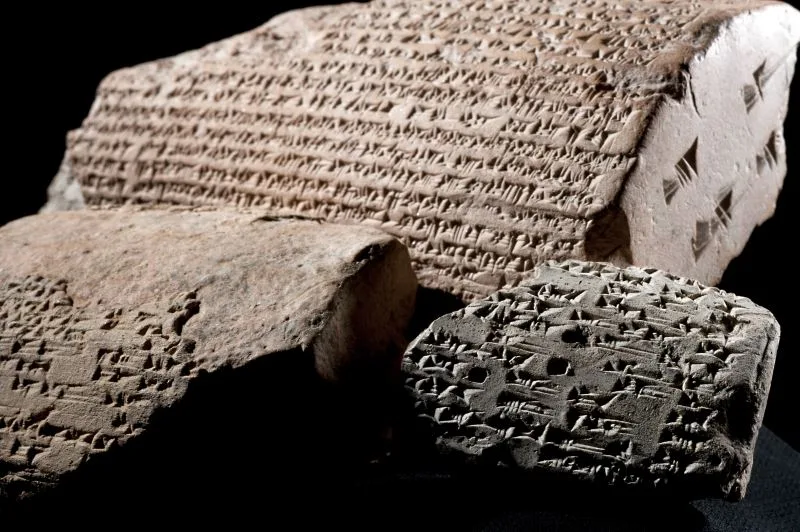
The city's history in the Late Hittite period is illuminated largely thanks to the hieroglyphic Luwian inscriptions commissioned by the kings themselves. These inscriptions carved the rulers' building activities, military successes and political events into stone and have brought them down to us.
The Kings: Katuwa, Yariri and Kamani
Among the known Late Hittite rulers of Carchemish, three names stand out in particular:
- Katuwa — In his inscriptions he introduces himself as "Katuwa, Country-Lord of Carchemish and son of Suhi." His texts speak of an internal revolt and the deliverance of the city, of conquests and the construction of certain buildings; his reign is generally dated to the 9th century BCE (roughly around 880 BCE).
- Yariri — Because the true heir to the throne, Kamani, was still a child, Yariri acted as his regent (guardian). Yariri's inscription describes the building works he carried out in the city and his personal accomplishments; it is dated to around the beginning of the 8th century BCE.
- Kamani — the young prince for whom Yariri served as regent; he later became ruler of the city.
These three names — Katuwa, Yariri and Kamani — show that Carchemish was not merely a fortress but a genuine kingdom with a dynasty spanning generations and a historiography of its own.
The 'Long Wall' and the Late Hittite Reliefs
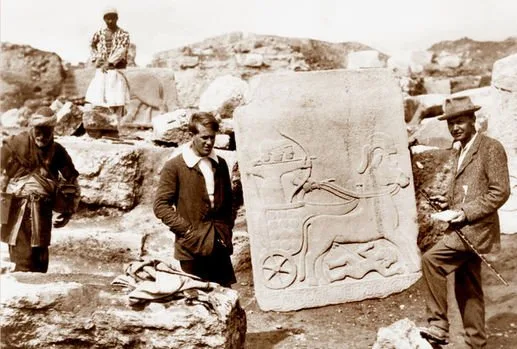
Foremost among the features that made Carchemish famous in the world of archaeology are the monumental series of reliefs that adorned the city's ceremonial area. The best known of these is the series of carved reliefs (orthostats) worked onto basalt and limestone blocks, which the excavators named the "Long Wall of Sculpture." Set out block after block, these depict gods and goddesses, warriors, ceremonial scenes and mythological beings.
These reliefs are among the finest examples representing the characteristic style of Late Hittite art — a visual language in which Hittite, Assyrian and local Syrian traditions blend. The lion and sphinx figures adorning the city's gates and walls were part of this programme that rendered royal ceremonies and religious beliefs in stone. A similar relief tradition can also be traced at other Late Hittite centres in the region, such as Sakçagözü and the Yesemek Open-Air Museum, famous for its sculpture workshop.
The Assyrian Annexation: 717 BCE and Sargon II
The era of Carchemish as an independent kingdom came to an end at the close of the 8th century BCE with the rise of the Assyrian Empire. In 717 BCE, the Assyrian king Sargon II captured the city. According to Assyrian sources, the city was at that time headed by King Pisiri, the last ruler of the dynasty. Sargon accused Pisiri of seeking an alliance against Assyria and took this as the pretext for his campaign.
After the conquest, Carchemish was turned into an Assyrian province; the city thus lost the independent political identity it had preserved for centuries. Sargon II's annexation in 717 BCE was a sign that the end was approaching not only for one city but for the entire age of the Late Hittite city-kingdoms.
The name Carchemish steps onto the stage of history once more, ages later. In 605 BCE, near the city, the Battle of Carchemish was fought between the Babylonian army (under King Nebuchadnezzar II) and the army of the Egyptian Pharaoh Necho II. This clash is regarded as one of the turning points that tipped the balance of power in the Near East in Babylon's favour, and it is also mentioned in the biblical texts.
History of Excavation: From the British Museum to Turkish–Italian Teams
The modern archaeological story of Carchemish begins in the 19th century. Between 1878 and 1881, the first soundings were carried out on behalf of the British Museum by Consul Patrick Henderson.
The truly major excavations, however, took place between 1911 and 1914, again on behalf of the British Museum and under the direction of D. G. Hogarth. Names that would later become famous worked side by side in these excavations: in 1911, Hogarth, R. Campbell Thompson and the young T. E. Lawrence ("Lawrence of Arabia"); from 1912 to 1914, C. Leonard Woolley together with T. E. Lawrence directed the site. The excavations were interrupted in 1914 by the outbreak of the First World War; a final season was conducted in 1920 by Leonard Woolley and P. L. O. Guy.
These excavations brought to light important remains from the Assyrian and Late Hittite periods — defensive structures, temples, palaces, and numerous basalt statues and reliefs bearing hieroglyphic Luwian inscriptions.
Present-Day Excavations: Nicolò Marchetti
After a long interval, systematic excavations resumed at Carchemish. Since 2011, the Carchemish Mound Excavations have been carried out by a joint Turkish–Italian team under the leadership of Prof. Dr. Nicolò Marchetti of the University of Bologna. With contributions from Istanbul University and the University of Gaziantep on the Turkish side, this work investigates the part of the city that lies within Türkiye's borders; arrangements aimed at protecting sensitive structures such as the Late Hittite palace area are also made within this scope.
Where Are the Finds Today?
The principal movable finds from Carchemish — especially the reliefs and statues bearing hieroglyphic Luwian inscriptions — are held in two great collections. A significant portion of the finds unearthed during the British Museum excavations went to the British Museum in London; the works that remained in Türkiye and were brought there are held at the Museum of Anatolian Civilizations in Ankara. The Museum of Anatolian Civilizations is one of the places where Late Hittite reliefs are most comprehensively displayed.
For those who wish to get to know the region's archaeological heritage more closely, the museums in Gaziantep are complementary stops: for the city's ancient-period finds, the Gaziantep Archaeology Museum stands out, as does the Zeugma Mosaic Museum with its world-famous mosaic collection. To follow, in a broader frame, the place of the Hittite and Late Hittite age to which Carchemish belongs within the region's history, see the History of Gaziantep page; for the region's other ancient settlements, you can look at the Ancient Cities category along with the Tilmen Mound and Duluk (Doliche) Ancient City pages.
Frequently Asked Questions
Where is Carchemish Ancient City located?
Carchemish lies on the western bank of the Euphrates River, on the present-day Türkiye–Syria border. A significant part of the city lies on Turkish soil, within the Karkamış district of Gaziantep, while the rest is on the Syrian side, south of the border. The site is about 60 kilometres southeast of the centre of Gaziantep.
Why was Carchemish an important city?
Carchemish was a strategic junction controlling one of the few points at which the Euphrates could be crossed easily. During the Hittite Empire it was an important centre governed by a prince of the royal dynasty, and after the collapse of the empire it became one of the most powerful of the Late Hittite (Neo-Hittite) city-kingdoms.
What does the Late Hittite (Neo-Hittite) kingdom mean?
After the collapse of the Hittite state around 1180 BCE, a series of city-kingdoms emerged in Southeastern Anatolia and Northern Syria that carried on Hittite culture, the Luwian language and the hieroglyphic script. These are called the Late Hittite or Neo-Hittite kingdoms; Carchemish is one of the most important of them.
Who captured Carchemish and when?
The city was captured in 717 BCE by the Assyrian king Sargon II. According to Assyrian sources, the city's ruler at that time was Pisiri, the last king of the dynasty. After the conquest, Carchemish was turned into an Assyrian province and lost its independent political identity.
Who excavated Carchemish?
The first soundings were carried out between 1878 and 1881 on behalf of the British Museum by Consul Patrick Henderson. The major excavations took place between 1911 and 1914 under the direction of D. G. Hogarth, with the participation of figures such as Leonard Woolley and T. E. Lawrence ("Lawrence of Arabia"). Since 2011, a Turkish–Italian team led by Prof. Dr. Nicolò Marchetti has continued the excavations.
Where are the finds from Carchemish displayed?
The reliefs and statues bearing hieroglyphic Luwian inscriptions are held in two principal places: the British Museum in London and the Museum of Anatolian Civilizations in Ankara. A significant portion of the finds unearthed during the British Museum excavations went to London, while those that remained in Türkiye are held at the museum in Ankara.