Gaziantep's ancient heritage won't fit into a single period or a single culture. Within the borders of one province, a three-thousand-year-old Hittite sculpture workshop, a frontier city that left its mark on the Roman age, and a sacred hill named after a god all stand side by side. This article focuses on the tour's three main stops — Zeugma on the banks of the Euphrates, Doliche just north of the city, and Yesemek in İslahiye — telling you the period of each, why it matters, and what you'll actually see on site.
An honest warning right up front: these three stops are not close to one another. Zeugma lies to the east of the city, on the Euphrates in the direction of Nizip; Doliche sits just north of the city centre; and Yesemek is much farther away, in the İslahiye district to the southwest. In other words, cramming all three into a single day is not realistic. The most enjoyable plan is to split the stops across separate half or full days — for example, one day for Doliche (a half day is enough, since it's so close to the city), one day for Zeugma and the mosaic museum, and a separate day to set out for Yesemek.
If you'd like to see the whole region at a glance before you start exploring, the Ancient Cities category page and the general Culture Atlas make a good starting point.
Zeugma: The Roman Frontier City Astride the Euphrates
The tour's best-known stop is Zeugma, which stretches along the banks of the Euphrates in the village of Belkıs, in Gaziantep's Nizip district. The city grew out of a twin settlement founded on both banks of the river around 300 BC by Seleucus I Nicator, one of Alexander the Great's successors and the founder of the Seleucid Empire. The city on the western bank was called Seleucia, and the one on the eastern bank Apamea, after Seleucus's wife Apama. The name "Zeugma" comes from the Greek for "bridge, crossing, bridge of boats" and points to the very thing that shaped the city's entire fate: the permanent crossing over the Euphrates.
The Ancient City of Zeugma
In the Roman era, Zeugma shone as a frontier and garrison city guarding the main river crossing; the Legio IV Scythica legion was stationed here for a long time, and the city became an important junction on the trade route running east from Antioch. Its glorious age ended abruptly in the mid-3rd century with the attack of the Sasanian ruler Shapur I. Because findings show that the population largely emptied the city before the sacking, Zeugma is often compared to Pompeii for the way it froze everyday life in a single moment. In the year 2000, the waters of the Birecik Dam submerged a significant part of the city; the rescue excavations of this period drew worldwide attention. For a detailed history of the city's founding, destruction and rediscovery, take a look at the Ancient City of Zeugma page.
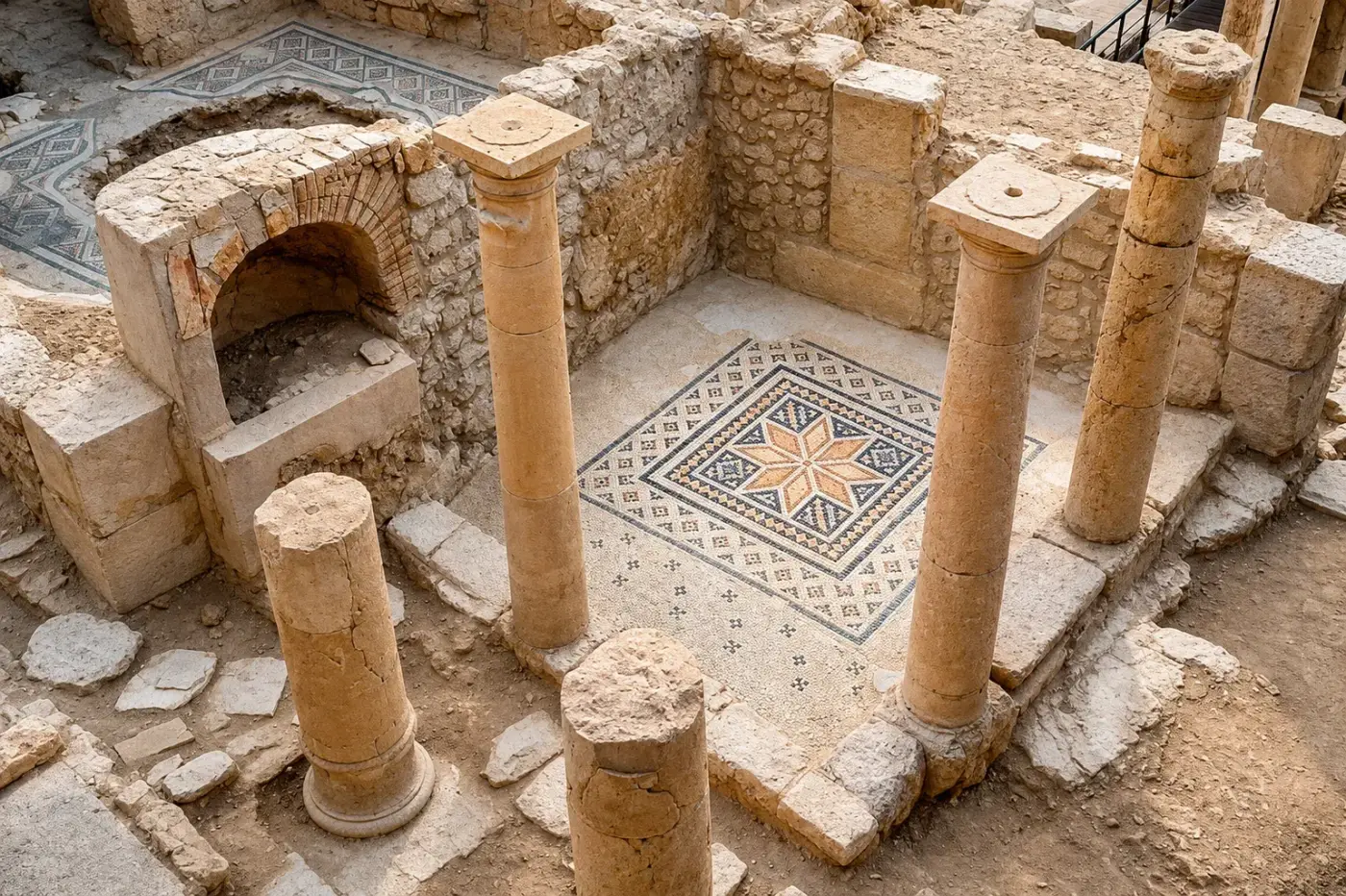
On site today you can see the acropolis hill rising above the dam waters, Roman villas preserved on the slope (the Houses of Dionysos and Danae, for instance), and fragments of fresco and mosaic — some preserved in situ — that you can view from metal walkways. The site is about an hour from Gaziantep's city centre, so it's worth planning your Zeugma day at a relaxed pace.
Where Can You See the Gypsy Girl?
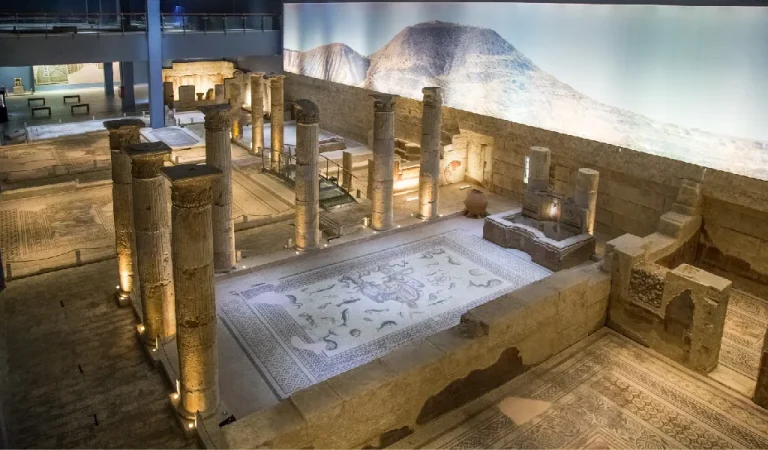
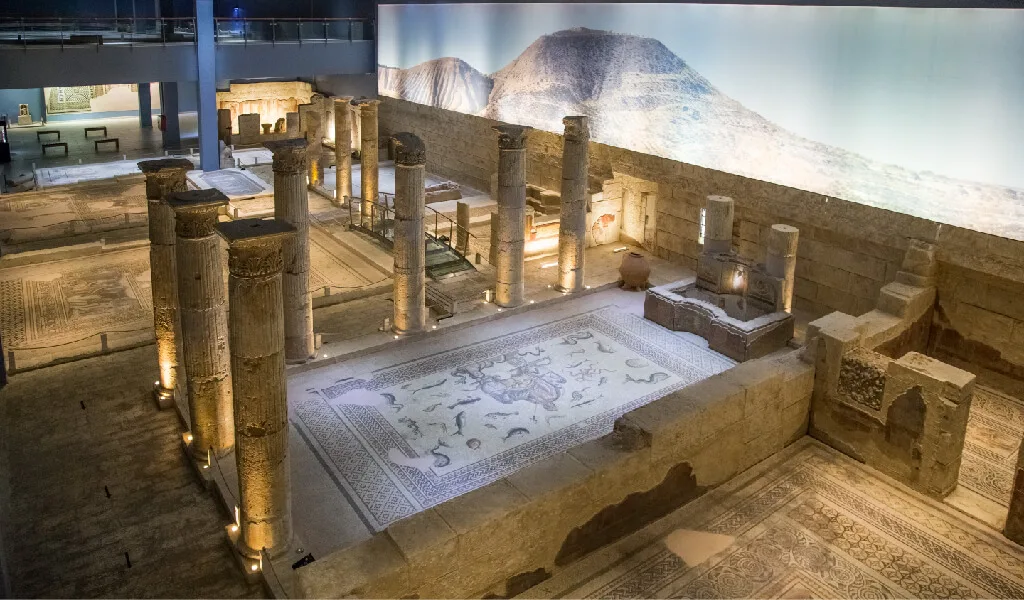
Let's clear up a misconception that catches many tourists out from the start: Zeugma's famous floor mosaics — above all the fragment known as the "Gypsy Girl" — are not on the site of the ancient city. These masterpieces were lifted from their original locations during the rescue excavations and moved to the Zeugma Mosaic Museum in the centre of Gaziantep. So the open-air site is where they were found, while the museum is where they are displayed; the two complement each other. For anyone curious about the Gypsy Girl's story and the details of the mosaics, our Zeugma guide: the Gypsy Girl article covers this subject separately.
Doliche (Dülük): The Hill Where a God Was Born
The second stop is the closest to the city centre: Dülük, known in antiquity as Doliche. It lies about 10 kilometres north of Gaziantep's city centre, in the Şehitkâmil district, around Keber Hill near the village of Dülük. Being so close to the city makes Doliche ideal for a relaxed half-day trip.
The Ancient City of Doliche
Doliche's real fame comes not from its portable finds but from a belief it gave rise to. A local god whose origins reach back to a storm and fertility deity of the Hittite-Hurrian tradition was identified in the Roman era with the chief god Jupiter and took the name Jupiter Dolichenus, meaning "Jupiter of Doliche." From the early 2nd century AD to the mid-3rd, this cult spread — especially through the Roman army — from the Danube and the Rhine to Britain, North Africa and Rome itself. A frontier town's local god turning into one of a whole empire's shared cults is among the most striking examples in the history of ancient religion. For the city's history and the story of its excavation, see the Ancient City of Doliche page.
The Rock-Cut Temple of Mithras
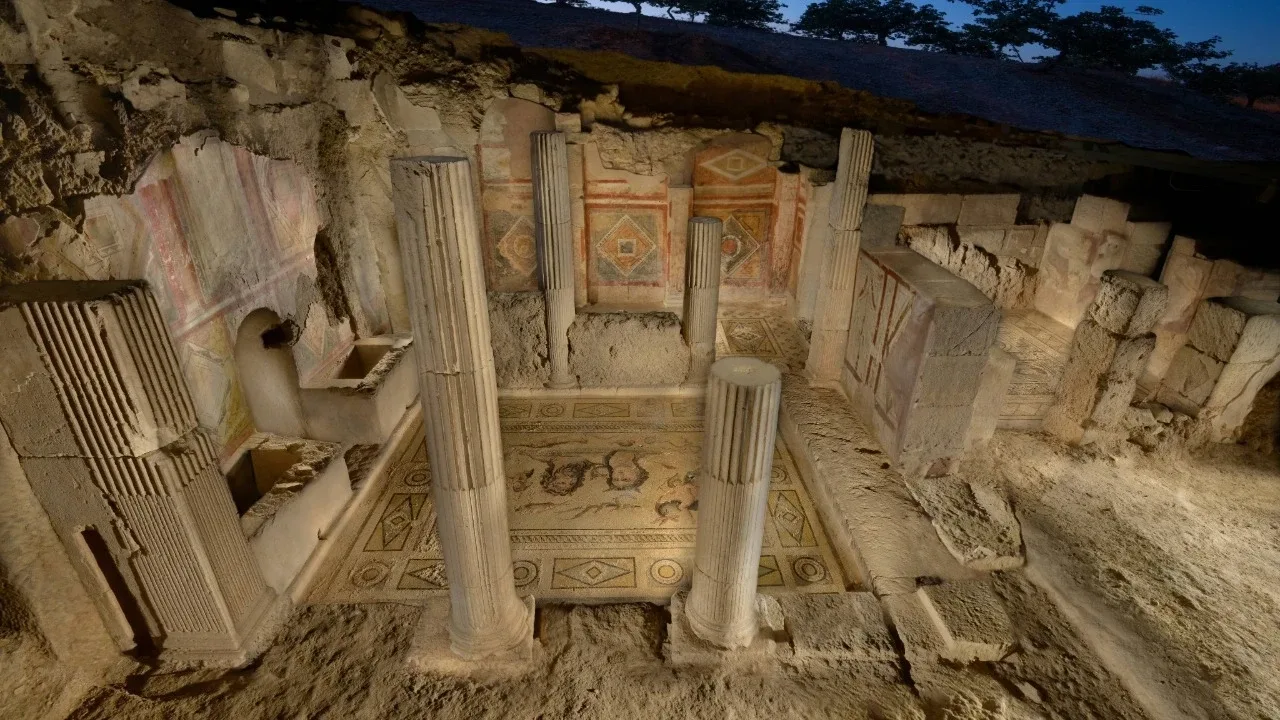
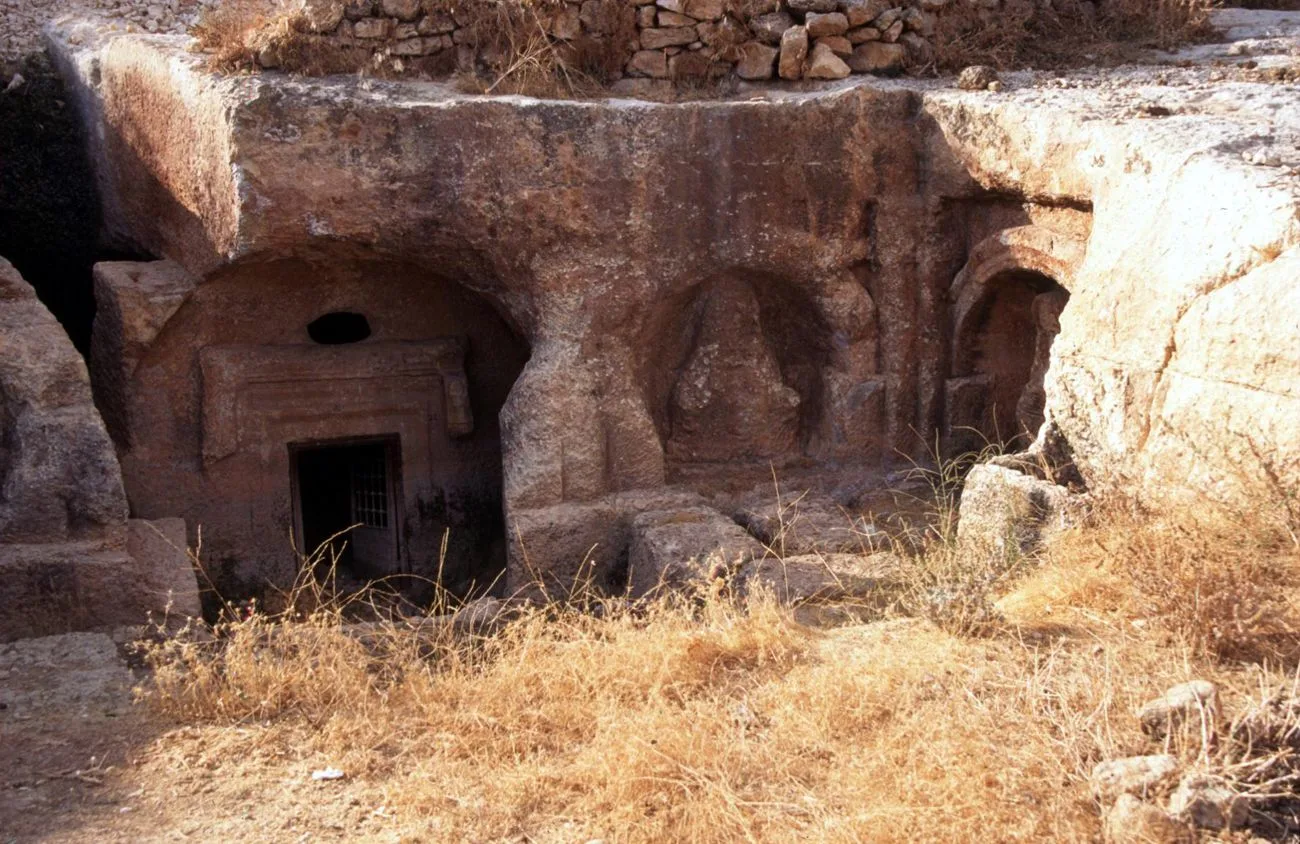
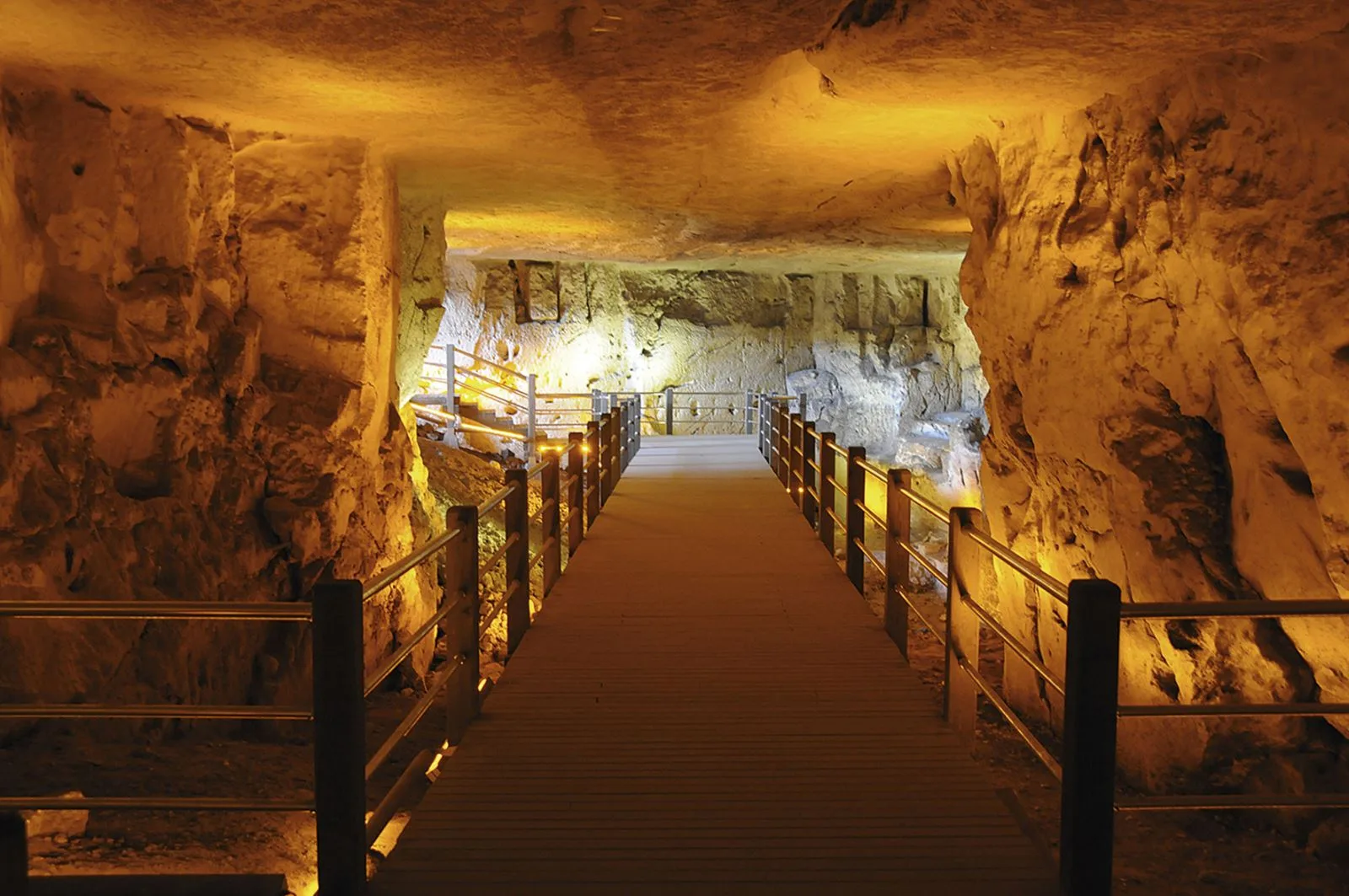
Doliche's second great centre of worship is a Temple of Mithras (Mithraeum) carved beneath Keber Hill into an abandoned underground quarry. The cult of Mithras was a mystery religion popular in the 2nd and 3rd centuries AD, again especially among the Roman army; its temples were usually dark, cave-like spaces meant to evoke the cave scene at the heart of its mythology. The structure at Doliche is architecturally unusual because it was carved into the natural rock and the void of a former quarry, and it is described as one of the largest known underground temples of Mithras. Today the Dülük area, with both these archaeological sites and the Dülük Baba forest and picnic grounds, is a place where nature and history meet.
Yesemek: The Ancient World's Largest Sculpture Workshop
The tour's farthest and perhaps most astonishing stop: the Yesemek Open-Air Museum. It spreads across a hillside in the village of Yesemek, in the İslahiye district to the southwest of Gaziantep. The site is about 23 kilometres from the centre of İslahiye and roughly 113 kilometres from Gaziantep's city centre; so it's best to set aside a separate day to get here. The road is long, but the destination is more than worth the effort.
The Yesemek Open-Air Museum
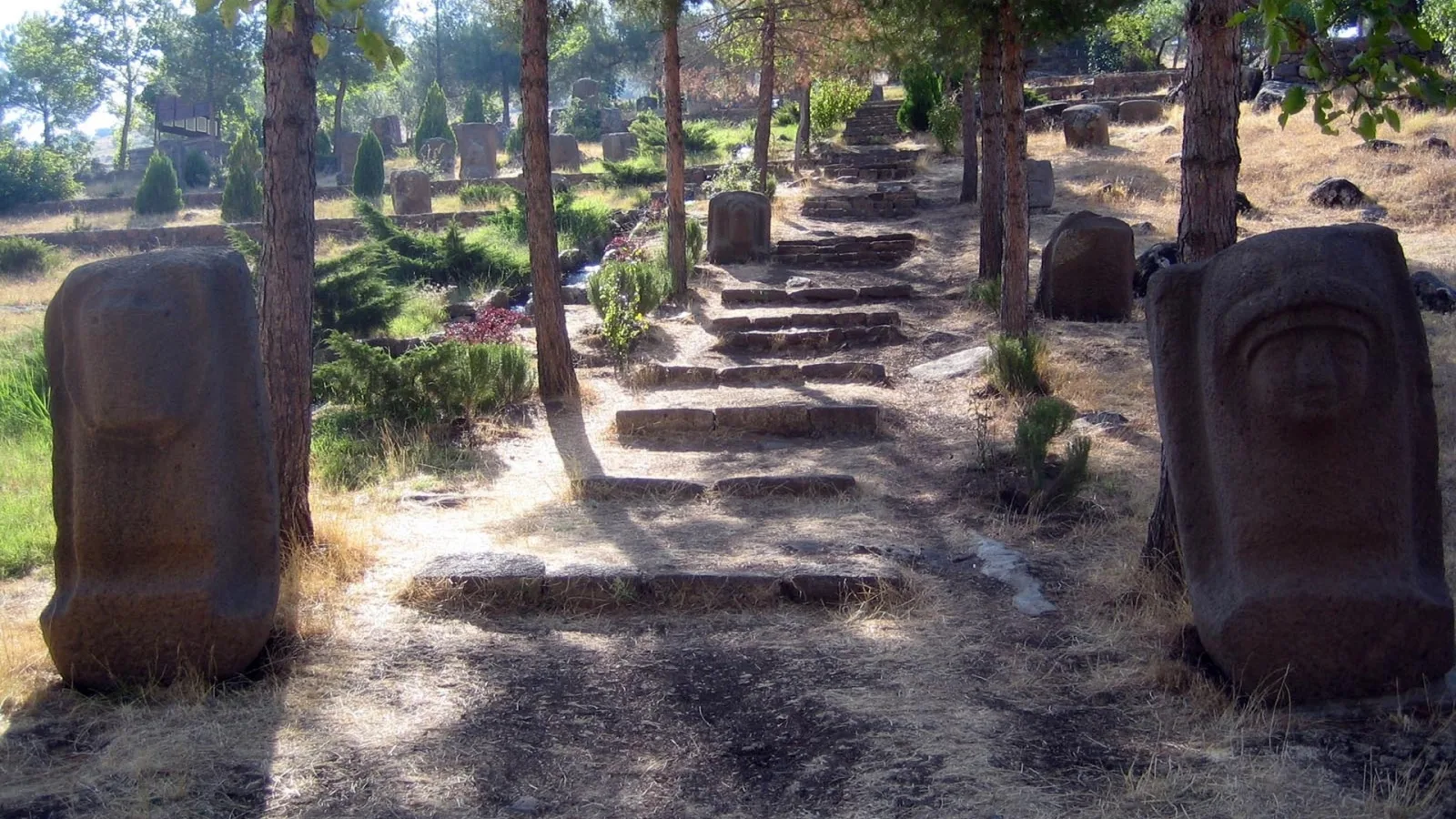
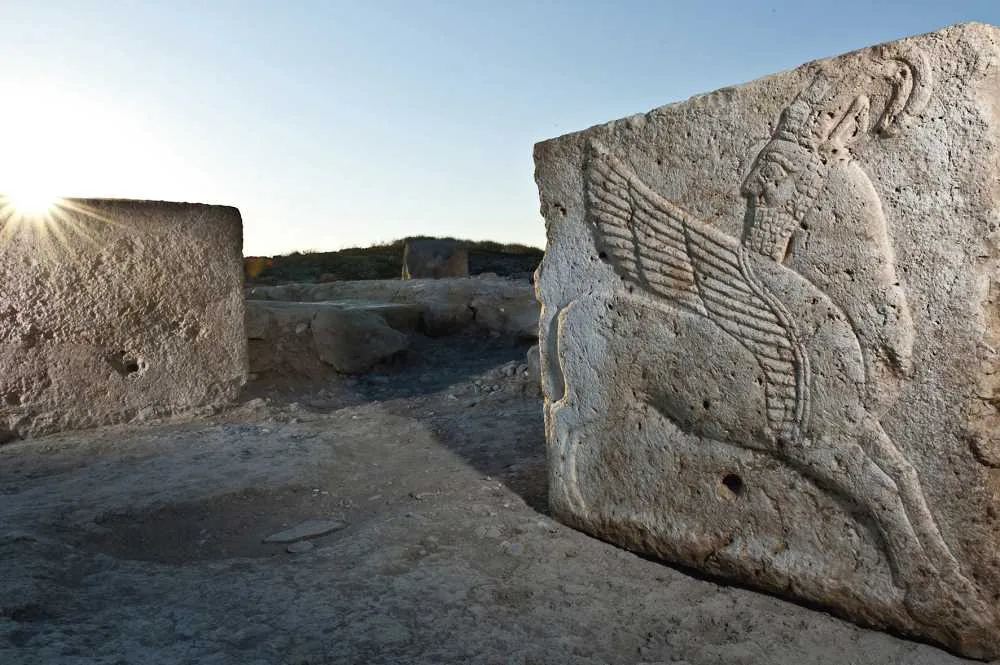
This was the region's largest basalt quarry and open-air sculpture workshop in the Hittite and Late Hittite periods. With an area of around 100,000 square metres and hundreds of unfinished sculpture roughs, it is recognised as the largest known stone-carving workshop of the ancient Near East. The workshop's founding is linked to the reign of Šuppiluliuma I, one of the most powerful rulers of the Hittite Empire — that is, to roughly the 14th century BC. After the collapse of the Hittite Empire the workshop fell silent for a time; but in the 9th century BC it came back to life under the Kingdom of Sam'al, whose centre was the nearby Zincirli Höyük. For a more detailed history of the site, take a look at the Yesemek Open-Air Museum page.
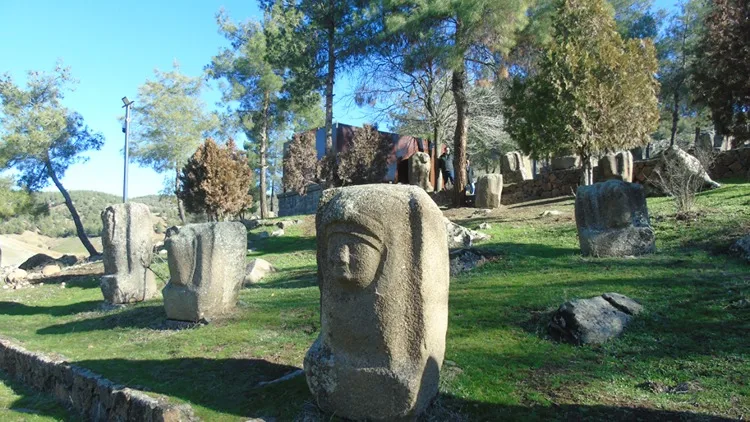
What makes Yesemek unique is that it is not a finished monument city but a "production site." Gate lions, sphinxes and mountain gods stand half-finished on the slope, just as they were the moment the workers drew their hands away more than three thousand years ago. Because the roughs on site are at different stages of completion, you can read a sculpture's journey from raw basalt to finished work step by step: first the block was broken away from the quarry, then the figure's rough outlines were carved, and the final touches were most often made at the city gate or palace where the piece was destined to go. In this respect, Yesemek is not merely a find site but a living technical record of an ancient craft.
For Those Who Want to Extend the Route
These three stops form the backbone of the tour; but the region's ancient map is far wider. For those who want to trace the Late Hittite world, there are a few more stops leading to the cities once adorned with the lions and sphinxes carved at Yesemek.
The Ancient City of Carchemish stands out as one of the most important centres of the Late Hittite world. For those curious about Bronze and Iron Age settlements, Tilmen Höyük and Sakçagözü are also stops that round out the region's layered past. You can see all of these settlements together on the Ancient Cities page.
If, alongside the ancient cities, you'd also like to visit Gaziantep's museums, our Gaziantep museum route article — where we've arranged the city centre's dozens of museums in a sensible order — will make a good travelling companion. And for the region's general historical fabric, you can browse the Culture Atlas.
Frequently Asked Questions
Can I visit Zeugma, Doliche and Yesemek in a single day?
In practice it's difficult. The three stops are far apart and in different directions: Zeugma is east of the city near Nizip, Doliche is just to the north, and Yesemek is in İslahiye to the southwest. The most enjoyable plan is to split the stops across separate half or full days; while a half day is enough for Doliche, which is very close to the city, it's more comfortable to set aside separate days for Zeugma and especially Yesemek.
Will I see Zeugma's famous mosaics at the ancient city?
No. Zeugma's floor mosaics — including the "Gypsy Girl" — are displayed not at the ancient city site but at the Zeugma Mosaic Museum in the centre of Gaziantep. The open-air area is where they were found; the masterpieces were lifted out during rescue excavations and moved to the museum. Visiting the two together is the best approach.
Why is Doliche (Dülük) important?
Doliche is important because it is the birthplace of the god it is named after, Jupiter Dolichenus. Rooted in a local storm god, this belief spread to every corner of the empire in the Roman era, especially through the army. Beneath Keber Hill there is also one of the largest known underground temples of Mithras, carved into the rock.
Why is Yesemek called "the ancient world's largest sculpture workshop"?
With an area of around 100,000 square metres, Yesemek is regarded as the largest known stone-carving workshop of the ancient Near East. The site is unique because the hundreds of unfinished basalt sculpture roughs on the slope reveal, step by step, every stage of production a sculpture went through on its way from raw stone to finished work.
To which periods does Yesemek belong?
The workshop's founding is linked to the reign of the Hittite king Šuppiluliuma I, that is, to roughly the 14th century BC. It saw its main active period in the Hittite age (around the 14th–13th centuries BC) and later revived in the 9th century BC under the Kingdom of Sam'al, whose centre was the nearby Zincirli Höyük.
Which other ancient cities can I add to the route?
For those who want to explore the Late Hittite world in more depth, Carchemish stands out. Alongside it, Tilmen Höyük and Sakçagözü are stops that round out the region's Bronze and Iron Age layers. You can review them all together on the Ancient Cities category page.