Gaziantep is a generous city for a photographer: the castle silhouette on its hill, the centuries-old gaze of a mosaic, the golden shimmer of copper, weathered stone streets and the greenish waters of the Euphrates. But a good frame emerges not just in the right place — it emerges at the right hour. In this guide we've turned the city's six most iconic stops into a photogenic route, with clear answers for each one to the questions of when to go, where to shoot from, and how. Our aim is that whether you pull out your phone or arrive with a professional camera, you leave Gaziantep with frames that are genuinely iconic. Follow the light; the rest is waiting for you out in the streets.
The Language of Light: What to Know Before You Shoot Gaziantep
Gaziantep's architecture is built largely of warm yellow limestone — the city's famous "keymıh" stone (a soft, honey-toned local building stone). This stone all but drinks in the low, warm light of the day's first and last hours, while under the midday sun it turns hard and washed-out. So if you plan to shoot the historic fabric, the golden hour — roughly the hour after sunrise and the hour before sunset — is your strongest ally. The streets take on long shadows, warm tones and soft transitions.
Interiors, bazaars and museums, by contrast, are best scheduled for the middle of the day, when light is at its most abundant. That way you're indoors while the sun beats down hard outside, and out among the silhouettes and streets during the soft light of morning and evening. The route below is built on exactly this logic: spend the morning at the castle and in the historic center, midday in the bazaar and museum, and the last light along the banks of the Euphrates.
1. The Gaziantep Castle Silhouette — The City's Signature Frame
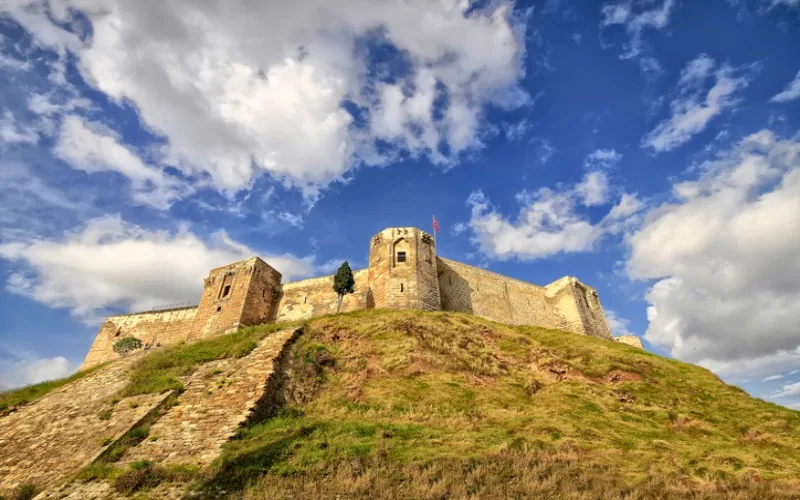
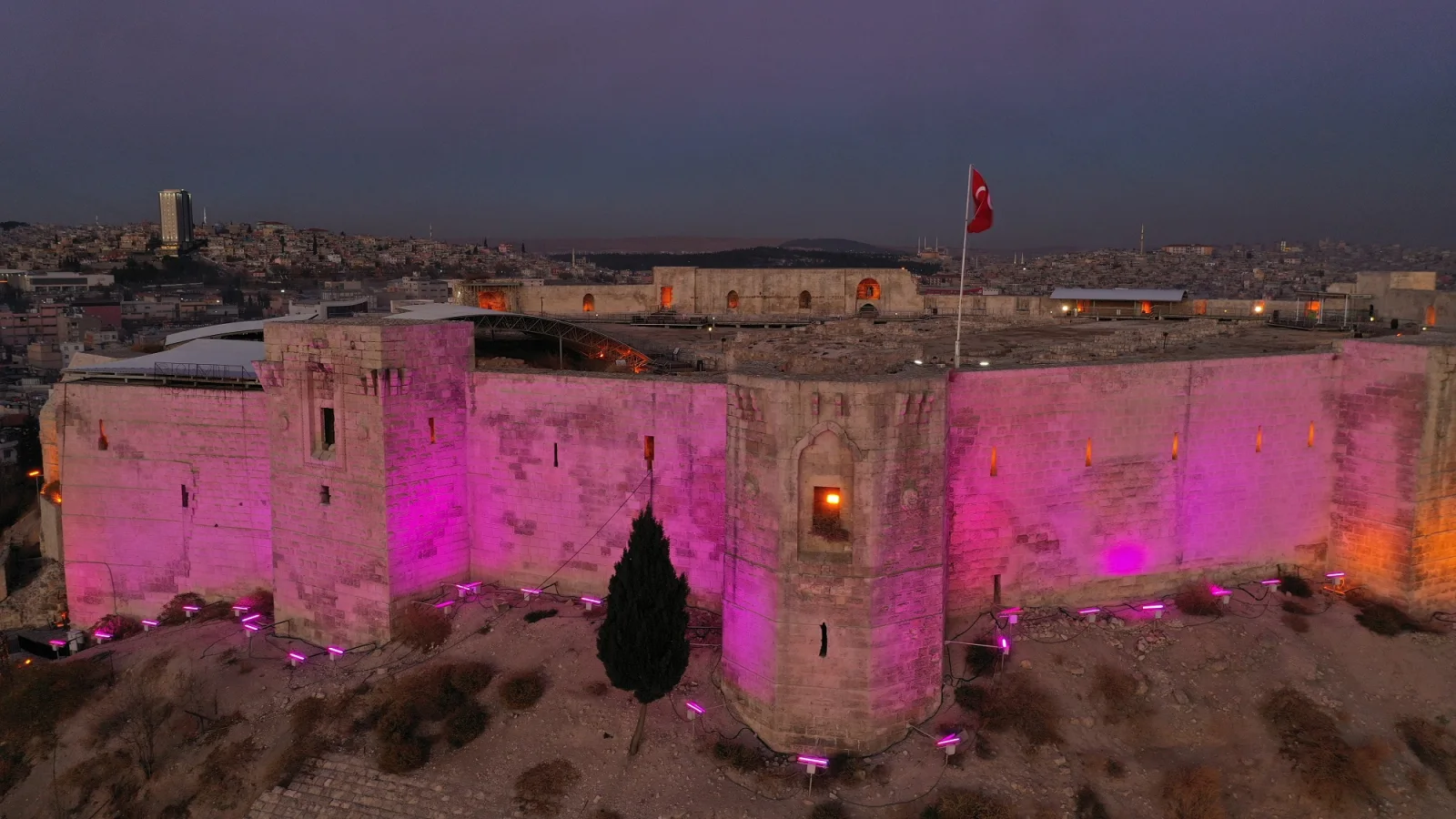
The natural start of the route is the castle, rising on top of a mound in the city center. With origins reaching back to the Roman period and its present circular, walled-and-bastioned form dating to the 6th century AD under the Eastern Roman emperor Justinian I, it is Gaziantep's undisputed signature frame. Before you climb to the top, don't forget to shoot the castle from below: catching the stone walls that lean into the green slope with a wide angle from the surrounding square gives you that classic "castle on the hill" silhouette.
When: Early morning captures the clean texture of the walls before the crowds; the most dramatic frames come near sunset, in the minutes when the stones turn orange. A cloudy sky makes for a far stronger backdrop than flat blue. How: To emphasize the curve of the walls, shoot from a low point, leaving room for the sky; once you're at the top, frame the city view between the bastions. For the castle's layers of history, take a look at our Gaziantep Castle page.
2. The Gypsy Girl's Gaze — Zeugma Mosaic Museum
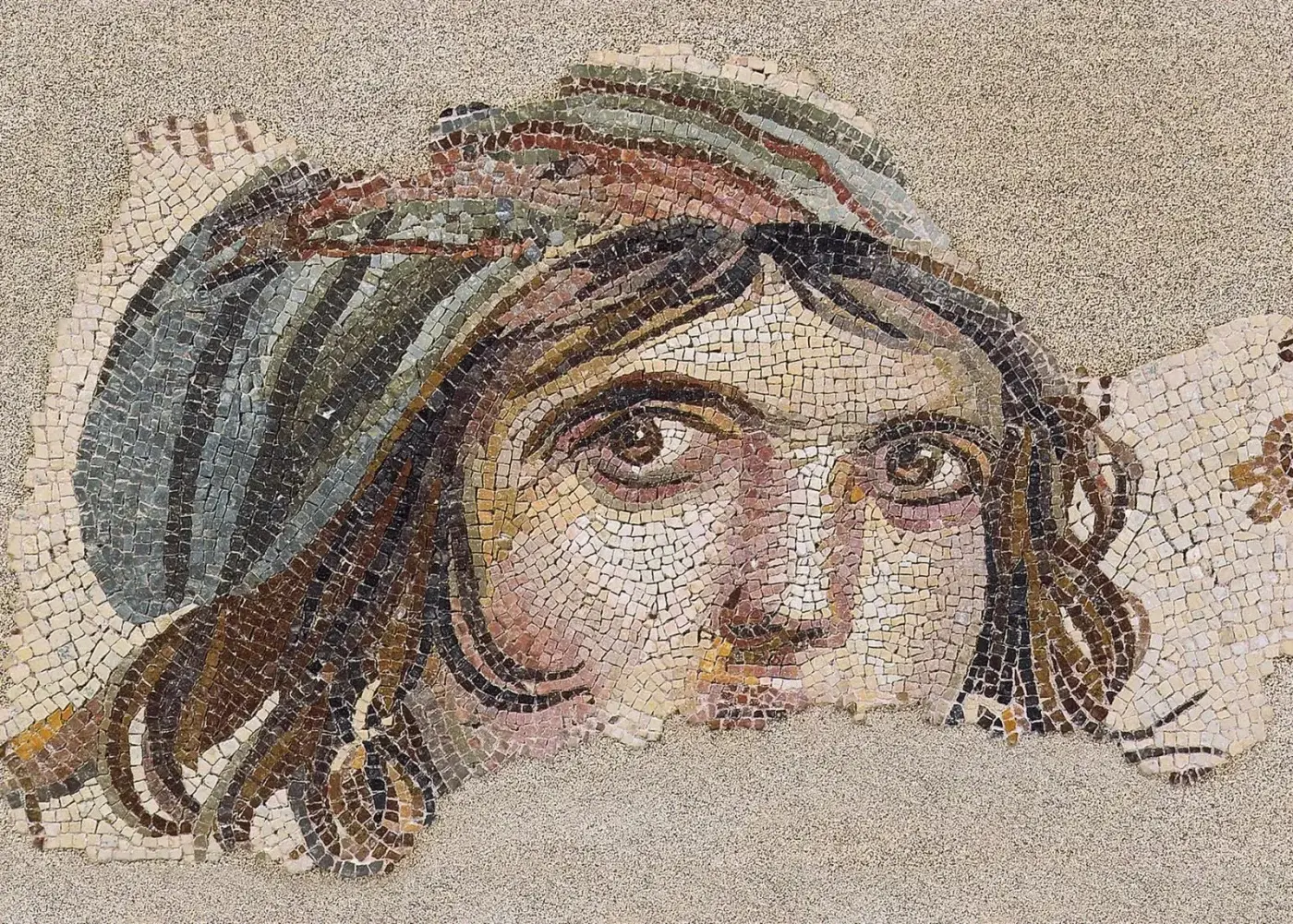
The city's best-known face is, without doubt, the mosaic known as the "Gypsy Girl." Its identity is still debated today — some researchers read it as a Maenad from the retinue of Dionysus, others as a young woman — but this mesmerizing face is the crowning jewel of the Zeugma Mosaic Museum. Because it was made in the "three-quarter gaze" technique of the Hellenistic painting tradition, its eyes seem to follow you from whatever angle you look; that alone makes photographing it an experience in itself.
When: Since the museum is an indoor space, it is independent of outdoor conditions; placing it at midday, when the sun is harsh outside, balances the route. How: The mosaics are displayed under special lighting; a flash both causes reflections and is prohibited in most places, so switch it off and hold your phone or camera steady to let the light in. The most effective frame is a close-up shot head-on, from the angle where the eyes land dead center, once the crowd has thinned. If you're curious about the mosaic's discovery story and the museum's other works, our Zeugma Mosaic Museum page and our Zeugma guide article are just the thing.
For those who prefer to tour the museums not one by one but as a route, our Gaziantep museum route guide shows how to visit nine museums in a single day in a photogenic sequence.
3. The Shimmer of Copper — The Coppersmiths' Bazaar
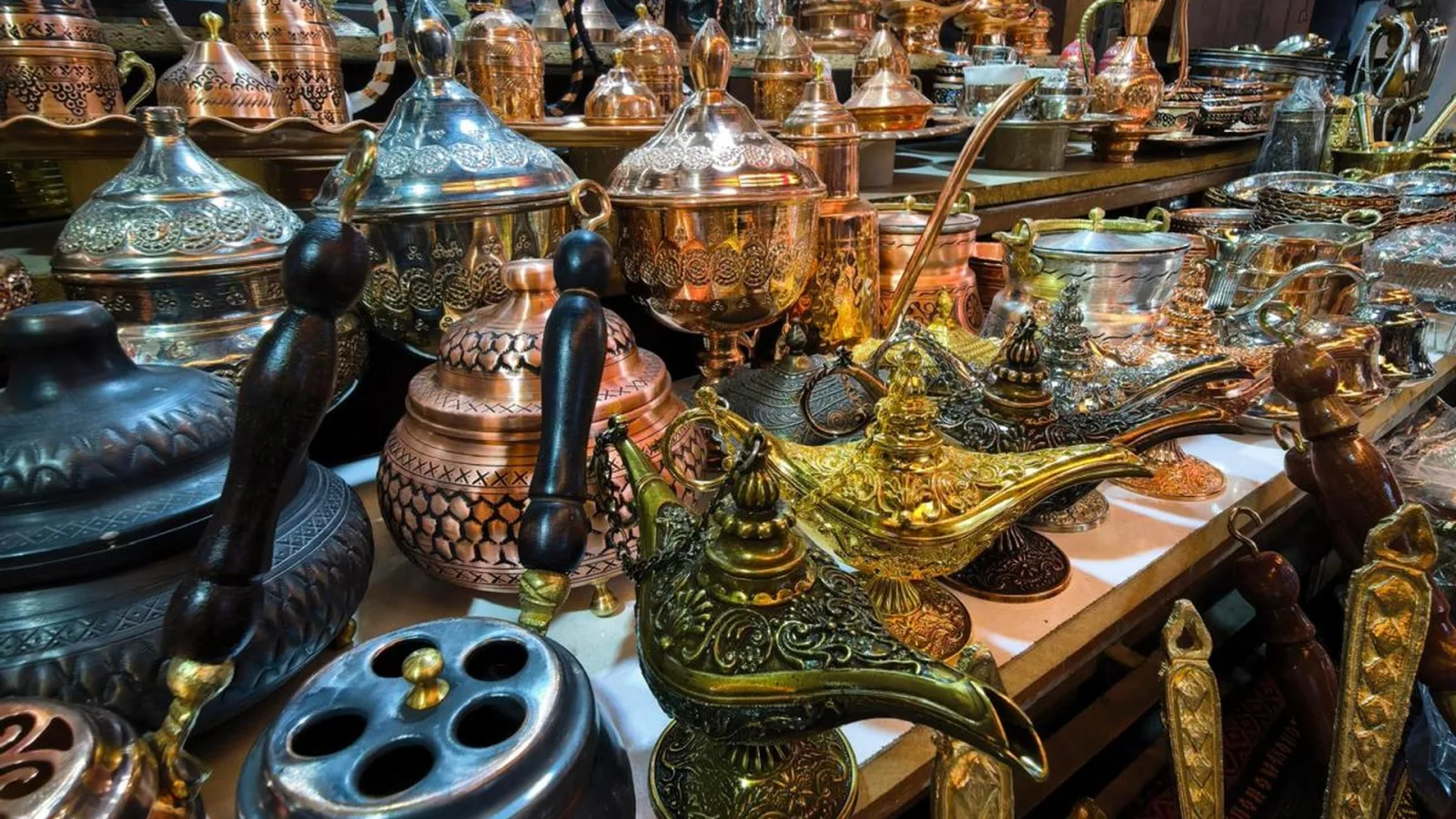
In the old fabric of Şahinbey, along a narrow stone-paved street wedged between the caravanserais, a rhythmic hammering has risen for centuries. The Coppersmiths' Bazaar is the still-breathing heart of Gaziantep's craft memory, and a treasure for the photographer: ewers, cauldrons and pitchers stacked one on top of another, and the light falling on polished copper, turn every stall into a natural still life.
When: Mid-morning, when the masters have opened their stalls and begun to work, both the light and the movement are at their richest. The narrow street sinks into shadow in the afternoon, so go early for the bright details. How: Chase two kinds of frame. The first is a detail at macro distance of the copper vessels stacked together, showing how the light curls across the metal; the second is an atmospheric frame that takes in the depth of the street and the masters at work. When photographing people, a brief smile and asking permission bring out the most natural portrait. For the bazaar's craft tradition, see our Coppersmiths' Bazaar page.
4. Stone Streets and Courtyards — Historic Antep Houses
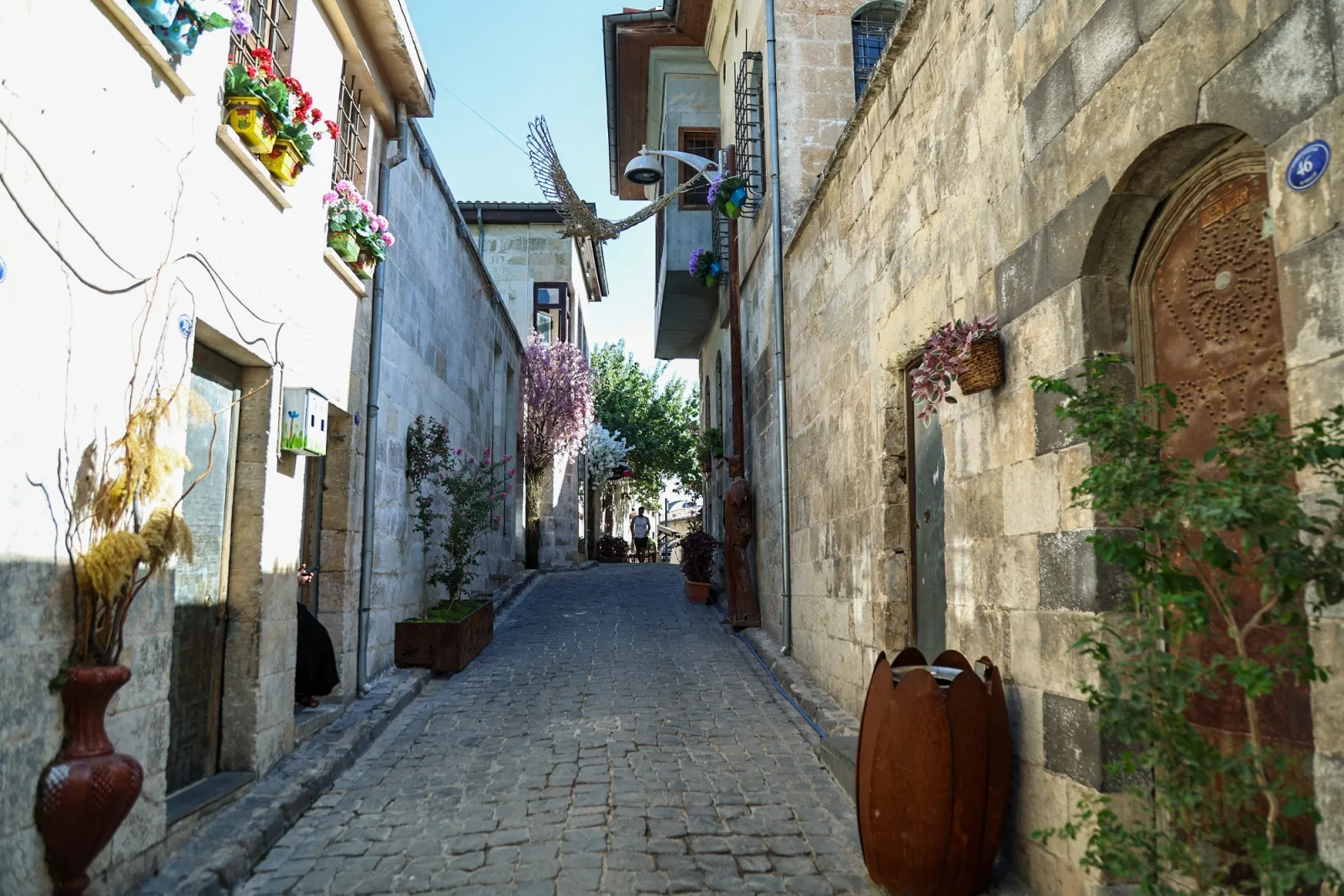
The Bey, Eyüboğlu and Karagöz neighborhoods at the foot of the castle are Gaziantep's most photogenic labyrinth. Houses built of yellow limestone, bay windows, arched doorways, recessed windows and cobblestones — with potted flowers and old door knockers among them, every corner promises a frame. These streets are the city's "little-known yet most-shared" face.
When: Early morning, when the streets are empty and the light slants in between the stones, is worth its weight in gold. In the late afternoon, when the street lamps come on and the stone walls are still warm, a warm "blue hour" atmosphere forms — for night shots, a tripod or a steady support will make your work easier. How: Use the street's perspective; cobblestones stretching into the distance give a natural line of depth. A door knocker, the wooden lattice of a bay window, or a flower on a wall become the details that complete the wider frame. For the architectural story of this fabric, our Traditional Antep Houses and Historic Bey Neighborhood pages are a good place to start.
If you'd like to explore these neighborhoods at a relaxed pace, our Gaziantep in 48 Hours guide shows you which street to enter and when.
5. A Castle Above the Euphrates — The View of Rumkale
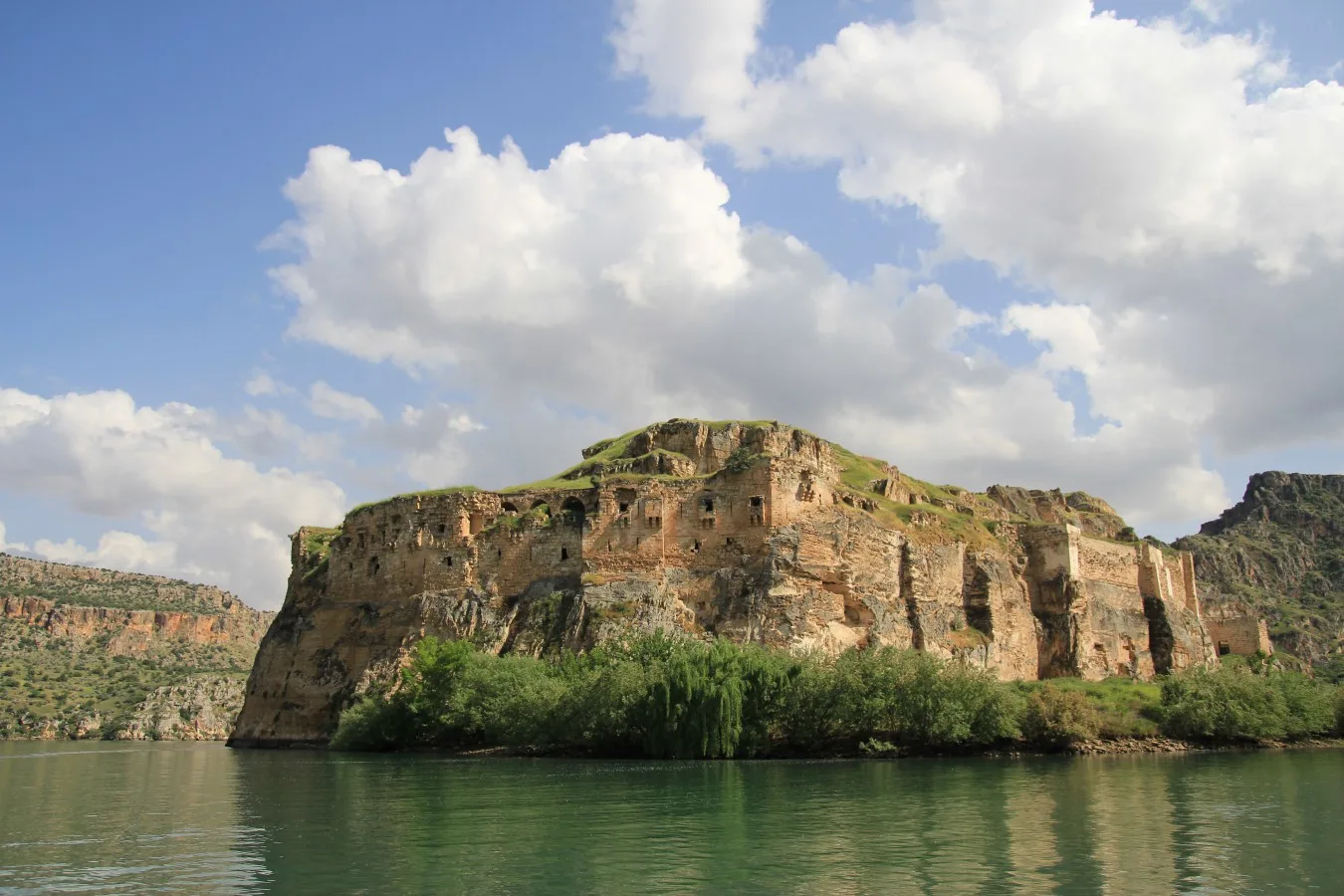
Step just outside the city toward Yavuzeli and Gaziantep's most cinematic frame awaits you: Rumkale. Rising on a steep rocky headland surrounded on three sides by water, at the point where the Merzimen Stream meets the Euphrates, this medieval castle is today mostly toured by boat, owing to the waters raised by the Birecik Dam. When the greenish water, the yellow rock and the sky meet in a single frame, an unforgettable composition emerges.
When: Boat tours are generally run during the day; the best light comes in the second half of the afternoon, when the sun lights the castle from the side and makes the water gleam. Windless hours let the water give mirror-like reflections. How: When shooting the castle from the boat, leave a little room for the water's surface; the reflection in the lower half doubles the frame. A wide angle takes in the whole of the rock and the surrounding canyon. For the castle's layered history, take a look at our Rumkale page.
6. A Minaret Rising from the Water — Halfeti's Submerged Face
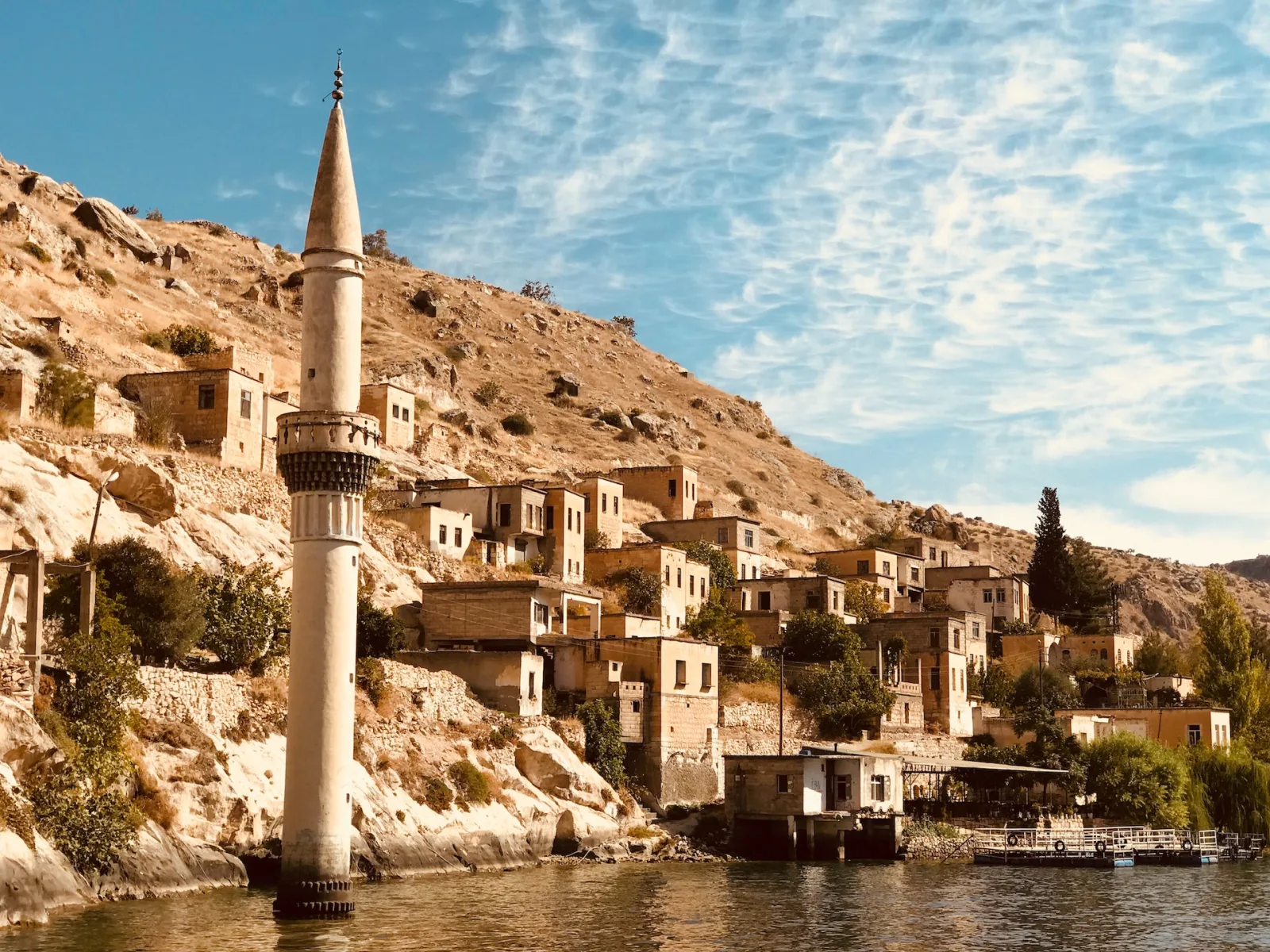
Halfeti, the gateway to the Rumkale boat, is a photographic legend in its own right. When the waters of the Birecik Dam swallowed most of the old settlement in 2000, a "sunken town" emerged; the minaret rising halfway out of the water became the signature of that story. Stone houses lined along the slope, calm water and that lone minaret make up one of the most-shared frames around Gaziantep.
When: When the water is calm — that is, early in the morning or in the final hours when the wind dies down — the minaret's reflection in the water is at its clearest. The soft evening light brings out the warm tone of the stone houses. How: When shooting the minaret from the boat, place it toward one edge of the frame and make room for the houses behind; that way both the main subject and the story enter the frame. An angle close to the water strengthens the reflection. For Halfeti's place on Gaziantep's Euphrates route, you can look at our Halfeti page, and to see the whole route from the shore to the castle, you can read our Euphrates River route: Halfeti and Rumkale article.
Tips to Round Out the Route
As much as the iconic frames, the small details in between enrich a Gaziantep album: the steam of menengiç coffee (a caffeine-free coffee brewed from roasted wild terebinth berries) brewing in a copper pot, the golden layers of a baklava fresh to the plate, the gleaming surface of a sweet-shop window. When you shoot these, favor natural window light; food photography comes alive not under harsh overhead light but in soft light coming from the side. If you'd like to plan the city's flavor stops, our gastronomy guide is a good place to start.
One last reminder: the best frame most often comes not on the first try but with a little waiting. Waiting for the light to emerge from behind a cloud, for the street to empty, or for a master to raise his hammer turns an ordinary photograph into an iconic frame. You can reach all of the city's culture and nature stops from our culture guide, and expand your route according to your own interests.
Frequently Asked Questions
What is the best time of day to take photos in Gaziantep?
For shooting the historic fabric, the streets and the silhouettes, the best time is the golden hour: roughly the hour after sunrise and the hour before sunset. In these hours the city's yellow limestone drinks in the light, shadows lengthen and tones soften. Reserving the midday hours for enclosed spaces like the bazaars and museums, meanwhile, balances the route.
What is Gaziantep's most iconic photo spot?
The city's signature frame is the silhouette of Gaziantep Castle, rising on top of a mound. Alongside it, the Gypsy Girl mosaic at the Zeugma Mosaic Museum, the glow of copper at the Coppersmiths' Bazaar, the old streets of Antep, and Rumkale on the Euphrates together with Halfeti's submerged minaret are the most-shared stops.
What should I watch out for when photographing the Gypsy Girl mosaic?
The mosaic is displayed under special lighting; a flash both causes reflections and is generally prohibited, so it's best to switch off the flash and keep your camera steady. The most effective frame is a close-up shot head-on, from the angle where the eyes land dead center, once the crowd has thinned. We recommend confirming the museum's current photography rules before your visit.
How can I photograph Rumkale and Halfeti?
Both are today mostly seen by boat tour; Halfeti is the gateway for reaching Rumkale, which lies within Gaziantep's borders. The best light comes in the early morning when the water is calm and in the second half of the afternoon when the sun lights the rock from the side. Leaving room for the water's surface in your shots brings the reflections into the frame.
Can I take good photos with a phone too?
Yes. Most of the frames on this route come out strong with a phone as well, when shot at the right hour and from the right angle. Catching the golden-hour light, keeping the flash off, using the perspective lines in the streets, and leaving room for reflections on the water noticeably improve the result, regardless of the equipment.
Can I fit the Gaziantep photography route into a single day?
The stops in the city center — the castle, the Gypsy Girl, the Coppersmiths' Bazaar and the historic streets — are close to one another, so they comfortably fit into a single day. Rumkale and Halfeti, however, lie outside the city on the banks of the Euphrates, so it's best to plan a separate day or a full-day boat tour; that way you can give each stop the light it deserves.