Say Gaziantep and the first dessert that comes to mind is, without question, baklava: that famous little mouthful where layer upon layer of pastry meets a generous measure of Antep pistachio and a carefully judged amount of syrup. But the Antep dessert table reaches far beyond baklava. The same pistachio, the same syrup, the same kaymak and the same flour-halva tradition give life to dozens of different sweets, from katmer to şöbiyet, from burma kadayıf to bülbül yuvası, from walnut sausage to kuymak. This guide starts with the baklava everyone knows and then takes you on a tour of Gaziantep's dessert world beyond it.
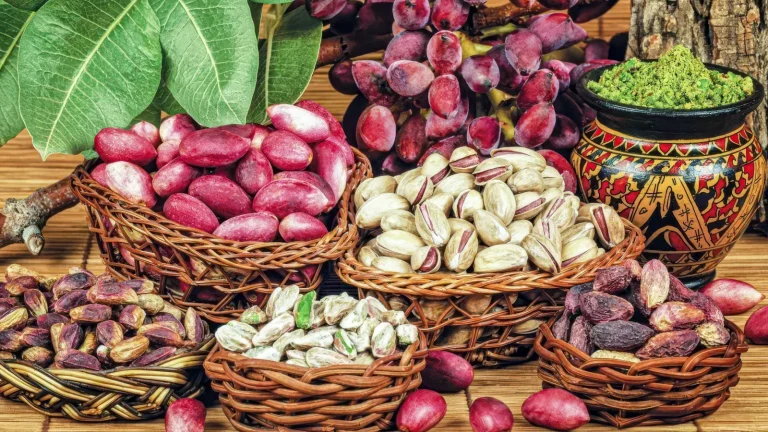
A few deep-rooted traditions feed Antep's craft of sweet-making. The first is the emerald-green Antep pistachio, itself protected by a geographical indication, harvested early and known locally as "boz iç" (grey inner kernel): it sets both the colour and the signature aroma of a dessert. The second is the culture of syrup: the art of balance, made from sugar, water and lemon, drizzled cold over hot pastry. The third is kaymak: the clotted cream traditionally made from water-buffalo milk, giving desserts a soft, milky filling. And the fourth is the tradition of flour and semolina halva: hot sweets cooked in a pan, without an oven and without syrup. When these four currents come together, baklava turns out to be simply the most famous member of a very large family.
For anyone curious about Antep cuisine as a whole, this piece is a starting point; for a broader picture, take a look at our Desserts section and our gastronomy guide. Now let us take a closer look at seven representatives from beyond baklava.
Pastry and Syrup-Soaked Sweets
The great family baklava belongs to is built on thin pastry and syrup. But at the same counter, from the hands of the same masters, other sweets emerge in textures and shapes quite different from baklava. Here are the most sought-after members of that family.
Antep Katmer
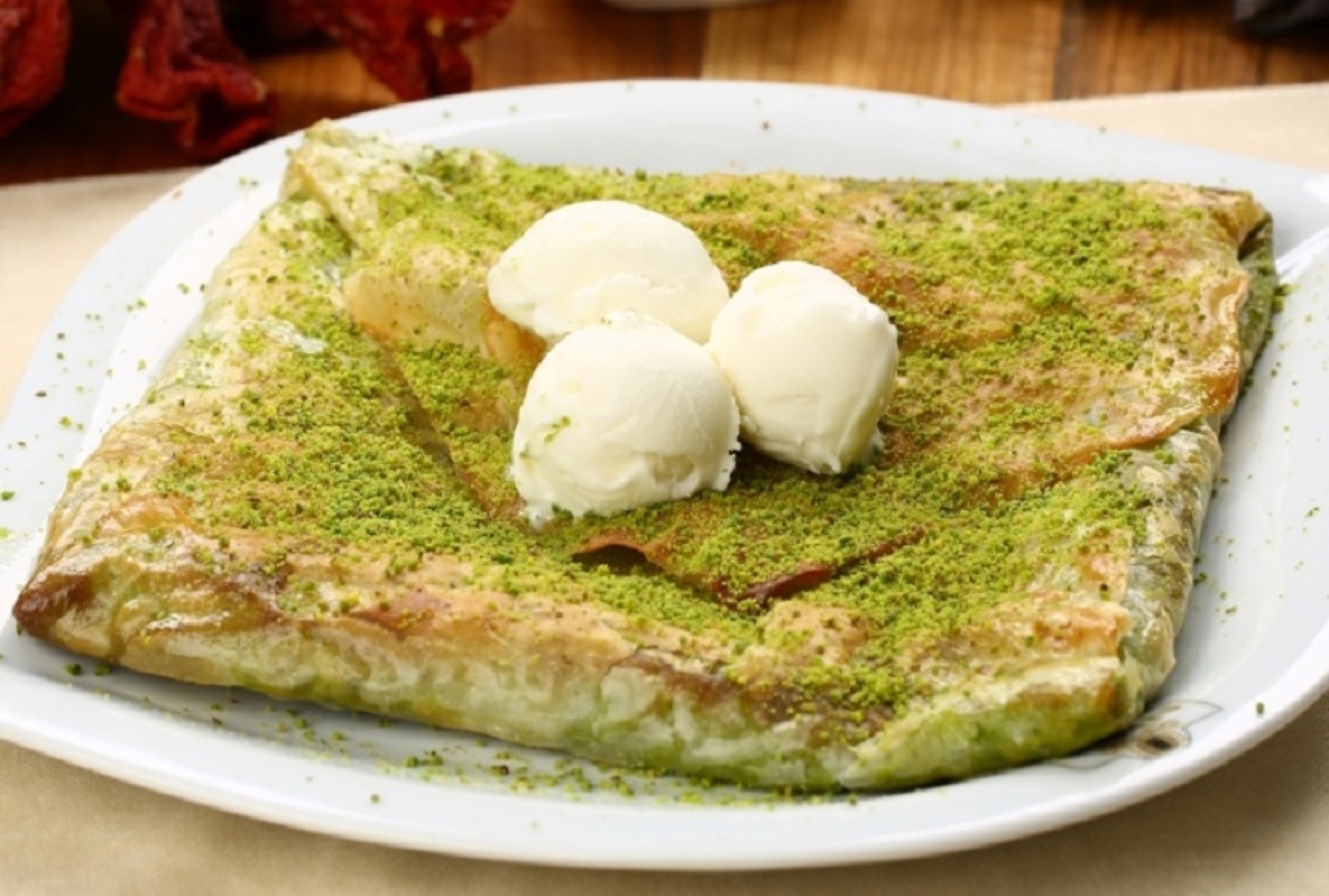
If baklava is Antep's most famous dessert, katmer is its most longed-for morning treat. The dough is rolled out with a pin and then tossed through the air until it reaches the thinness of paper; it is filled with fresh grey-green Antep pistachio, clotted kaymak and beet sugar, folded into an envelope shape and baked in a stone oven in just a few minutes. The most important thing that sets katmer apart from baklava is that it carries no syrup: its sweetness comes from the sugar that melts and soaks into the dough as it bakes, so the outside is crisp while the inside stays soft with melting kaymak. That pistachio-and-kaymak filling at the heart of a katmer creates a creamy centre that baklava never has.
Following an application by the Gaziantep Chamber of Industry, katmer was registered as a geographical indication by TÜRKPATENT on 7 December 2017 (Designation of Origin, Registration No: 264). In the city, it is a deep-rooted tradition for the groom's family to send katmer to the newlyweds on the morning after a wedding, symbolising the wish for "a life that begins with a sweet taste." For details on how it is made, its history and the wedding custom, see our Antep katmer page.
Şöbiyet
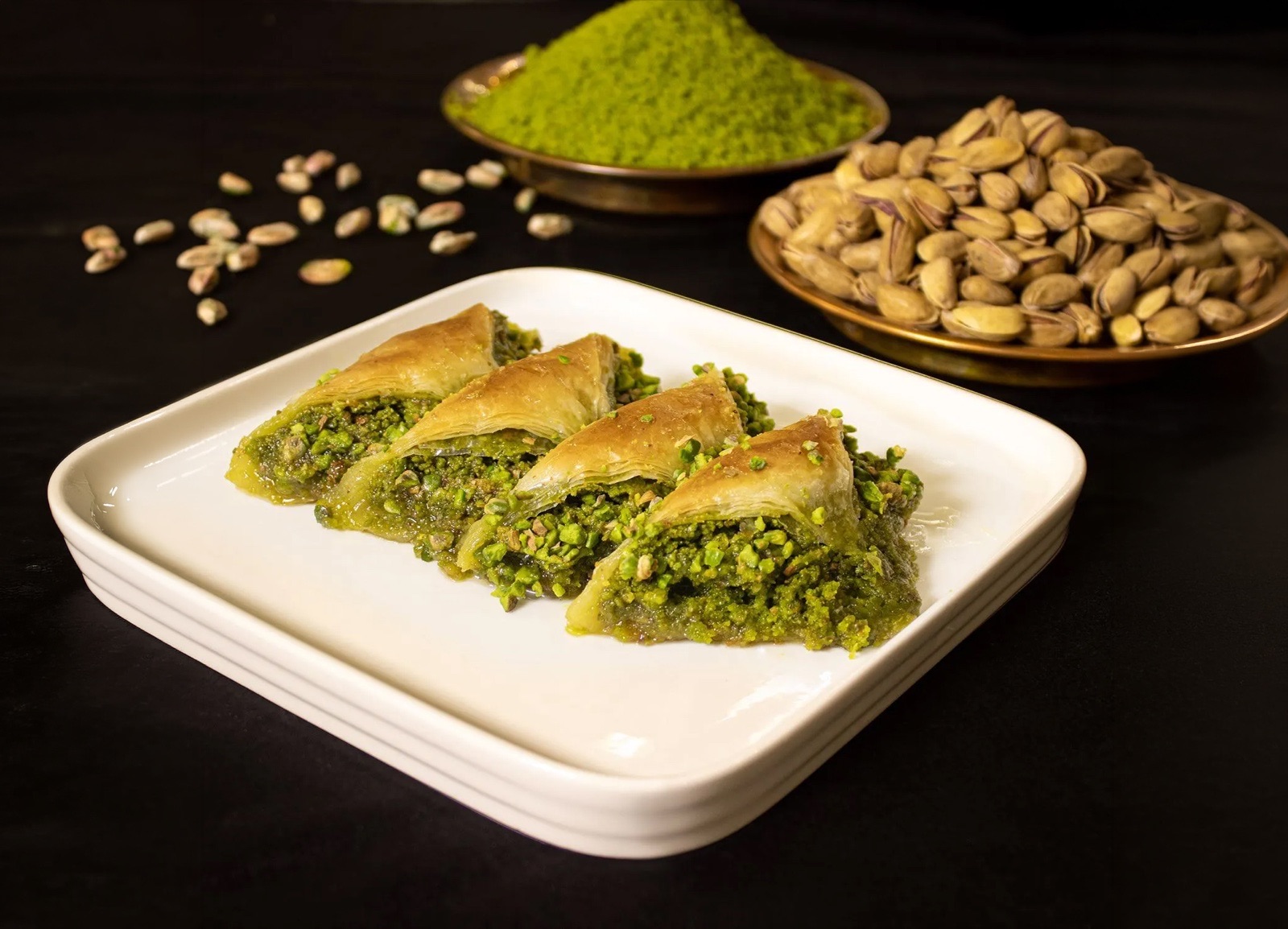
For those who love baklava but are looking for something a little softer and milkier, the destination is şöbiyet. Between layers of thin baklava pastry, a layer of kaymak and fresh grey-green Antep pistachio is placed; once the top is closed with pastry, it is cut into sealed triangles, cooked with clarified butter and soaked in syrup. Two things set it apart from baklava: the soft kaymak filling between the layers, and the triangular shape that keeps that filling from spilling out. In this way şöbiyet combines the crispness of baklava with the softness of a milk-based dessert in a single bite.
Gaziantep şöbiyet was granted a geographical indication by TÜRKPATENT on 6 April 2022 under the name "Gaziantep Şöbiyeti / Antep Şöbiyesi" (Designation of Origin, Registration No: 1062). Because its milky filling does not keep for long, it is at its most delicious when eaten fresh and piping hot. For more detail, you can visit our şöbiyet page.
Burma Kadayıf
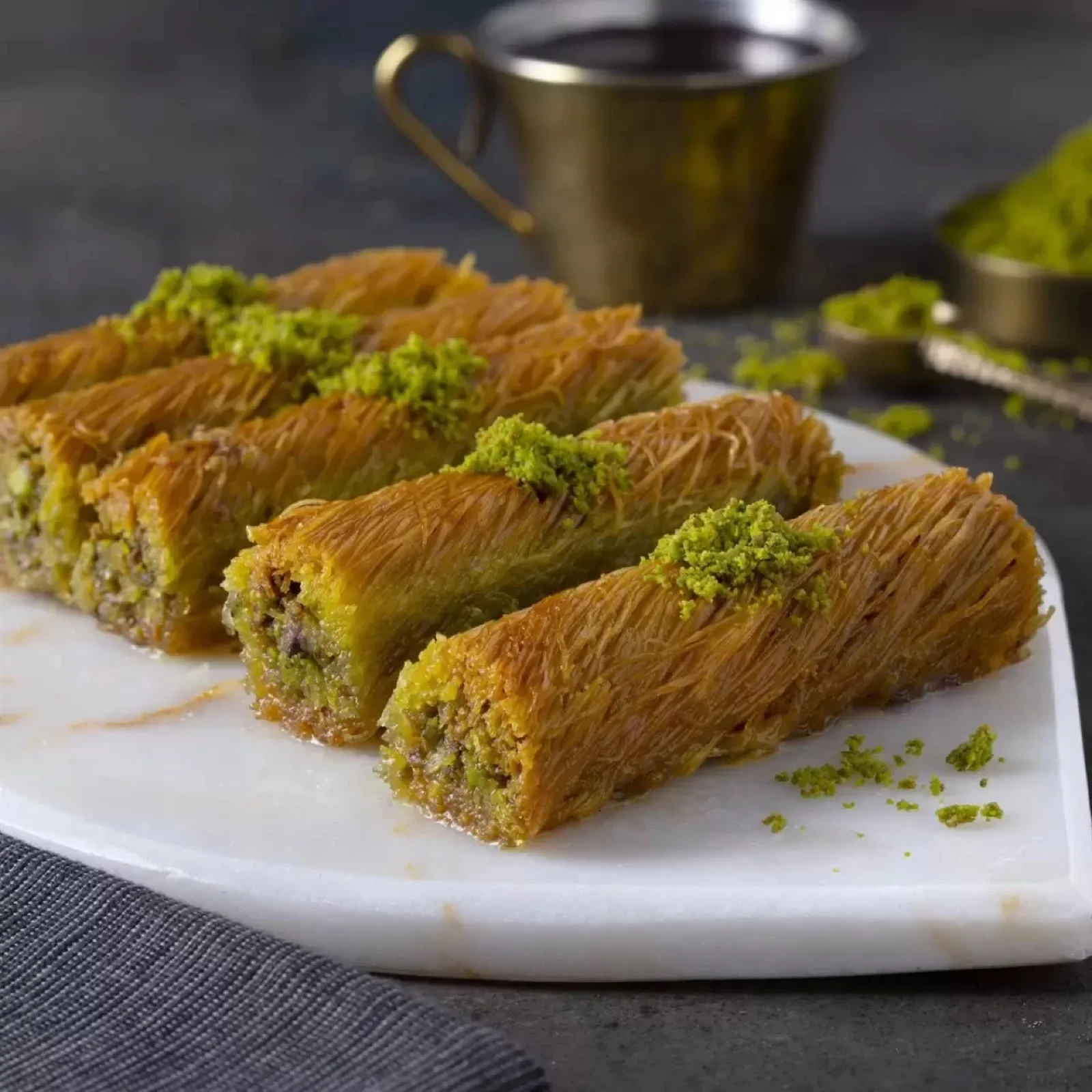
Burma kadayıf, in which shredded kadayıf pastry is worked with great finesse, is a classic pistachio dessert that stands right beside the baklava family. The finely poured strands of kadayıf are moistened with clarified butter, wrapped with plenty of grey-green Antep pistachio around a rolling pin, and then squeezed toward the centre with both hands and twisted; it takes its name ("burma" meaning twisted) from exactly this twisting motion. Once the roll bakes crisp in the oven and cold syrup is drizzled over it, the crunch of the strands, the oily pistachio inside and the syrup they soak up all come together in a single bite.
Burma kadayıf, meeting Gaziantep's abundant pistachio and its deep-rooted kadayıf craft, has been a beloved dessert made in the city for many years; the dessert's geographical indication, however, is registered under the name of Diyarbakır. You can find more detail on how the kadayıf strands are twisted and their relationship with pistachio on our burma kadayıf page.
Bülbül Yuvası
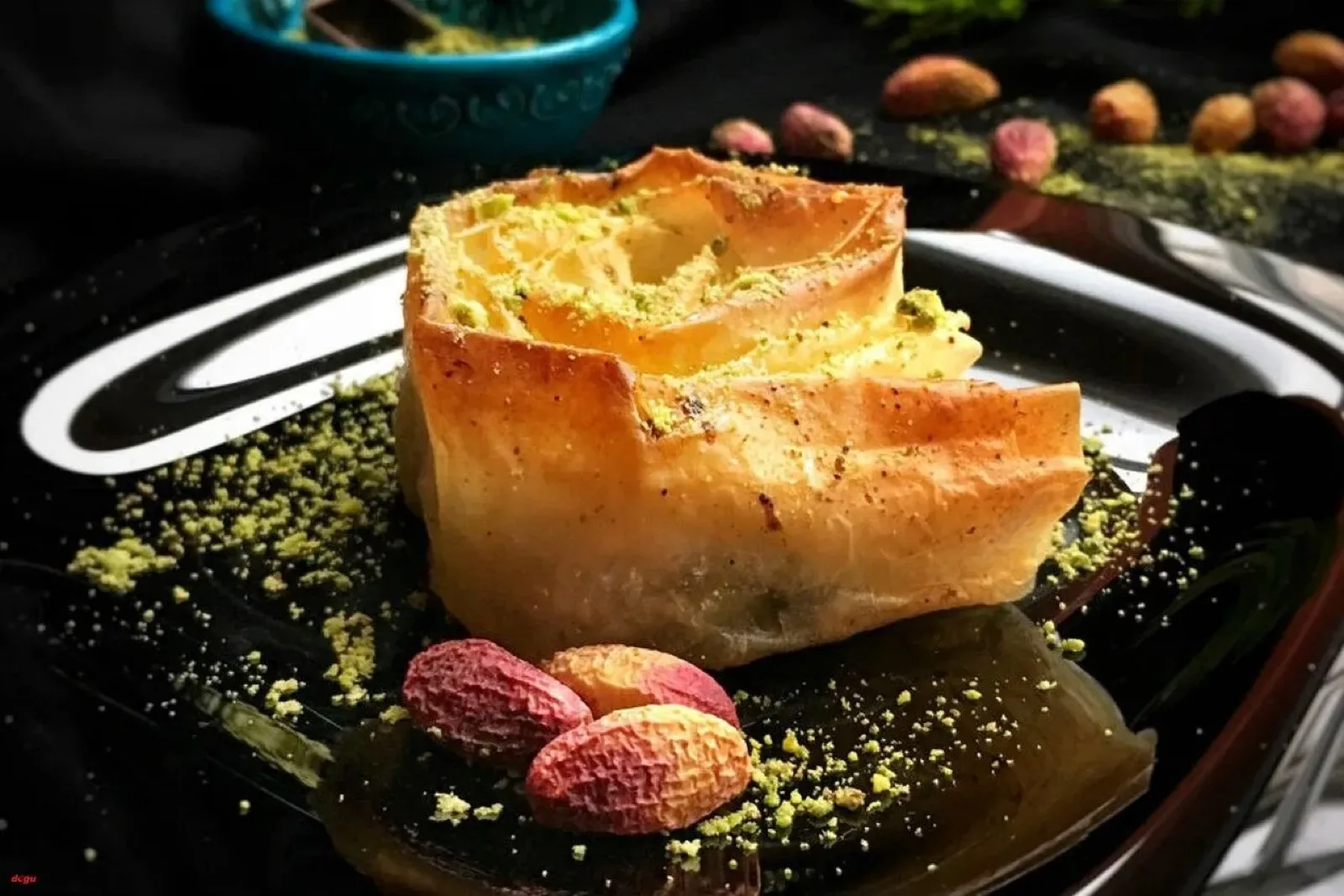
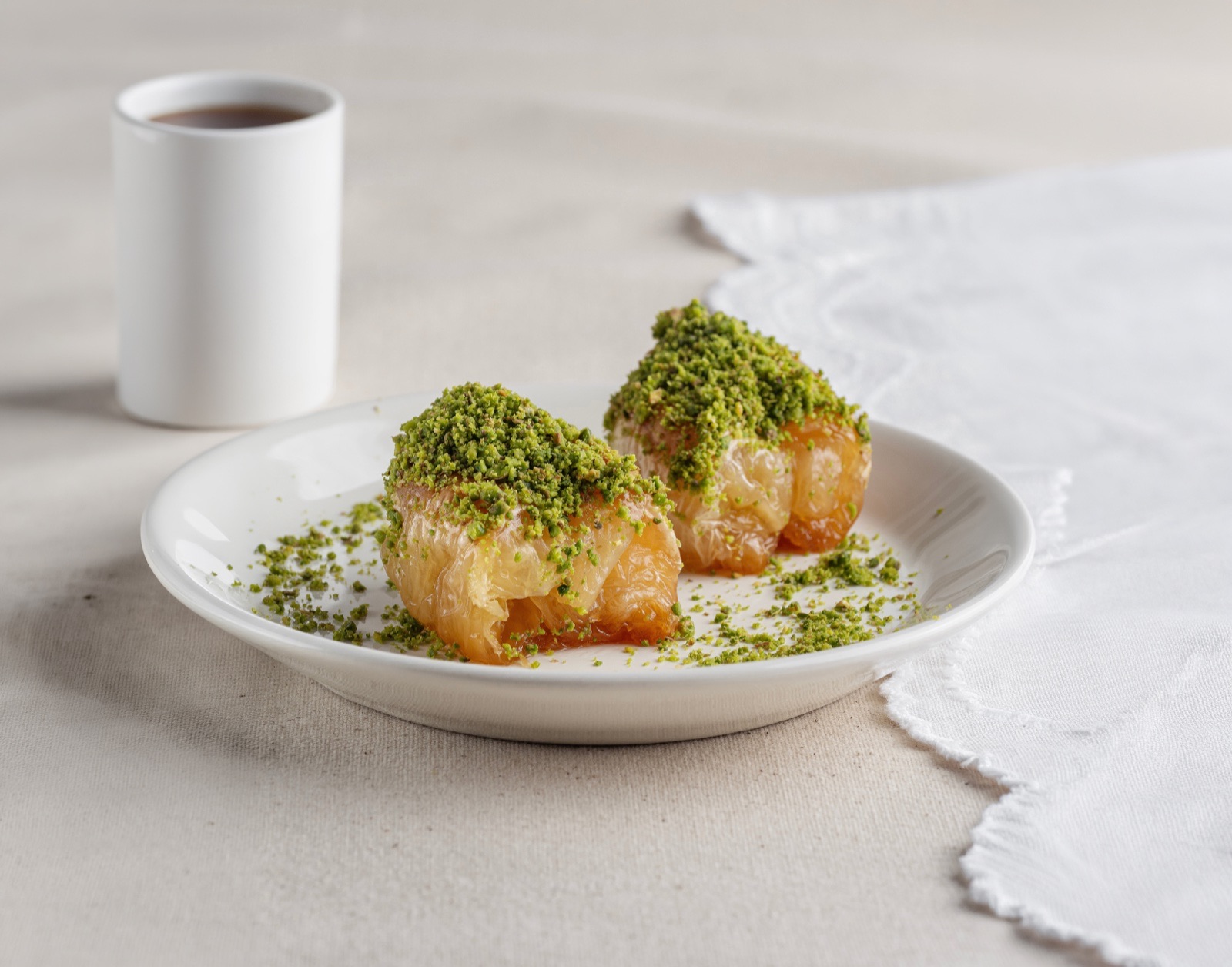
Bülbül yuvası ("nightingale's nest"), which catches your interest by its very name, is a type of baklava in which paper-thin hand-rolled pastry is gathered on a rolling pin and wrapped into a ring shape. The hollow in its centre is filled with plenty of grey-green Antep pistachio; it is cooked with clarified butter and sweetened with sugar syrup. It takes its name from resembling a bird's nest, with its round form and hollow middle. It is a finely crafted dessert in which the proportion of pistachio is kept high.
Bülbül yuvası was granted a geographical indication by TÜRKPATENT in 2022 (Designation of Origin, Registration No: 1063). You can read about the finer points of making this dessert, which is instantly recognisable on a baklava tray by its appearance, on our bülbül yuvası page.
Candy and Grape-Molasses Sweets
Antep's dessert tradition is not limited to the oven and syrup alone. There is another current, in which pistachio is kneaded with sugar and the grapes of the harvest are turned into pekmez (grape molasses); and these sweets are the easiest of all to carry out of the city.
Pistachio Marzipan (Fıstık Ezmesi)
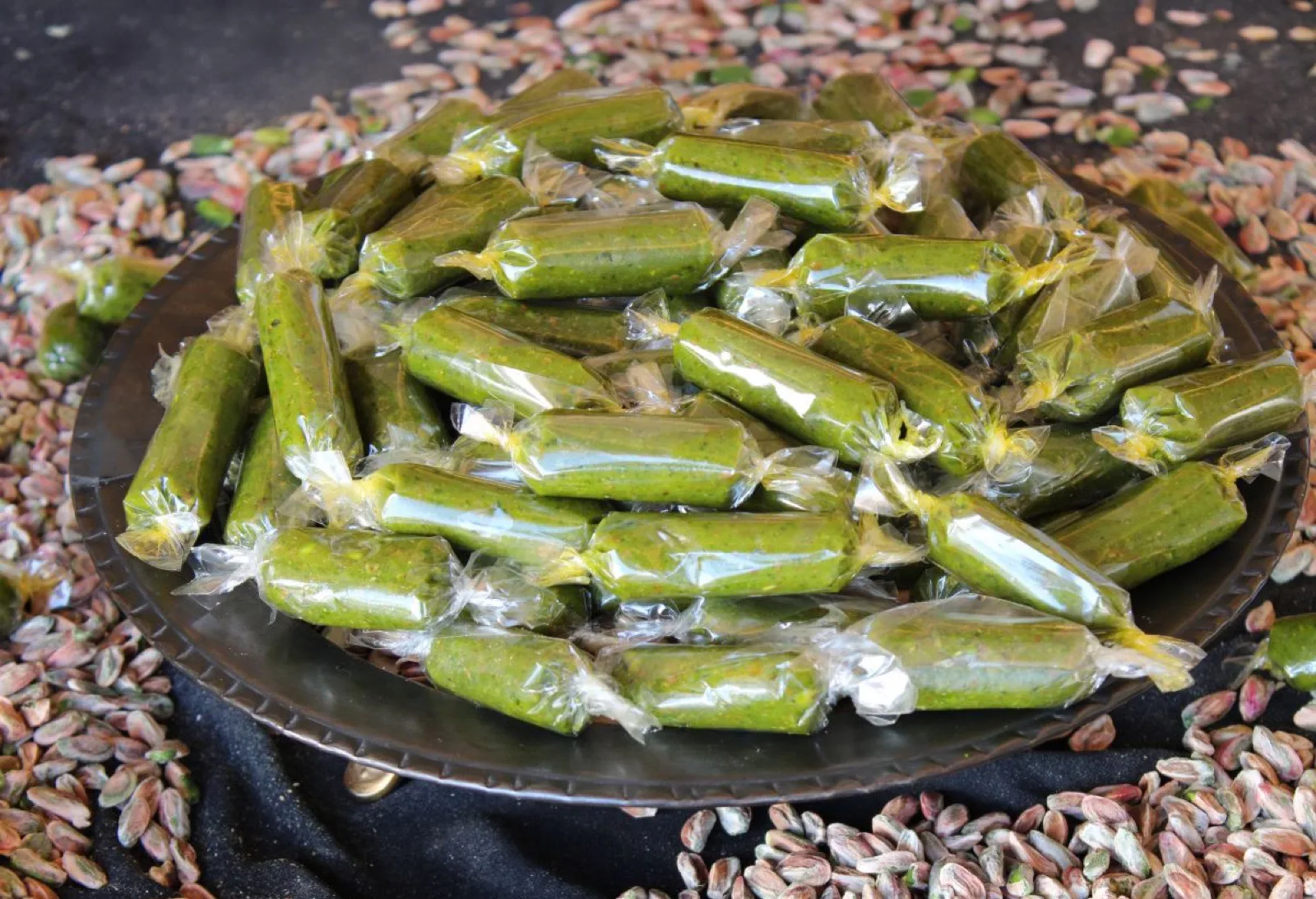
The dessert in which the Antep pistachio shines in its purest form is fıstık ezmesi (pistachio marzipan). Obtained by grinding raw Antep pistachio and kneading it with a thick sugar syrup, this green-and-gold, deep-rooted Turkish confectionery art brings together, in a single bite, Antep's climate, its soil and a master-and-apprentice tradition centuries old. It is not dipped in syrup like baklava; its sweetness comes from the sugar kneaded into the pistachio. Thanks to its keeping quality, it is one of the treats most often taken home from Antep as a gift.
Pistachio marzipan received a Designation of Origin registration from TÜRKPATENT in 2017 (No: 237), and in June 2025 it gained European Union geographical indication protection. We have described the history of this deep-rooted confection and its relationship with pistachio in detail on our pistachio marzipan page.
Walnut Sausage (Cevizli Sucuk)
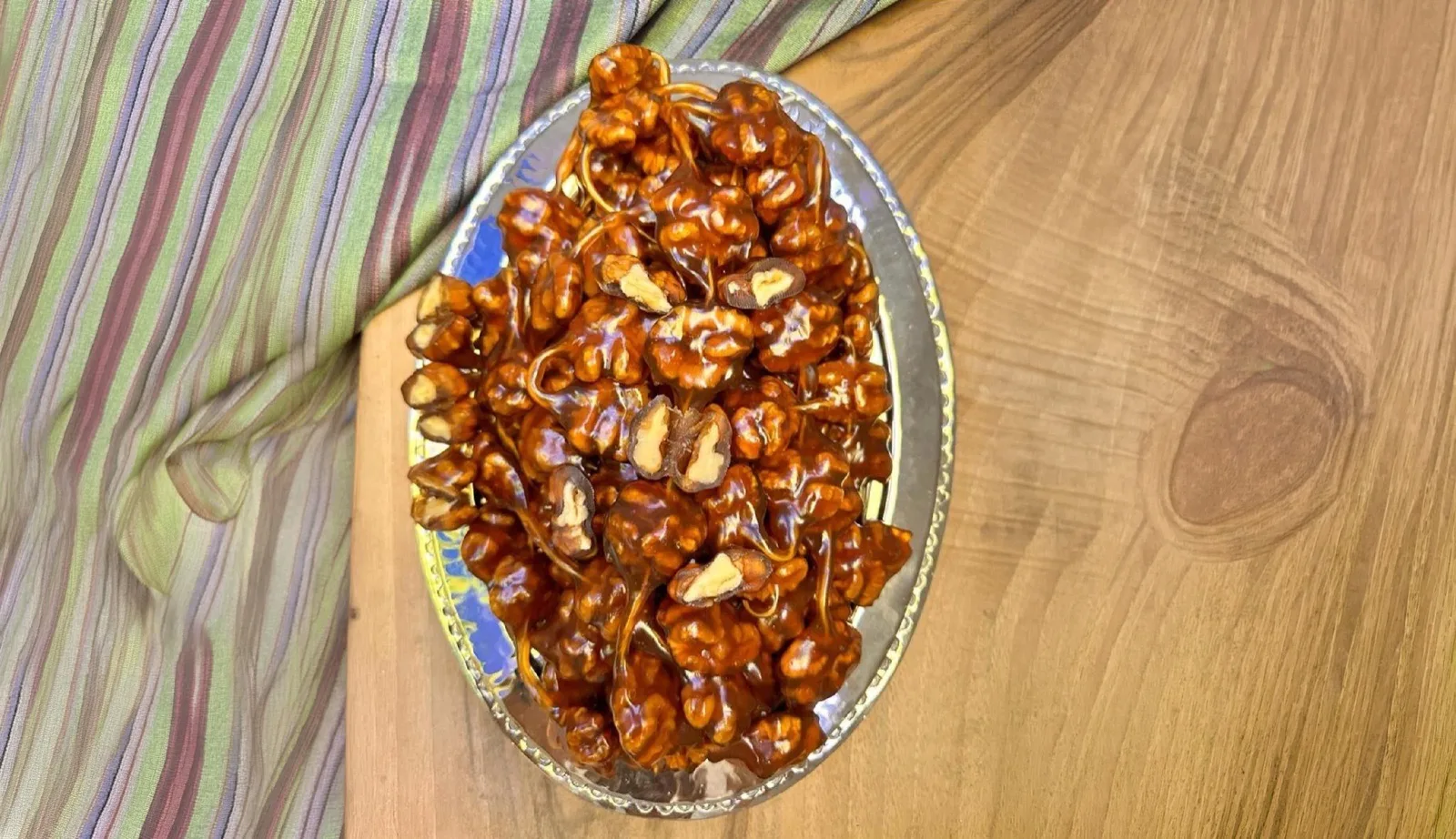
Its name may be surprising, but cevizli sucuk (walnut sausage) has nothing to do with meat; "sucuk" (sausage) refers only to its long, cylindrical shape. Walnut kernels are threaded one by one onto a string and dipped again and again into a thick pudding (köme) made by boiling grape molasses with starch and flour; between each dipping it is dried, and once a thick crust has formed it is sliced in the shape of a sausage. Made in Gaziantep as a way of turning the leftover grapes after the harvest into molasses, this sweet is a long-keeping winter treat enjoyed with tea on long winter nights. Locally it is also known as orcik.
You can find the stages of making this beloved product of pekmez culture on our walnut sausage page.
Hot Pan and Halva Sweets
The most everyday, most warming face of Antep's dessert culture is the flour and semolina halvas cooked at the pan. These are oven-free and most often syrup-free; they are made in minutes and eaten hot right away.
Gaziantep Kuymak
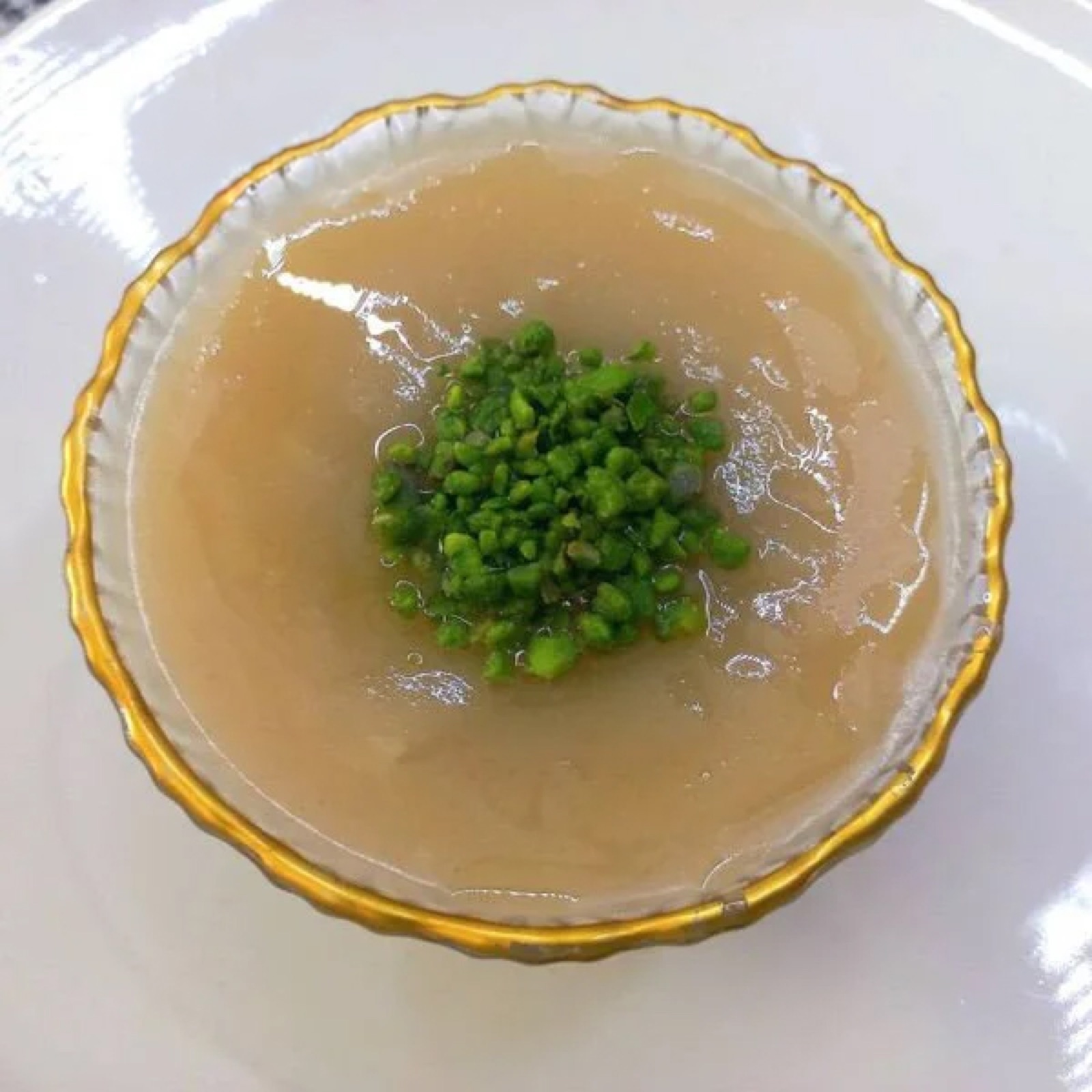
One of the most comforting Antep desserts, made with simple ingredients, is kuymak. Known locally as un kuymağı (flour kuymak), it is a flour dessert in which fine wheat flour is toasted in clarified butter until it turns pink and then cooked with sweetened or molasses-flavoured water, served hot in bowls at the consistency of boza. Melted clarified butter is drizzled over the top; those who wish sprinkle on cinnamon, walnut or grey-green Antep pistachio. The best-known thing about this dessert, which has no syrup, no dough and no oven, is that it is cooked for new mothers, that is, for women who have just given birth.
Gaziantep kuymak was registered as a geographical indication by TÜRKPATENT on 7 December 2020 (Designation of Origin, Registration No: 620). You can find kuymak's place in the new-mother tradition and how it is prepared in detail on our Gaziantep kuymak page.
Semolina Halva with Cheese (Peynirli İrmik Helvası)
For those seeking the surprising harmony of sweet and savoury, peynirli irmik helvası (semolina halva with cheese) is one of the most distinctive flavours of Antep cuisine. Semolina is toasted in clarified butter, cooked with sugar and water; then fresh unsalted cheese is stirred in and it is turned over the heat until the cheese melts and stretches. When it is spooned up while hot, the stringy stretch of the cheese is the dessert's signature: the grainy texture of the toasted semolina, the measured sweetness of the sugar and the lightly salty softness of the melting cheese all meet in a single bite.
This dessert too, following an application by Gaziantep Metropolitan Municipality, was registered as a geographical indication by TÜRKPATENT on 10 February 2022 (Designation of Origin, Registration No: 1029). You can find the secret of its stretchy, stringy texture on our semolina halva with cheese page.
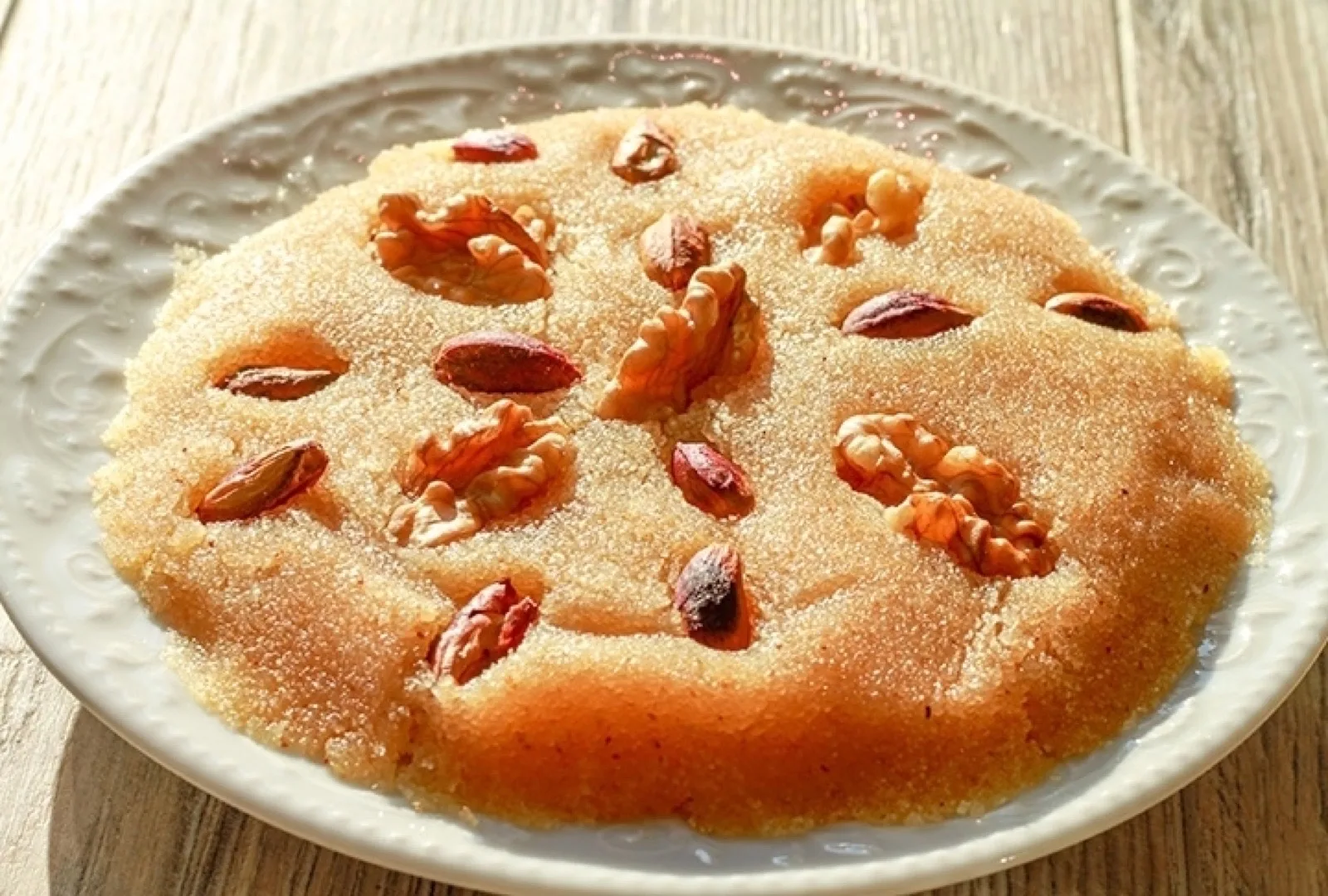
Antep's world of desserts beyond baklava is not limited to these seven representatives either. There is dolangel, in which a milk-and-semolina pudding is wrapped in thin pastry into a cylinder shape and which received a TÜRKPATENT registration on 15 November 2021 (Designation of Origin, Registration No: 947); there is haytalya, the refreshing treat of hot summer days, in which a starch pudding is dipped in ice-cold syrup scented with rosewater; and there are many more varieties that show just how broad the city's dessert tradition is. To see them all in one place, take a look at our Desserts section.
Tasting Antep Desserts the Right Way
Tasting most of these desserts at Antep's own table, fresh and at the right moment, completely changes the experience. Sweets with milky fillings, such as katmer and şöbiyet, lose their crispness the longer they wait, so they should be eaten on the spot, piping hot; keeping products such as pistachio marzipan and walnut sausage, on the other hand, are the best suited to being carried out of the city. Kuymak and semolina halva with cheese, meanwhile, should come straight from the pan to the bowl and to the table at once.
The relationship Gaziantep cuisine has built with pistachio does not end with desserts either; the same grey-green pistachio also appears in the savoury kitchen. Those curious about pistachio's journey into kebab can look at our Gaziantep kebab guide; those who wish to discover Antep's meat-free flavours can take a look at our vegetarian Antep flavours article. And for anyone who wants to get to know the history of Antep cuisine and its table culture more closely, the Emine Göğüş Culinary Museum is a fine starting point as well.
Frequently Asked Questions
What desserts are eaten in Gaziantep besides baklava?
Many desserts are eaten, such as katmer, şöbiyet, burma kadayıf, bülbül yuvası, pistachio marzipan, walnut sausage, kuymak, semolina halva with cheese, dolangel and haytalya. Antep's dessert culture is far broader than baklava alone.
What is the difference between katmer and baklava?
Baklava is made with layer upon layer of pastry, pistachio and syrup; katmer, by contrast, carries no syrup. Grey-green Antep pistachio and clotted kaymak are placed inside the katmer, it takes its sweetness from the sugar that melts as it bakes, and it is eaten hot.
Why is şöbiyet different from baklava?
In şöbiyet, kaymak and pistachio are placed between thin sheets of pastry, which are then closed in the form of a sealed triangle. This milky kaymak filling sets it apart from baklava's dry pistachio filling and gives it a softer texture.
Is there meat in walnut sausage?
No. Walnut sausage has nothing to do with meat; "sausage" refers only to its shape. It is a grape-molasses sweet made by dipping string-threaded walnuts in a molasses pudding and drying them; locally it is also known as orcik.
Which desserts from Antep can be taken home as gifts?
Syrup-free, long-keeping sweets such as pistachio marzipan and walnut sausage are the best suited to being carried out of the city. Desserts with milky fillings, such as katmer and şöbiyet, should be consumed fresh and on the spot.
Which Antep desserts have a geographical indication?
Katmer (No 264), şöbiyet (No 1062), bülbül yuvası (No 1063), pistachio marzipan (No 237, also EU-registered), kuymak (No 620), semolina halva with cheese (No 1029) and dolangel (No 947) hold TÜRKPATENT geographical indication registrations.