Say Gaziantep and most people think first of kebab, then of baklava. Yet the real breadth of Antep cuisine isn't found beside the grill; it lives at the table built by bulgur, lentils, vegetables and olive oil. A cuisine that spent long winter months on legumes and grains for centuries, it turned meatless cooking not into a necessity but into an art in its own right. In this guide we answer the question "What is there for a vegetarian to eat in Gaziantep?" category by category, from mezes to lentil pottages, from köfte kneaded raw to olive-oil pastries. Some are fully vegan plates with no egg or milk, others are vegetarian delights enriched with cheese or yogurt; but they all share one thing, a character that leaves you satisfied even when there is no meat in sight.
The Meatless Wealth of Antep Cuisine
The meatless side of the Antep table rests on three foundations: fine köfte bulgur (known locally as "simit"), legumes such as red lentils, mung beans and chickpeas, and the tomatoes, peppers, eggplant and purslane that come straight from the garden. Add the region's sour-hot notes on top of these, pomegranate molasses, sumac, unripe-grape verjuice and isot pepper, and layered, filling dishes emerge without any meat at all. You can find the map of this entire flavor universe in the Ayıntap gastronomy guide; here we focus only on the meatless side of it.
One important note: some Antep dishes are assumed to be "meatless" because of their name, but they are not. Bakla tavası, for instance, is a meat dish in which fresh broad beans are cooked with lamb or beef, and it is not included in this guide. Every plate we have chosen is a genuinely meatless delight, confirmed with a "Vegetarian" badge on its own page.
Mezes: The Kingdom of Cold Starters
For a vegetarian guest, the Antep meze table is practically a field of discovery. Most mezes are built entirely on vegetables, walnuts, olives and olive oil; they are rich enough to make a meal on their own, not just an accompaniment to kebab. For more options, take a look at the mezes section.
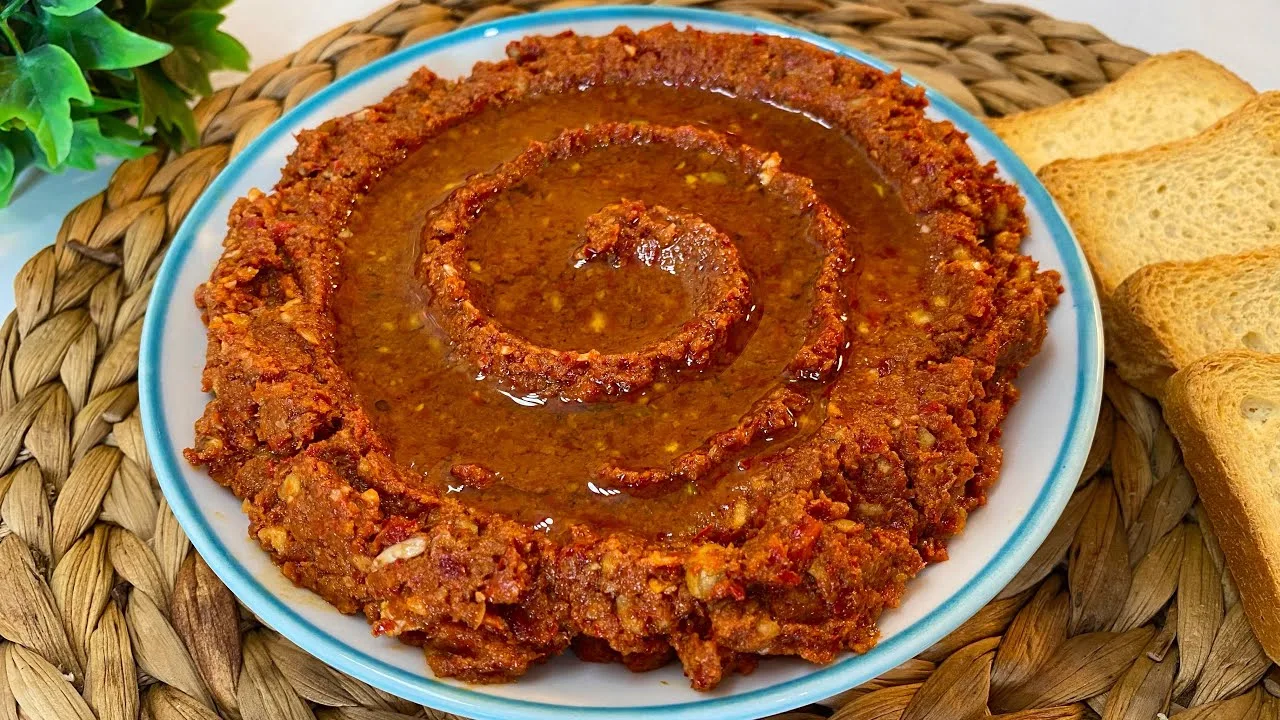
Muhammara
Muhammara is a sweet-sour, faintly hot, spreadable paste where red pepper, pounded walnuts and pomegranate molasses come together. Breadcrumbs or crushed rusk bind it, olive oil softens it, and garlic, cumin and isot pepper give it depth. In its basic form it contains no animal ingredient at all, which makes it vegan-friendly. Carrying a geographical-indication registration under the name "Gaziantep Muhammarası," this meze is perfect for scooping up with bread. Take a look at the muhammara page for how it is made and its history.
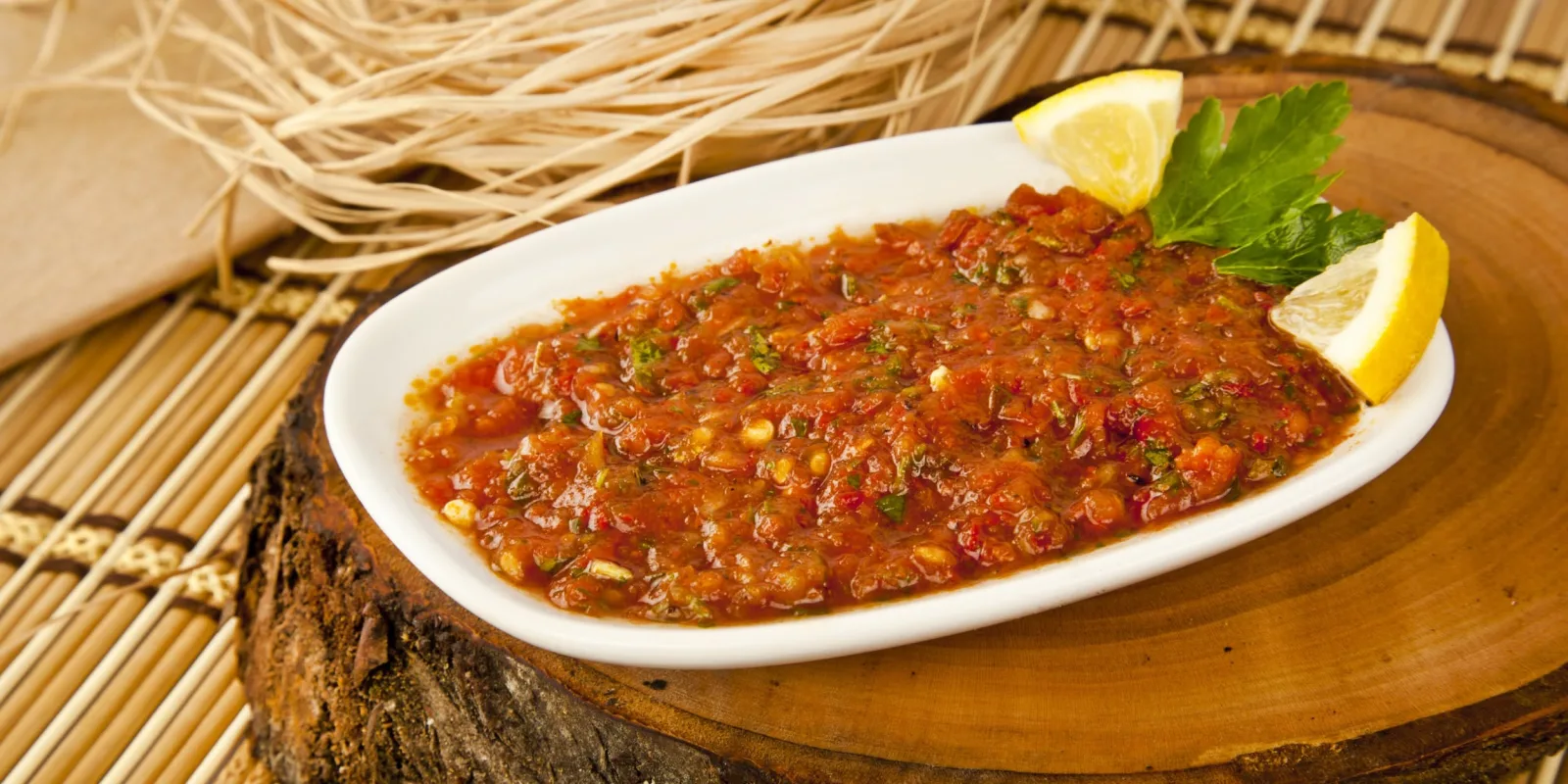
Acılı Ezme (Spicy Ezme)
Acılı ezme is a cold meze in which tomatoes and peppers are finely chopped by knife and blended with onion, garlic, parsley, pepper paste, pomegranate molasses and isot pepper. Although its name means "paste," its texture is not a smooth purée; it is a coarse, crunchy chop. This flavor, where heat and sourness walk hand in hand, is entirely vegetable-based and is indispensable to the Antep table. The details are on the acılı ezme page.
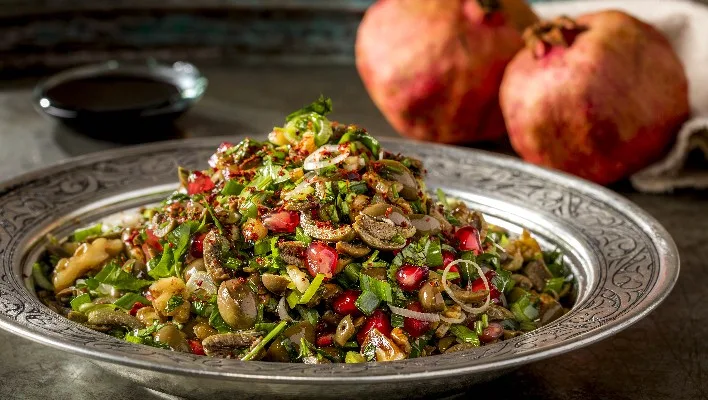
Olive Piyaz (Zeytin Piyazı)
Olive piyaz is a cold meze in which cracked green olives meet walnuts, spring onion and parsley, then are blended with pomegranate molasses, olive oil and isot pepper. In Antep cooking, "piyaz" means a salad built on onion and greens and sweetened with pomegranate molasses; olive piyaz is that same logic built around olives. Because it contains no meat, meat stock or any animal ingredient, it is both vegetarian and vegan. For more, see the olive piyaz page. Mung-bean piyaz, which applies the same piyaz logic to a legume, is another fully vegan option.
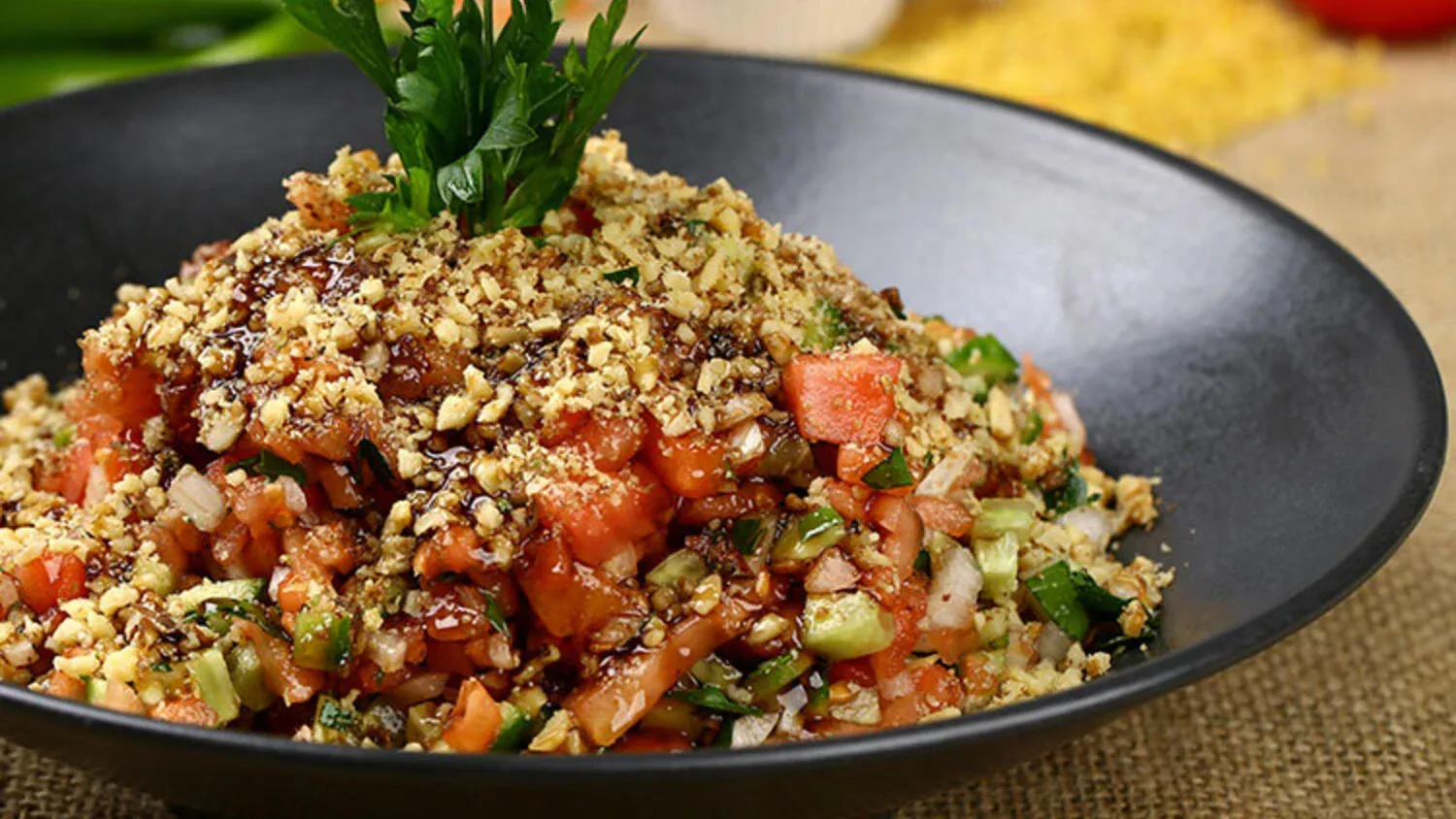
Don't move on without adding to this trio the gavurdağı salad, a finely diced tomato salad with walnuts eaten by the spoonful; this classic, also known in Antep as "kaşık salatası" (spoon salad), is completely meatless too.
Soups and Pottages: The Power of Lentils and Legumes
Most of the soups and pottages that warm Antep's cold-month tables are built on legumes and grains. These dishes fill you up without any need for meat; thanks to their abundance of plant protein, some are so hearty they've earned the folk nickname "the poor man's kebab." For more, take a look at the stews and soups section.
Malhıta (Sour Lentil Pottage)
Malhıta is the Gaziantep dialect word for red lentils; "ekşili malhıta" is a traditional Antep pottage cooked with these lentils and made pleasantly sour. Red lentils boiled until soft meet plenty of garlic and dried mint; a light sourness is added by squeezing in pomegranate molasses, verjuice or lemon. Despite its simple ingredients, it is one of the most deeply rooted and beloved flavors of the Antep table. See the malhıta page for its history.
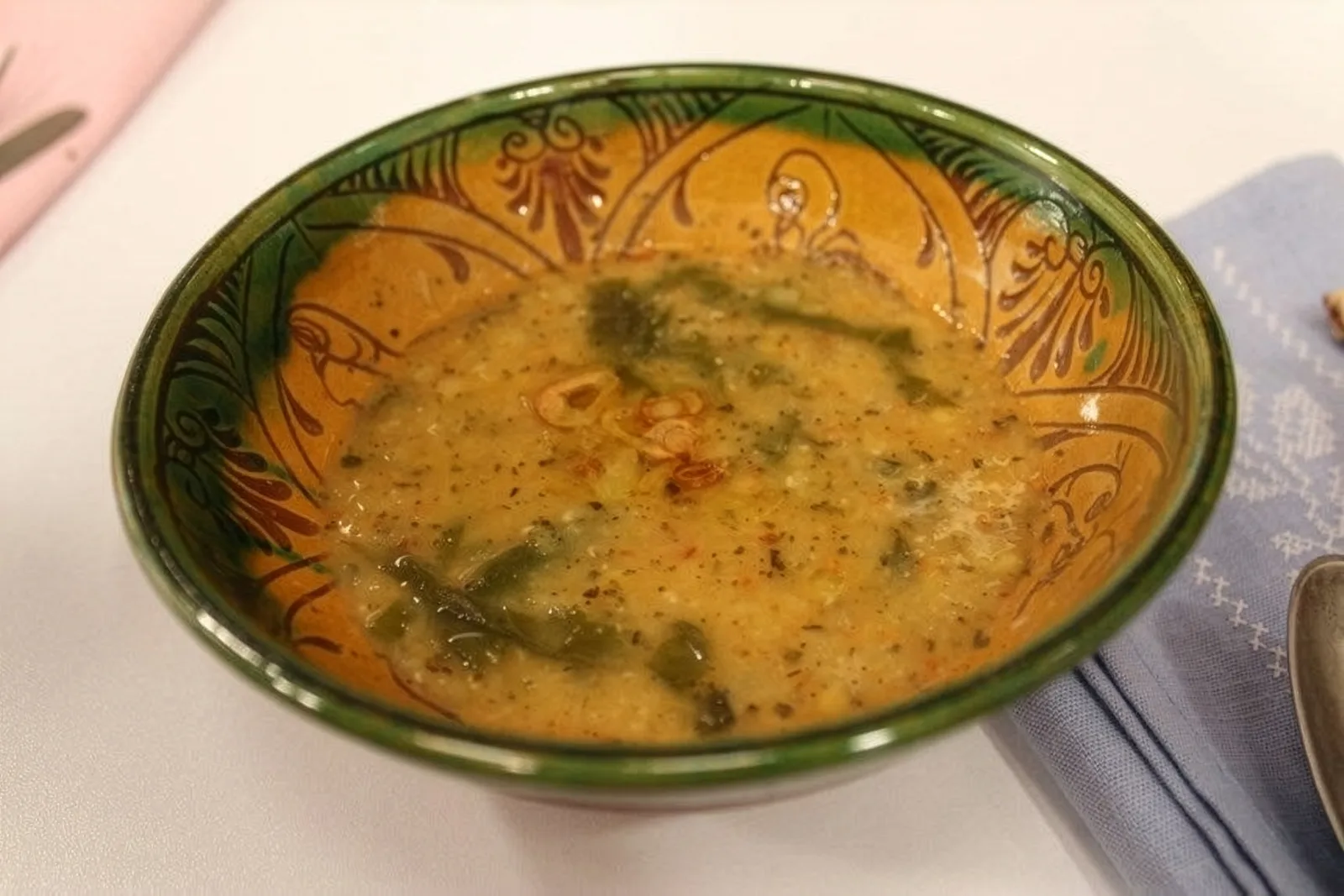
Mung Bean Soup (Maş Çorbası)
Antep mung bean soup is a lightly sour winter soup in which mung beans, a small green legume, come together with bulgur or crushed wheat and are seasoned with onion, red pepper and tarragon. Thick, filling and simple, it lives on as a meal of the cold months, sipped almost as a remedy. More information is on the mung bean soup page.
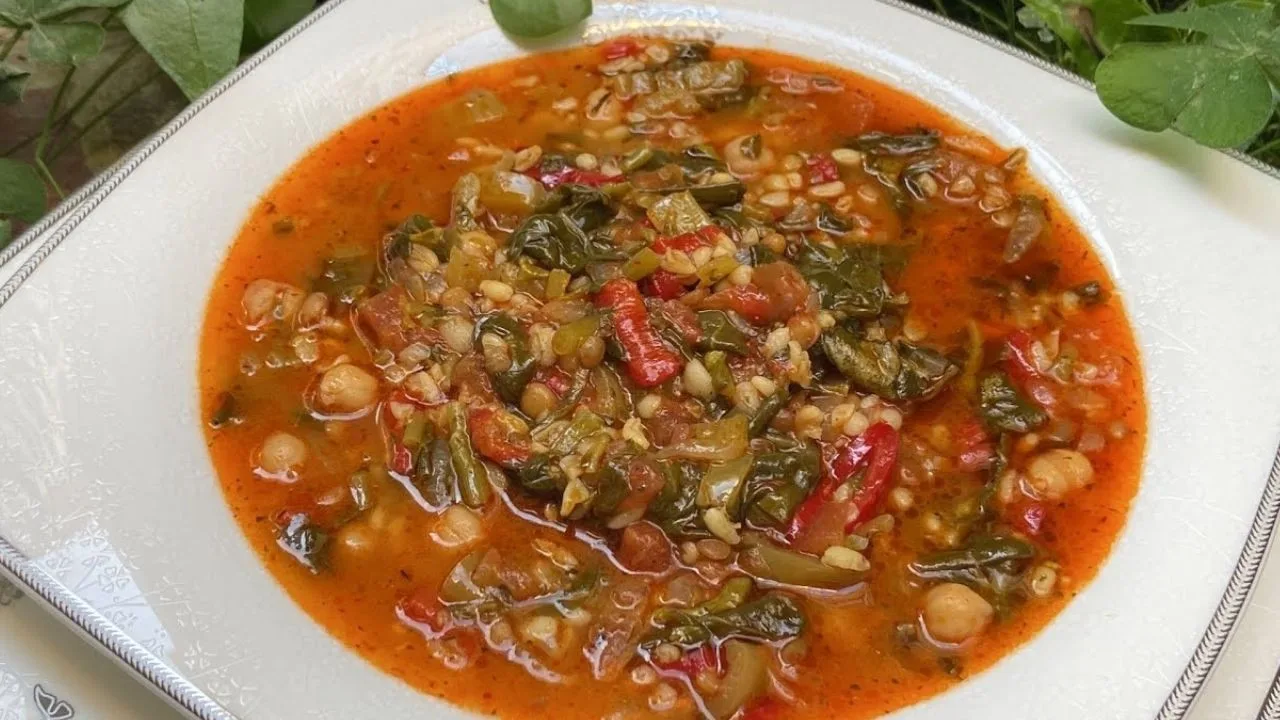
Pirpirim Aşı (Purslane Pottage)
Pirpirim aşı is a traditional pottage in which purslane, called "pirpirim" in the local dialect, meets legumes and bulgur and is soured with sumac. Cooked until plenty of purslane softens alongside green lentils, chickpeas and black-eyed peas, this dish is extremely rich in plant protein thanks to its variety of legumes; that is why it is sometimes called "the poor man's kebab" as well. It is seen both as a soup and as a stew that can stand on its own. The details are on the pirpirim aşı page. Those looking for a denser, porridge-like alternative can check out the malhıtalı aşı porridge.
Meatless Köfte: Flavors Kneaded Without Cooking
One of the most surprising things about Antep cuisine is a whole family of köfte where the word "köfte" doesn't bring meat to mind at all. Most of them are never cooked; bulgur, lentils or bread are kneaded at length with vegetables and spices, then shaped by hand. You can see every kind of köfte in the köfte section.
Antep Yağlı Köfte
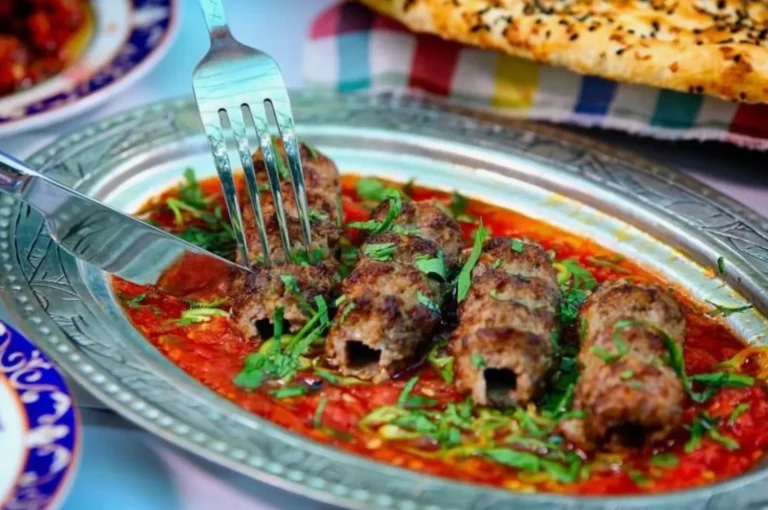
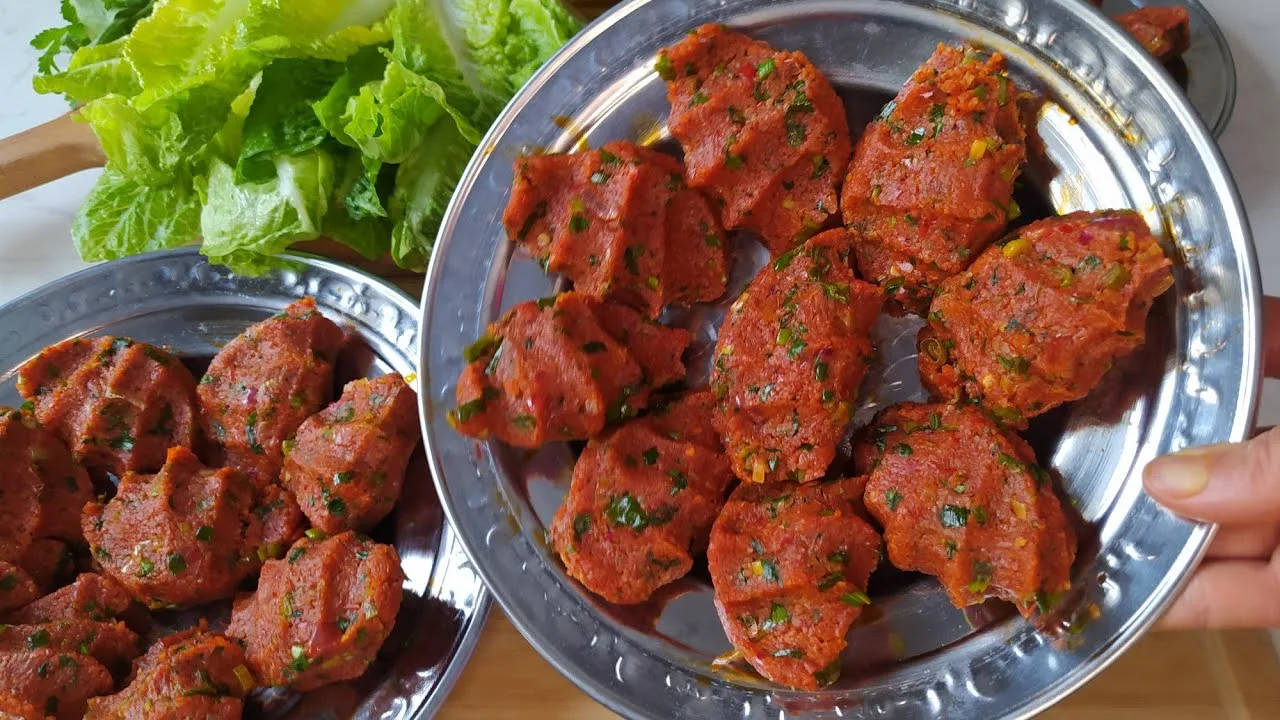
Yağlı köfte is a meatless köfte in which fine köfte bulgur is kneaded at length with pepper paste, grated tomato, onion, garlic and plenty of red pepper flakes, and clarified butter or butter that melts is added at the very end and kneaded in again. The "yağlı" (buttery) in its name comes from the clarified butter worked into the dough at this final stage; it is what gives the köfte its softness, its sheen and its full mouthfeel. A close relative of çiğ köfte, yağlı köfte is served with lettuce and greens. See the yağlı köfte page for details.
Malhıtalı (Lentil) Köfte
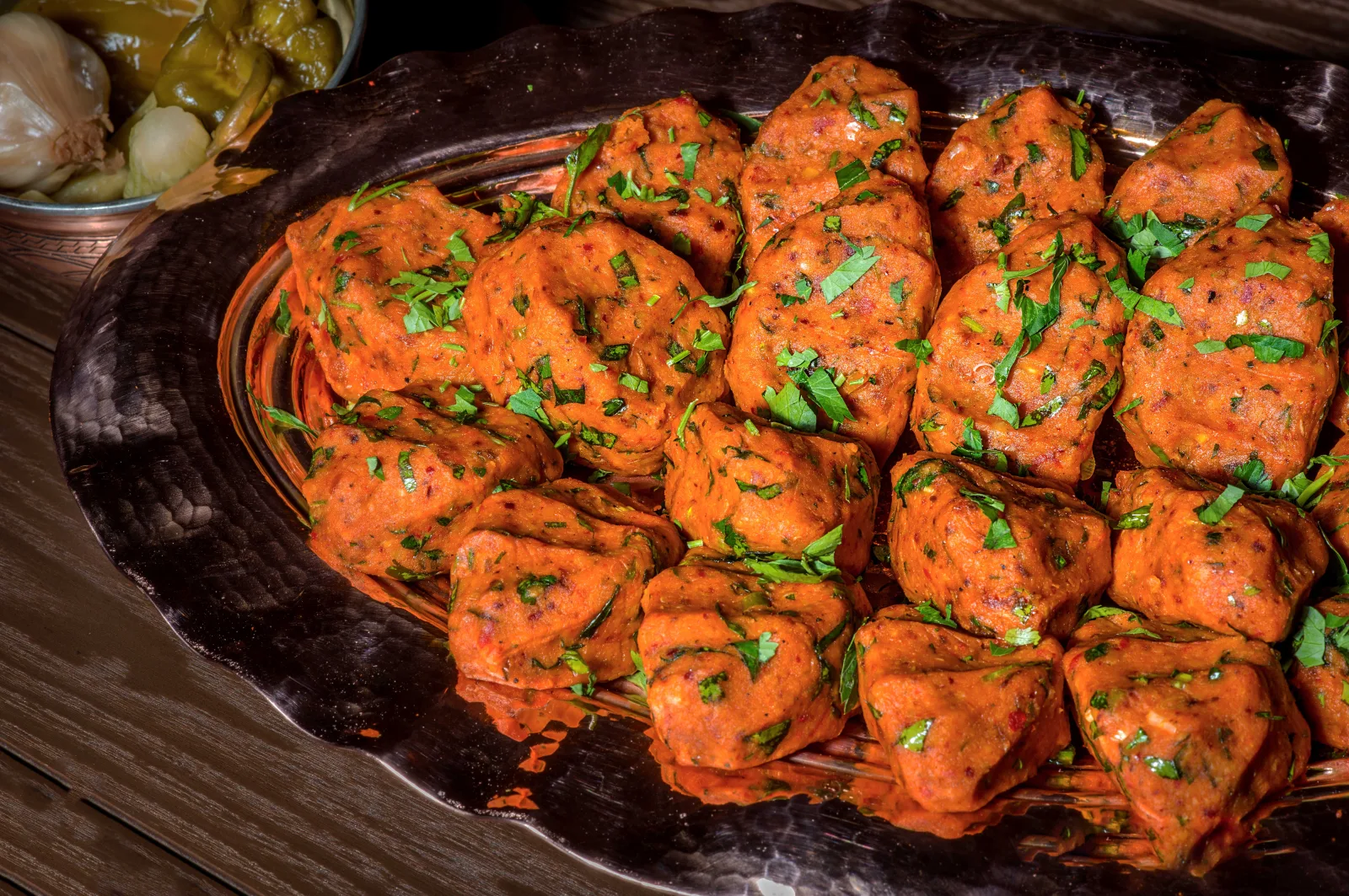
Malhıtalı köfte is one of the meatless masterpieces of Antep cuisine: a cold köfte in which red lentils cooked until tender and fine köfte bulgur are kneaded with onion, pepper paste, spices and the region's own tarragon, then shaped by squeezing in the hand. There is no meat in it; it draws its heartiness and character from the lentils, bulgur and plenty of greens. It is served on a large platter set in the middle of the table, cradled in lettuce leaves and eaten with a squeeze of lemon. There's more on the malhıtalı köfte page.
The third member of this family is omaç köfte: a bread köfte in which crumbled dry yufka or tırnaklı pide (thumb-pressed flatbread) is kneaded with Antep cheese, tomato, onion and pepper and eaten without cooking. Because it contains cheese, it is not fully vegan but a lacto-vegetarian delight; it is also known as "pisik köftesi."
Pastries and Breads: The Meatless Face of the Oven
Antep's baking culture, too, has options waiting for vegetarians. Cheese-and-greens pastries and plain stone-oven breads make up this wing. For all the options, take a look at the pastries and breads section.
Sebzeli Peynir Böreği (Greens and Cheese Pastry)
Sebzeli peynir böreği is a savory Gaziantep pastry rolled out from leavened dough; it is filled with the region's fresh cheese plus a greens mixture of parsley, garlic and spring onion, then baked. The name "sebzeli" (with greens) comes from this greens mixture that livens up the cheese. On an Antep table dominated by meat, it holds a place of its own thanks to its cheese-and-greens balance, and it is mostly eaten at teatime. The details are on the sebzeli peynir böreği page.
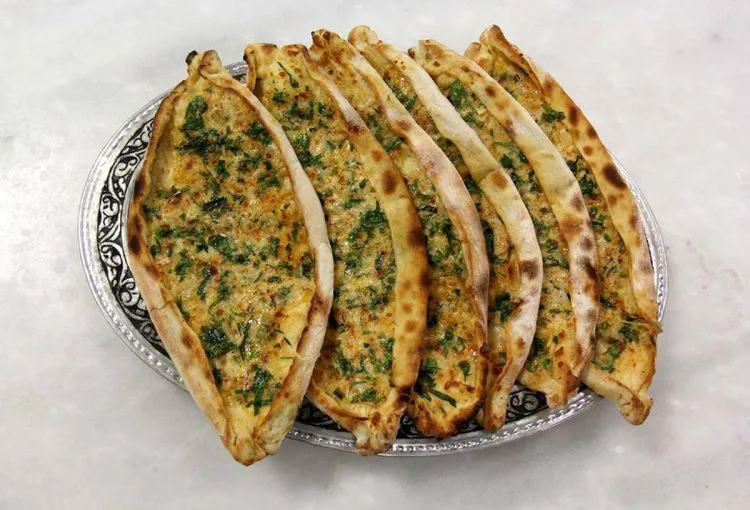
Alongside it, one should also mention Antep tırnaklı pide, made from nothing but flour, water, yeast and salt; this plain stone-oven bread, patterned with the fingerprints pressed into its surface, is the natural companion to mezes and pottages.
Desserts: The Meatless Finale of the Table
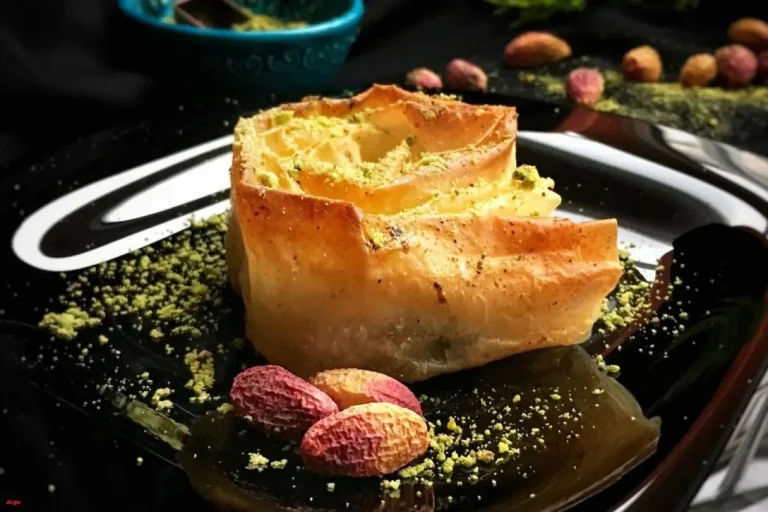
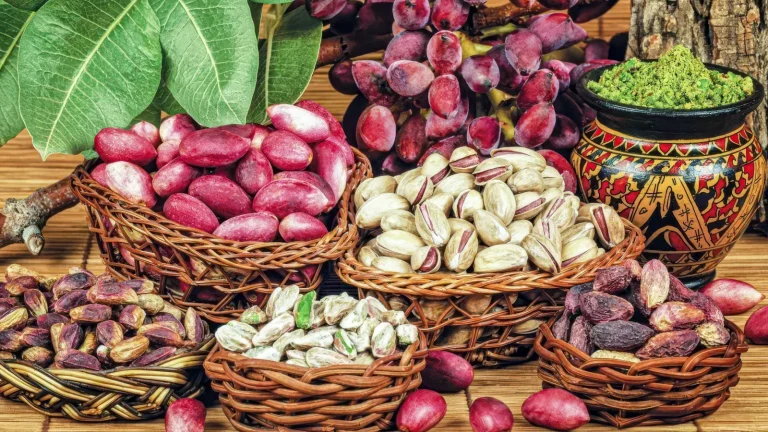
Here's the good news: nearly all Antep desserts are already meatless. Baklava, made of layer upon layer of yufka, Antep pistachios and syrup; katmer, folded with pistachios and kaymak; and helvas based on semolina, flour and syrup offer plenty of options for a vegetarian dessert table. Those containing milk or egg are considered vegetarian, those without are vegan. If you'd like to explore this sweet world of Antep beyond baklava in detail, our guide Antep Desserts Beyond Baklava is just the thing for you.
For Those Who Want to Keep Discovering Meat, Too
Although this guide focuses on meatless flavors, if you're curious about the whole of Antep cuisine, you can balance your table with our Gaziantep Kebab Guide, where we tell the story of the grill's stars. And to see the vegetarian options gathered together in a single piece, this vegetarian guide is always within reach.
Frequently Asked Questions
What can vegetarians eat in Gaziantep?
Mezes like muhammara, acılı ezme and olive piyaz; legume pottages like malhıta, mung bean soup and pirpirim aşı; and meatless köfte like yağlı köfte and malhıtalı köfte offer vegetarians plenty of options.
Are there any fully vegan dishes in Antep?
Yes. Plates made only with vegetables, legumes and olive oil, such as olive piyaz, mung-bean piyaz and muhammara, contain no milk or egg; in that sense they are vegan.
Are all Antep köfte made with meat?
No. Many Antep köfte, such as yağlı köfte, malhıtalı (lentil) köfte and omaç köfte, are completely meatless köfte kneaded from bulgur, lentils or bread without any cooking.
Is bakla tavası vegetarian?
No. Bakla tavası is a meat dish in which fresh broad beans are cooked with lamb or beef, and it is not vegetarian.
Is omaç köfte vegan?
Omaç köfte is meatless, but because it contains Antep cheese it is not vegan; it is a lacto-vegetarian delight.
Are Antep desserts suitable for vegetarians?
The vast majority are. Baklava, helvas and most syrup-soaked desserts are meatless; those without milk or egg are considered vegan, and those with them vegetarian.